


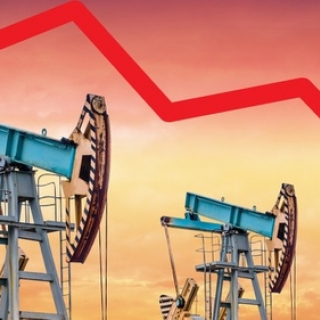
Oil prices fell to their lowest in a week on Monday after OPEC+ agreed to another large output increase in September, adding to oversupply concerns after U.S. data showed lacklustre fuel demand in the top consuming nation.
Brent crude futures fell 43 cents, or 0.6%, to $69.24 a barrel by 11:39 a.m. ET (1539 GMT), while U.S. West Texas Intermediate crude declined by 48 cents, or 0.7%, to $66.85 a barrel.
Both contracts were down more than 2% earlier in the session and hit the lowest in a week, after declining close to 3% on Friday.
The Organization of the Petroleum Exporting Countries and its allies, together known as OPEC+, agreed on Sunday to raise oil production by 547,000 barrels per day (bpd) for September.
The latest in a series of accelerated output increases aimed at capturing market share was in line with market expectations and marks a full and early reversal of the group's largest tranche of output cuts, amounting to about 2.5 million bpd, or about 2.4% of global demand.
While the group cited healthy market fundamentals to back its decision, data released by the U.S. government last week showed the weakest gasoline demand in May, the start of the country's summer driving season, since the COVID-19 pandemic of 2020.
The data also showed U.S. oil production at a monthly record in May, adding to global oversupply concerns.
Oil traders are now hedging for the possibility of further supply increases from OPEC+, with potential discussions to unwind a further 1.65 million bpd of cuts at the group's next meeting on September 7 adding pressure to oil prices.
"OPEC+ retains a substantial amount of spare production capacity, and markets are now watching closely to see whether the group will tap into it," StoneX analyst Alex Hodes said.
"So far, there are no clear signals that OPEC+ intends to deploy this additional capacity, but the possibility remains on the table," he added.
Analysts at Goldman Sachs expect that the actual increase in supply from the eight OPEC+ countries that have raised output since March will be 1.7 million bpd because other members have cut output after overproducing.
Investors also continued to digest the impact of the latest U.S. tariffs on exports from dozens of trading partners and remain wary of further U.S. sanctions on Russia.
U.S. President Donald Trump has threatened to impose 100% secondary tariffs on Russian crude buyers as he seeks to pressure Moscow into halting its war in Ukraine.
Trump on Monday said he will substantially raise tariffs on India over its purchases of Russian oil, after two Indian government sources told Reuters over the weekend that the country will keep buying oil from Moscow despite Trump's threats.
That helped limit oil's losses. About 1.7 million bpd of crude supply will be at risk if Indian refiners stop buying Russian oil, ING analysts said in a note.
Source: Investing,com
Oil prices stabilized on Thursday (February 12th), as the market reassigned a risk premium to US-Iran tensions despite US inventory data showing swelling domestic supplies. This movement confirms one ...
Oil prices rose on Wednesday (February 11th), supported by a combination of geopolitical risk premiums from US-Iran tensions and more solid Asian demand signals particularly from India which helped ea...
Oil remained in the green zone on Tuesday (February 10th), as the market refused to abandon the Middle East risk premium. As of 13:07 GMT (20:07 WIB), Brent rose +0.4% to $69.32/barrel, while WTI rose...
Oil prices fell about 1% on Monday as concerns about conflict in the Middle East eased slightly. The market calmed after the US and Iran agreed to resume talks on Tehran's nuclear program, reducing fe...
Oil prices moved slightly higher in a volatile session on Friday, as investors assessed the direction of nuclear negotiations between the United States and Iran. Price movements appeared sensitive to ...
Oil prices stabilized on Thursday (February 12th), as the market reassigned a risk premium to US-Iran tensions despite US inventory data showing swelling domestic supplies. This movement confirms one thing: geopolitical headlines are still more...
Gold prices weakened slightly on Thursday (February 12th), as more solid US employment data reduced market confidence in an imminent Federal Reserve interest rate cut. The strong employment data prompted market participants to shift expectations of...
The Hang Seng Index reversed its downward trend in Hong Kong on Thursday (February 12th), weakening by around 0.9% to around 27,000 after a strong session earlier. This decline halted the momentum of the short term rally, as investors began to...