


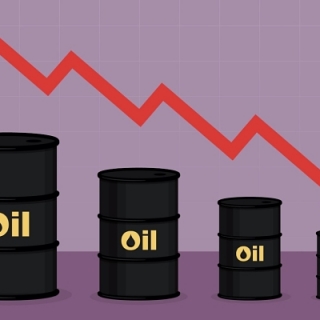
Oil prices plunged more than 2% on Thursday (July 10th), as investors weighed the potential impact of US President Donald Trump's tariffs on global economic growth.
Brent crude futures closed at $68.64 per barrel, down $1.55, or 2.21%. US West Texas Intermediate crude futures closed at $66.57 per barrel, down $1.81, or 2.65%.
On Wednesday, Trump threatened Brazil, Latin America's largest economy, with punitive 50% tariffs on exports to the US, pressuring his Brazilian counterpart, Luiz Inácio Lula da Silva, over the trial of former President Jair Bolsonaro in Brazil on charges of plotting a coup to prevent Lula from taking office in 2023.
On Thursday, Lula held a meeting with ministers, a day after hinting at reciprocal measures in a social media post. Trump has also announced plans for tariffs on copper, semiconductors, and pharmaceuticals. His administration has sent tariff letters to the Philippines, Iraq, and other countries, adding to more than a dozen this week, including to major U.S. suppliers South Korea and Japan.
Trump's history of frequently delaying tariffs has caused the market to be less reactive to such announcements, said Harry Tchilinguirian, head of group research at Onyx Capital Group.
"People are largely in a wait-and-see mode, given the erratic nature of policy and the flexibility the administration has shown regarding tariffs," Tchilinguirian said.
Policymakers remain concerned about inflationary pressures from Trump's tariffs, with only "a few" officials at the June 17-18 Federal Reserve meeting saying they felt interest rates could be lowered as soon as this month, according to meeting minutes released Wednesday.
Higher interest rates make borrowing more expensive and could slow oil demand. OPEC+ oil producers are set to agree to another major production increase for September, as eight members complete a voluntary production cut and the United Arab Emirates moves to increase its quota.
However, OPEC+ has indicated it will likely pause production increases in October due to the potential peak in oil demand, said Phil Flynn, senior analyst at Price Futures Group.
"Previous fears of 'peak oil' have not materialized, and rising prices are encouraging the discovery of new oil resources, both domestically and abroad," Flynn wrote in a note on Thursday.
Elsewhere, US Secretary of State Marco Rubio held "candid" talks with Russian Foreign Minister Sergei Lavrov, where he expressed Washington's frustration over the lack of progress in ending the war in Ukraine. Trump recently said he was considering a bill that would impose tougher sanctions on Russia. (alg)
Source: Reuters
Oil prices stabilized on Thursday (February 12th), as the market reassigned a risk premium to US-Iran tensions despite US inventory data showing swelling domestic supplies. This movement confirms one ...
Oil prices rose on Wednesday (February 11th), supported by a combination of geopolitical risk premiums from US-Iran tensions and more solid Asian demand signals particularly from India which helped ea...
Oil remained in the green zone on Tuesday (February 10th), as the market refused to abandon the Middle East risk premium. As of 13:07 GMT (20:07 WIB), Brent rose +0.4% to $69.32/barrel, while WTI rose...
Oil prices fell about 1% on Monday as concerns about conflict in the Middle East eased slightly. The market calmed after the US and Iran agreed to resume talks on Tehran's nuclear program, reducing fe...
Oil prices moved slightly higher in a volatile session on Friday, as investors assessed the direction of nuclear negotiations between the United States and Iran. Price movements appeared sensitive to ...
Oil prices stabilized on Thursday (February 12th), as the market reassigned a risk premium to US-Iran tensions despite US inventory data showing swelling domestic supplies. This movement confirms one thing: geopolitical headlines are still more...
Gold prices weakened slightly on Thursday (February 12th), as more solid US employment data reduced market confidence in an imminent Federal Reserve interest rate cut. The strong employment data prompted market participants to shift expectations of...
The Hang Seng Index reversed its downward trend in Hong Kong on Thursday (February 12th), weakening by around 0.9% to around 27,000 after a strong session earlier. This decline halted the momentum of the short term rally, as investors began to...