


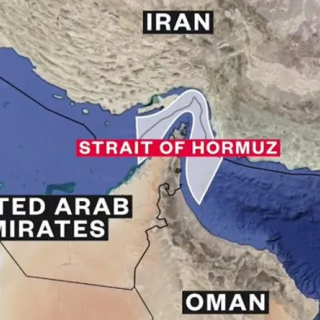
Oil prices fell 1% on Monday after touching a five-month high as markets tried to gauge the impact on transit of oil and gas via the Strait of Hormuz after U.S. airstrikes against Iran at the weekend.
Brent crude futures were down 70 cents, or 0.9%, at $76.31 a barrel by 10:46 a.m. ET (1446 GMT). U.S. West Texas Intermediate crude (WTI) fell 76 cents, or 1%, to $73.09.
Earlier in the session, Brent and WTI touched five-month highs of $81.40 and $78.40 respectively, before seesawing between positive and negative territory throughout the European trading session.
U.S. President Donald Trump said he had "obliterated" Iran's main nuclear sites in strikes over the weekend, joining an Israeli assault in an escalation of conflict in the Middle East as Tehran vowed to defend itself.
Israel carried out fresh strikes against Iran on Monday including on capital Tehran and the Iranian nuclear facility at Fordow, which was also a target of the U.S. attack.
At least two supertankers made U-turns near the Strait of Hormuz following U.S. military strikes on Iran, ship tracking data shows, as more than a week of violence in the region prompted vessels to speed, pause, or alter their journeys.
About a fifth of global oil supply flows through the strait. However, the risk of a complete shutdown is low, analysts have said.
"A full blockade would hurt Iran as well, given its dependency on crude exports to Asia - but asymmetric attacks on ships or terminals remain a very real possibility," said Fawad Razaqzada, market analyst at City Index.
"There's been no disruption to supply yet. But the market knows all too well how quickly that could change," Razaqzada said.
Iran, which is OPEC's third-largest crude producer, said on Monday that the U.S. attack on its nuclear sites expanded the range of legitimate targets for its armed forces and called Trump a "gambler" for joining Israel's military campaign against the Islamic Republic.
Meanwhile, Trump expressed a desire to see oil prices kept down amid fears that ongoing fighting in the Middle East could cause them to spike. On his Truth Social platform, he addressed the U.S. Department of Energy, encouraging "drill, baby, drill" and saying, "I mean now."
Investors are still weighing up the extent of the geopolitical risk premium, given the Middle East crisis has yet to crimp supply.
HSBC expects Brent prices to spike above $80 a barrel to factor in a higher probability of a Strait of Hormuz closure, but to recede again if the threat of disruption does not materialise, the bank said on Monday.
Iraq's state-run Basra Oil Company said international oil majors including BP (NYSE:BP), TotalEnergies (EPA:TTEF) and Eni had evacuated some staff members working in oilfields.
Source: Investing.com
Oil prices stabilized on Thursday (February 12th), as the market reassigned a risk premium to US-Iran tensions despite US inventory data showing swelling domestic supplies. This movement confirms one ...
Oil prices rose on Wednesday (February 11th), supported by a combination of geopolitical risk premiums from US-Iran tensions and more solid Asian demand signals particularly from India which helped ea...
Oil remained in the green zone on Tuesday (February 10th), as the market refused to abandon the Middle East risk premium. As of 13:07 GMT (20:07 WIB), Brent rose +0.4% to $69.32/barrel, while WTI rose...
Oil prices fell about 1% on Monday as concerns about conflict in the Middle East eased slightly. The market calmed after the US and Iran agreed to resume talks on Tehran's nuclear program, reducing fe...
Oil prices moved slightly higher in a volatile session on Friday, as investors assessed the direction of nuclear negotiations between the United States and Iran. Price movements appeared sensitive to ...
Oil prices stabilized on Thursday (February 12th), as the market reassigned a risk premium to US-Iran tensions despite US inventory data showing swelling domestic supplies. This movement confirms one thing: geopolitical headlines are still more...
Gold prices weakened slightly on Thursday (February 12th), as more solid US employment data reduced market confidence in an imminent Federal Reserve interest rate cut. The strong employment data prompted market participants to shift expectations of...
The Hang Seng Index reversed its downward trend in Hong Kong on Thursday (February 12th), weakening by around 0.9% to around 27,000 after a strong session earlier. This decline halted the momentum of the short term rally, as investors began to...