


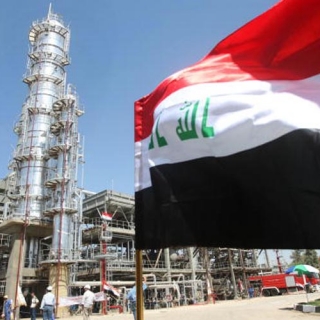
Oil prices fell more than $2 per barrel on Monday after reports that Iran is seeking an end to hostilities with Israel, raising the possibility of a truce and easing fears of a disruption to crude supplies from the region.
Brent crude futures fell $2.65, or 2.7%, to $71.58 a barrel by 11:05 a.m. ET (1506 GMT). U.S. West Texas Intermediate crude futures fell $2.71, or 3.7%, to $70.27 per barrel.
Iran has asked Qatar, Saudi Arabia and Oman to press U.S. President Donald Trump to use his influence on Israel for an immediate ceasefire in return for Tehran's flexibility in talks about its nuclear program, two Iranian and three regional sources told Reuters. Earlier, the Wall Street Journal had reported Iran was seeking a truce.
Traders pared bets that bombing by both sides could turn into a broader, regional war that would threaten energy infrastructure, Mizuho analyst Robert Yawger said.
On Friday, oil prices surged more than 7% after Israel began bombing Iran over claims Tehran was close to securing an atomic bomb.
Both sides have traded airstrikes, including on energy infrastructure, but key oil export facilities have not yet been hit.
"The Israelis have not touched Kharg Island, so that is the story right now," Yawger said, referring to the Iranian oil export hub.
He cautioned that any strikes on Kharg Island would likely send oil prices soaring to $90 a barrel.
"It all boils down to how the conflict escalates around energy flows," said Harry Tchilinguirian, group head of research at Onyx Capital Group.
"So far, production capacity and export capacity have been spared and there hasn't been any effort on the part of Iran to impair flows through the Strait of Hormuz."
Electronic interference with commercial ship navigation systems has surged in recent days around the Strait of Hormuz and the wider Gulf, which is having an impact on vessels sailing through the region, naval forces said on Monday.
About a fifth of the world's total oil consumption, or some 18 to 19 million barrels per day of oil, condensate and fuel, passes through the strait.
Iran, a member of the Organization of the Petroleum Exporting Countries, currently produces around 3.3 million bpd and exports more than 2 million bpd of oil and fuel.
The spare capacity of OPEC+ oil producers to pump more to offset any disruption is roughly equivalent to Iran's output, according to analysts and OPEC watchers.
"If Iranian crude exports are disrupted, Chinese refiners, the sole buyers of Iranian barrels, would need to seek alternative grades from other Middle Eastern countries and Russian crudes," Richard Joswick, head of near-term oil analysis at S&P Global Commodity Insights, said in a note.
Source: Investing.com
Oil prices stabilized on Thursday (February 12th), as the market reassigned a risk premium to US-Iran tensions despite US inventory data showing swelling domestic supplies. This movement confirms one ...
Oil prices rose on Wednesday (February 11th), supported by a combination of geopolitical risk premiums from US-Iran tensions and more solid Asian demand signals particularly from India which helped ea...
Oil remained in the green zone on Tuesday (February 10th), as the market refused to abandon the Middle East risk premium. As of 13:07 GMT (20:07 WIB), Brent rose +0.4% to $69.32/barrel, while WTI rose...
Oil prices fell about 1% on Monday as concerns about conflict in the Middle East eased slightly. The market calmed after the US and Iran agreed to resume talks on Tehran's nuclear program, reducing fe...
Oil prices moved slightly higher in a volatile session on Friday, as investors assessed the direction of nuclear negotiations between the United States and Iran. Price movements appeared sensitive to ...
Oil prices stabilized on Thursday (February 12th), as the market reassigned a risk premium to US-Iran tensions despite US inventory data showing swelling domestic supplies. This movement confirms one thing: geopolitical headlines are still more...
Gold prices weakened slightly on Thursday (February 12th), as more solid US employment data reduced market confidence in an imminent Federal Reserve interest rate cut. The strong employment data prompted market participants to shift expectations of...
The Hang Seng Index reversed its downward trend in Hong Kong on Thursday (February 12th), weakening by around 0.9% to around 27,000 after a strong session earlier. This decline halted the momentum of the short term rally, as investors began to...