


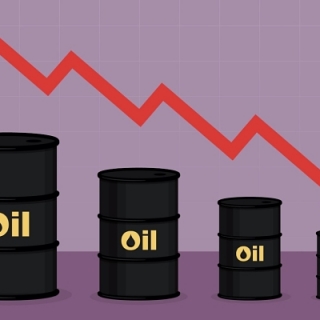
Oil prices fell on Wednesday as traders eyed a potential surge in U.S. crude inventories, although prices held near two-week highs amid optimism after the United States and China agreed to temporarily lower their tit-for-tat tariffs.
Brent crude futures fell 39 cents, or 0.6%, to $66.24 a barrel by 0400 GMT. U.S. West Texas Intermediate (WTI) crude futures fell 36 cents, or 0.6%, to $63.31. Both benchmarks had risen more than 2.5% in the previous session.
The world's two largest economies agreed on Monday to pause their trade war for at least 90 days, with the United States cutting tariffs to 30% from 145% and China cutting duties on U.S. imports to 10% from 125%. "The US-China economic pause may have created a narrative that could reinvigorate demand amid a backdrop of cautious optimism," said Priyanka Sachdeva, senior market analyst at Phillip Nova.
However, expectations of a surprise surge in US oil inventories are limiting optimism for now, Sachdeva added.
"This sharp contrast with last week's substantial drawdown signals that the demand side is still grappling with significant challenges, leaving market observers on edge and wondering where the next turnaround will come from," she said.
Crude stocks rose by 4.3 million barrels in the week to May 9, market sources said, citing figures from the American Petroleum Institute on Tuesday.
Official weekly inventory data from the US Energy Information Administration is due on Wednesday at 10:30 a.m. EDT (1430 GMT).
Investors remain wary of demand signals. Rystad energy analysts said in a note that the deal has "eaten some of the demand-side pessimism," while warning of lingering impacts from tariffs despite the rollback.
The market is also watching U.S. President Donald Trump's trip to the Gulf, which began on Tuesday with an appearance at an investment forum in Riyadh, where he said the U.S. would lift long-standing sanctions on Syria and secure a $600 billion Saudi investment pledge.
Rystad Energy's global head of commodity markets Mukesh Sahdev said preventing a spike in oil prices during the summer travel season would be a key part of the president's agenda on the trip.
The United States could take advantage of lower prices to buy more Middle Eastern crude for its Strategic Petroleum Reserve, he added.
"What the market doesn't know is how U.S. actions regarding Iran, Russia and Venezuela will result in supply disruptions or increases," Sahdev said.
On Tuesday, the United States imposed new sanctions on about 20 companies it said were helping Iran's General Staff and its main company, Sepehr Energy, ship Iranian oil to China. The sanctions follow the fourth round of U.S.-Iran talks in Oman to resolve a dispute over Iran's nuclear program. (Newsmaker23)
Source: Reuters
Oil prices stabilized on Thursday (February 12th), as the market reassigned a risk premium to US-Iran tensions despite US inventory data showing swelling domestic supplies. This movement confirms one ...
Oil prices rose on Wednesday (February 11th), supported by a combination of geopolitical risk premiums from US-Iran tensions and more solid Asian demand signals particularly from India which helped ea...
Oil remained in the green zone on Tuesday (February 10th), as the market refused to abandon the Middle East risk premium. As of 13:07 GMT (20:07 WIB), Brent rose +0.4% to $69.32/barrel, while WTI rose...
Oil prices fell about 1% on Monday as concerns about conflict in the Middle East eased slightly. The market calmed after the US and Iran agreed to resume talks on Tehran's nuclear program, reducing fe...
Oil prices moved slightly higher in a volatile session on Friday, as investors assessed the direction of nuclear negotiations between the United States and Iran. Price movements appeared sensitive to ...
Oil prices stabilized on Thursday (February 12th), as the market reassigned a risk premium to US-Iran tensions despite US inventory data showing swelling domestic supplies. This movement confirms one thing: geopolitical headlines are still more...
Gold prices weakened slightly on Thursday (February 12th), as more solid US employment data reduced market confidence in an imminent Federal Reserve interest rate cut. The strong employment data prompted market participants to shift expectations of...
The Hang Seng Index reversed its downward trend in Hong Kong on Thursday (February 12th), weakening by around 0.9% to around 27,000 after a strong session earlier. This decline halted the momentum of the short term rally, as investors began to...