


Oil prices rose about 1.5% to settle at a two-week high on Monday, after the U.S. and China agreed to temporarily slash tariffs, raising hopes of an end to the trade war between the world's two biggest economies.
Brent crude futures rose $1.05, or 1.6%, to settle at $64.96 a barrel. U.S. West Texas Intermediate (WTI) crude gained 93 cents, or 1.5%, to settle at $61.95.
Both benchmarks notched their highest settlements since April 28.
The U.S. and China tapped the brakes on tariffs, sending Wall Street stocks, the U.S. dollar and crude prices sharply higher on hopes the world's two biggest oil consumers can end a trade war that has stoked fears of recession.
"This was a larger-than-expected de-escalation and represents an upgrade to the outlook, though the negotiation process will likely remain challenging," analysts at bank ING said in a note.
U.S. Federal Reserve Governor Adriana Kugler said the trade deal could make it less necessary for the Fed to cut interest rates to stimulate the economy. This pressured oil prices in early trading, since lower rates can boost oil demand.
In April, oil prices fell to a four-year low as investors worried the U.S.-China trade war could depress economic growth and oil demand. Also, the Organization of the Petroleum Exporting Countries (OPEC) decided to boost oil output by more than previously expected.
In Saudi Arabia, the biggest producer in OPEC, oil giant Aramco (TADAWUL:2222) said it expects oil demand to remain resilient this year and sees further upside if the U.S. and China resolve their trade dispute.
In Iraq, OPEC's No. 2 producer, crude exports were on track to decline to around 3.2 million barrels per day (bpd) in May and June, which would be a significant reduction from previous months.
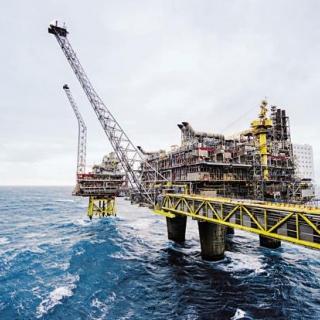
Oil prices gained support after Norwegian energy firm Equinor said it temporarily halted output from the Johan Castberg oilfield in the Arctic Barents Sea to make repairs.
In the Black Sea, Black Sea CPC Blend exports via the Caspian Pipeline Consortium system were on track to ease to 1.5 million bpd in May from 1.6 million bpd in April.
In Mexico, PMI, trading arm of state-owned energy company Pemex, anticipates a reduction in crude exports this year as more will be sent to local refineries, especially the new Olmeca refinery.
Ongoing talks between the U.S. and Iran over Tehran's nuclear program could pressure crude prices, since Iran is OPEC's No. 3 producer and any nuclear deal could reduce sanctions on Iran's exports. Russian crude supply could also increase on global markets if U.S.-brokered talks result in peace between Russia and Ukraine.
Ukrainian President Volodymyr Zelenskiy said he was ready to meet Russia's Vladimir Putin in Turkey on Thursday after U.S. President Donald Trump told him publicly to immediately accept the Kremlin leader's proposal of direct talks.
Trump raised the prospect of joining talks between Russia and Ukraine in Turkey.
Russia was the world's No. 2 oil producer in 2024, according to data from the U.S. Energy Information Administration. A deal between Russia and Ukraine could reduce sanctions on Moscow and boost the amount of oil Russia can export.
In India, Prime Minister Narendra Modi warned Pakistan that New Delhi would target "terrorist hideouts" across the border again if there were new attacks on India and would not be deterred by what he called Islamabad's "nuclear blackmail".
India is the world's third biggest consumer of oil.
Source: Investing.com
Oil prices stabilized on Thursday (February 12th), as the market reassigned a risk premium to US-Iran tensions despite US inventory data showing swelling domestic supplies. This movement confirms one ...
Oil prices rose on Wednesday (February 11th), supported by a combination of geopolitical risk premiums from US-Iran tensions and more solid Asian demand signals particularly from India which helped ea...
Oil remained in the green zone on Tuesday (February 10th), as the market refused to abandon the Middle East risk premium. As of 13:07 GMT (20:07 WIB), Brent rose +0.4% to $69.32/barrel, while WTI rose...
Oil prices fell about 1% on Monday as concerns about conflict in the Middle East eased slightly. The market calmed after the US and Iran agreed to resume talks on Tehran's nuclear program, reducing fe...
Oil prices moved slightly higher in a volatile session on Friday, as investors assessed the direction of nuclear negotiations between the United States and Iran. Price movements appeared sensitive to ...
Oil prices stabilized on Thursday (February 12th), as the market reassigned a risk premium to US-Iran tensions despite US inventory data showing swelling domestic supplies. This movement confirms one thing: geopolitical headlines are still more...
Gold prices weakened slightly on Thursday (February 12th), as more solid US employment data reduced market confidence in an imminent Federal Reserve interest rate cut. The strong employment data prompted market participants to shift expectations of...
The Hang Seng Index reversed its downward trend in Hong Kong on Thursday (February 12th), weakening by around 0.9% to around 27,000 after a strong session earlier. This decline halted the momentum of the short term rally, as investors began to...