


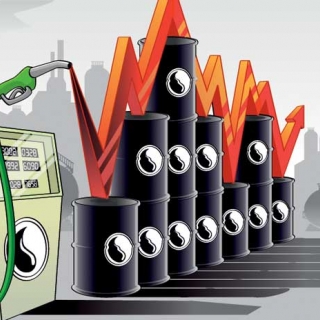
Oil prices inched higher in Asian trade on Thursday following steep losses in the prior session, as investors digested reports that OPEC+ plans to further ramp up production in June.
The commodity was supported by signals of potential tariff negotiations between the U.S. and China.
Brent Oil Futures expiring in June edged 0.3% higher to $66.33 per barrel, while West Texas Intermediate (WTI) crude futures gained 0.2% to $61.78 per barrel.
Both contracts settled nearly 2% lower on Wednesday in anticipation of increased supply from the Organization of the Petroleum Exporting Countries.
OPEC+ members eye faster output hikes - Reuters
Several OPEC+ nations are pushing to accelerate oil output hikes in June, extending May's surprise boost, as internal disputes over quota compliance deepen, Reuters reported Wednesday, citing sources familiar with the talks.
The proposed increase potentially matching May's 411,000 barrels per day rise comes as oil prices hover near four-year lows amid a U.S.-China trade war and oversupply concerns.
Eight OPEC+ countries will meet on May 5 to finalize the June plan, while divisions persist within the group, according to the report.
Saudi Arabia, frustrated by overproduction from Kazakhstan and Iraq, led the push for
May's accelerated increase, the report said.
Not all members are on board. Russia and others prefer slower, pre-agreed hikes to avoid further price declines, Reuters reported.
Signs of US-China tariff negotiations support oil
Despite the fall, oil prices were supported by expectations of potential tariff negotiations between the U.S. and China.
3rd party Ad. Not an offer or recommendation by Investing.com. See disclosure here or remove ads.
The Wall Street Journal on Wednesday reported that the Trump administration is considering reducing tariffs on Chinese imports to de-escalate trade tensions.
Prior to this, Trump hinted at potential trade negotiations with China, saying a potential deal could lead to a "substantial" reduction in tariffs. But "it won't be zero," he added.
A reduction of duties could lead to increased economic activity in China, the world's largest crude importer.
US crude inventories jump unexpectedly - EIA
The U.S. Energy Information Administration (EIA) on Wednesday reported that crude oil inventories increased by 244,000 barrels to 443.1 million barrels for the week ending April 18, defying analysts' expectations of a 770,000-barrel draw.
Meanwhile, both gasoline and distillate inventories fell more than anticipated.
Gasoline stocks declined by 4.5 million barrels, surpassing the expected 1.4 million-barrel draw, while distillate inventories, including diesel and heating oil, dropped by 2.4 million barrels, far exceeding the forecasted 30,000-barrel decrease.
Source: Investing.com
Oil prices stabilized on Thursday (February 12th), as the market reassigned a risk premium to US-Iran tensions despite US inventory data showing swelling domestic supplies. This movement confirms one ...
Oil prices rose on Wednesday (February 11th), supported by a combination of geopolitical risk premiums from US-Iran tensions and more solid Asian demand signals particularly from India which helped ea...
Oil remained in the green zone on Tuesday (February 10th), as the market refused to abandon the Middle East risk premium. As of 13:07 GMT (20:07 WIB), Brent rose +0.4% to $69.32/barrel, while WTI rose...
Oil prices fell about 1% on Monday as concerns about conflict in the Middle East eased slightly. The market calmed after the US and Iran agreed to resume talks on Tehran's nuclear program, reducing fe...
Oil prices moved slightly higher in a volatile session on Friday, as investors assessed the direction of nuclear negotiations between the United States and Iran. Price movements appeared sensitive to ...
Oil prices stabilized on Thursday (February 12th), as the market reassigned a risk premium to US-Iran tensions despite US inventory data showing swelling domestic supplies. This movement confirms one thing: geopolitical headlines are still more...
Gold prices weakened slightly on Thursday (February 12th), as more solid US employment data reduced market confidence in an imminent Federal Reserve interest rate cut. The strong employment data prompted market participants to shift expectations of...
The Hang Seng Index reversed its downward trend in Hong Kong on Thursday (February 12th), weakening by around 0.9% to around 27,000 after a strong session earlier. This decline halted the momentum of the short term rally, as investors began to...