


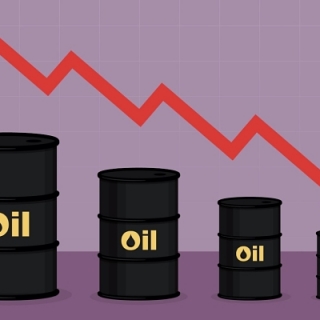
Oil prices fell about 1% on Wednesday, as a U.S. tariff policy change fueled uncertainty, prompting traders to weigh the potential impact of the U.S.-China trade war on economic growth and energy demand.
Brent crude was down 66 cents, or 1.0%, at $64.01 a barrel by 0630 GMT, while U.S. West Texas Intermediate crude was down 69 cents, or 1.1%, at $60.64. Both benchmarks fell 0.3% on Tuesday.
Global oil demand is expected to grow at its slowest rate in five years in 2025 and U.S. production growth is also set to ease, due to U.S. President Donald Trump's tariffs on trading partners and their retaliatory actions, the International Energy Agency said on Tuesday. "Investors continue to struggle to find catalysts to drive a more meaningful recovery, as global growth is widely expected to slow amid US tariffs, which are hurting oil demand," said Yeap Jun Rong, market strategist at IG.
"The downtrend in oil prices remains intact and we may expect the initial optimism around tariff removal to fade, and underlying macro headwinds in upcoming economic data could bring the market back to a more sobering reality," Yeap said.
Global oil demand this year is expected to rise by 730,000 barrels per day, the IEA said, down sharply from the 1.03 million barrels per day expected last month. The decline is larger than the demand estimate cut made on Monday by the Organization of the Petroleum Exporting Countries.
The tariff dispute between the US and China remains the most significant threat to the global economy and oil demand, said Imad Al-Khayyat, head of research at the London Stock Exchange Group.
"Every week that passes without any sign of easing in this impasse increases the likelihood of a global recession and lowers the ceiling on prices," Al-Khayyat said.
Concerns over Trump's escalating tariffs, combined with rising output from OPEC+, a grouping of OPEC and its producer allies such as Russia, have dragged oil prices down about 13% so far this month.
Uncertainty over trade tensions has prompted several banks, including UBS, BNP Paribas and HSBC, to cut their crude price forecasts.
Trump has raised tariffs on Chinese goods to record levels, prompting Beijing to impose retaliatory duties on U.S. imports in an escalating trade war between the world's two largest economies that markets fear could trigger a global recession. Meanwhile, U.S. crude stocks rose by 2.4 million barrels in the week to April 11, while gasoline inventories fell by 3 million barrels and distillate stocks fell by 3.2 million barrels, market sources said, citing figures from the American Petroleum Institute on Tuesday. (Newsmaker23)
Source: Reuters
Oil prices stabilized on Thursday (February 12th), as the market reassigned a risk premium to US-Iran tensions despite US inventory data showing swelling domestic supplies. This movement confirms one ...
Oil prices rose on Wednesday (February 11th), supported by a combination of geopolitical risk premiums from US-Iran tensions and more solid Asian demand signals particularly from India which helped ea...
Oil remained in the green zone on Tuesday (February 10th), as the market refused to abandon the Middle East risk premium. As of 13:07 GMT (20:07 WIB), Brent rose +0.4% to $69.32/barrel, while WTI rose...
Oil prices fell about 1% on Monday as concerns about conflict in the Middle East eased slightly. The market calmed after the US and Iran agreed to resume talks on Tehran's nuclear program, reducing fe...
Oil prices moved slightly higher in a volatile session on Friday, as investors assessed the direction of nuclear negotiations between the United States and Iran. Price movements appeared sensitive to ...
Oil prices stabilized on Thursday (February 12th), as the market reassigned a risk premium to US-Iran tensions despite US inventory data showing swelling domestic supplies. This movement confirms one thing: geopolitical headlines are still more...
Gold prices weakened slightly on Thursday (February 12th), as more solid US employment data reduced market confidence in an imminent Federal Reserve interest rate cut. The strong employment data prompted market participants to shift expectations of...
The Hang Seng Index reversed its downward trend in Hong Kong on Thursday (February 12th), weakening by around 0.9% to around 27,000 after a strong session earlier. This decline halted the momentum of the short term rally, as investors began to...