


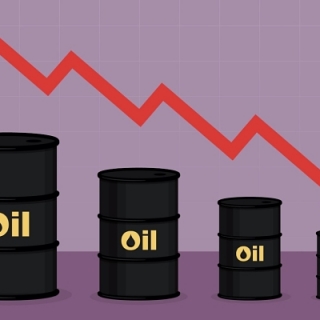
Oil prices edged lower in Asian trade on Monday as traders digested mixed signals on U.S. tariffs and the trade conflict with China, although weaker demand forecasts and lower prices continued to weigh.
Oil prices were trading near a four-year low hit last week, as concerns over weak demand and trade-related disruptions hit commodity markets. The prospect of increased economic pressure on top oil importer China also weighed on prices, as Beijing engages in a bitter trade war with the United States.
Brent crude for June delivery fell 0.3% to $64.56 a barrel, while West Texas Intermediate crude fell 0.3% to $60.75 a barrel by 9:22 p.m. ET (01:22 GMT). US-China trade war in focus, electronics briefly exempt
Tensions over the rapidly escalating US-China trade war eased slightly over the weekend, after the White House confirmed that Chinese electronics imports were exempt from Trump's steep "reciprocal" tariffs — a total of 145% — on the country.
But Trump said this was only temporary, and that his administration was preparing to impose separate tariffs on electronics in the coming months. Trump also said that electronics imports would still face a 10% universal tariff, and a 20% duty on Chinese imports related to fentanyl.
China has retaliated with 125% duties on American goods, marking a major escalation in the trade war between the world's largest economies.
The prospect of more economic headwinds for China is particularly worrying, given that the country is the world's largest oil importer.
China's economic downturn has steadily depressed the country's oil imports over the past year, with markets now worried about more headwinds.
Trump Energy Secretary Says Average Energy Prices Will Be Lower
U.S. Energy Secretary Chris Wright said over the weekend that energy prices are expected to be lower on average under Trump, with oil prices in particular expected to fall.
Trump has targeted lower energy prices as part of his agenda to curb inflation. The U.S. president has repeatedly called on Saudi Arabia and the Organization of the Petroleum Exporting Countries to increase production and lower prices—a call they have only partially complied with. More cues from OPEC are due this week with the monthly oil report.
Trump has also flagged plans to increase U.S. energy production—a trend that could massively increase oil supplies in the coming years. But the market doesn't see any near-term supply increases from this trend, given the time and investment needed to upgrade U.S. energy infrastructure. (Newsmaker23)
Source: Investing.com
Oil prices stabilized on Thursday (February 12th), as the market reassigned a risk premium to US-Iran tensions despite US inventory data showing swelling domestic supplies. This movement confirms one ...
Oil prices rose on Wednesday (February 11th), supported by a combination of geopolitical risk premiums from US-Iran tensions and more solid Asian demand signals particularly from India which helped ea...
Oil remained in the green zone on Tuesday (February 10th), as the market refused to abandon the Middle East risk premium. As of 13:07 GMT (20:07 WIB), Brent rose +0.4% to $69.32/barrel, while WTI rose...
Oil prices fell about 1% on Monday as concerns about conflict in the Middle East eased slightly. The market calmed after the US and Iran agreed to resume talks on Tehran's nuclear program, reducing fe...
Oil prices moved slightly higher in a volatile session on Friday, as investors assessed the direction of nuclear negotiations between the United States and Iran. Price movements appeared sensitive to ...
Oil prices stabilized on Thursday (February 12th), as the market reassigned a risk premium to US-Iran tensions despite US inventory data showing swelling domestic supplies. This movement confirms one thing: geopolitical headlines are still more...
Gold prices weakened slightly on Thursday (February 12th), as more solid US employment data reduced market confidence in an imminent Federal Reserve interest rate cut. The strong employment data prompted market participants to shift expectations of...
The Hang Seng Index reversed its downward trend in Hong Kong on Thursday (February 12th), weakening by around 0.9% to around 27,000 after a strong session earlier. This decline halted the momentum of the short term rally, as investors began to...