


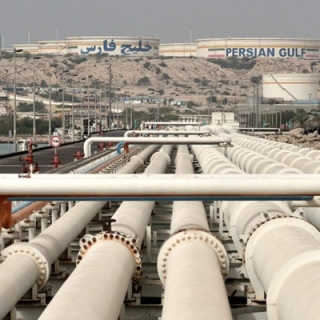
Iran's President Masoud Pezeshkian has called for solidarity among OPEC members in response to potential U.S. sanctions that could target the country's oil exports. This appeal came after U.S. President Donald Trump announced intentions to renew his "maximum pressure" campaign on Iran, which could significantly impact global oil supply.
At a meeting with OPEC Secretary General Haitham Al Ghais, Pezeshkian stressed the importance of unity within the organization to withstand possible U.S. sanctions. The Iranian president highlighted that collaborative efforts could prevent the U.S. from exerting pressure on individual OPEC members. The meeting took place amid discussions on the stability of the oil market, with Iran currently holding the rotating OPEC presidency.
Iran, a major oil producer, exports approximately 1.5 million barrels per day, primarily to China. These exports account for about 1.4% of the world's total oil supply. The potential loss of Iranian oil due to U.S. sanctions could have a significant effect on the market. During Trump's previous term, similar sanctions policies caused a drastic reduction in Iranian oil exports, which dropped to around 200,000 barrels per day in some months of 2020.
Amid these developments, Iranian Oil Minister Mohsen Paknejad conveyed to Al Ghais that unilateral sanctions on crude producers would lead to instability in energy markets and harm consumers globally. He emphasized the need to depoliticize the oil market to ensure energy security. Paknejad also addressed the challenges faced by the global oil market, particularly concerning upstream investment, and mentioned that Tehran has prepared strategies to cope with any scenario arising from U.S. sanctions.
Paknejad's remarks and the meeting with OPEC's secretary general underscore Iran's proactive approach to strengthening its position within OPEC and the broader energy market. The Iranian oil minister, who was elected as president of the OPEC Conference for 2025 in December, reiterated the country's readiness to face potential challenges in the energy sector.(Cay) Newsmaker23
Source: Investing.com
Oil prices stabilized on Thursday (February 12th), as the market reassigned a risk premium to US-Iran tensions despite US inventory data showing swelling domestic supplies. This movement confirms one ...
Oil prices rose on Wednesday (February 11th), supported by a combination of geopolitical risk premiums from US-Iran tensions and more solid Asian demand signals particularly from India which helped ea...
Oil remained in the green zone on Tuesday (February 10th), as the market refused to abandon the Middle East risk premium. As of 13:07 GMT (20:07 WIB), Brent rose +0.4% to $69.32/barrel, while WTI rose...
Oil prices fell about 1% on Monday as concerns about conflict in the Middle East eased slightly. The market calmed after the US and Iran agreed to resume talks on Tehran's nuclear program, reducing fe...
Oil prices moved slightly higher in a volatile session on Friday, as investors assessed the direction of nuclear negotiations between the United States and Iran. Price movements appeared sensitive to ...
Oil prices stabilized on Thursday (February 12th), as the market reassigned a risk premium to US-Iran tensions despite US inventory data showing swelling domestic supplies. This movement confirms one thing: geopolitical headlines are still more...
Gold prices weakened slightly on Thursday (February 12th), as more solid US employment data reduced market confidence in an imminent Federal Reserve interest rate cut. The strong employment data prompted market participants to shift expectations of...
The Hang Seng Index reversed its downward trend in Hong Kong on Thursday (February 12th), weakening by around 0.9% to around 27,000 after a strong session earlier. This decline halted the momentum of the short term rally, as investors began to...