


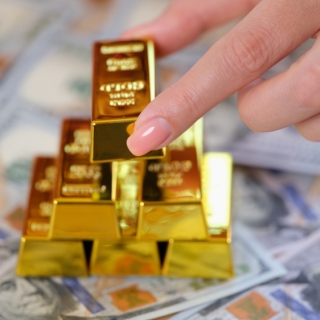
Gold prices consolidated at the start of the Asian session at around $4,228/oz as the market still digested the latest FOMC decision. The Fed cut interest rates, but at the same time signaled that it was unwilling to promise an aggressive easing path next year. For market participants, this was a unique combination: on the one hand, there was support from lower interest rates, on the other, a "strong warning" that the next cut would not be automatic and could be slower than expected.
In theory, a Fed rate cut eases short-term financial conditions: borrowing costs are cheaper, bond yields tend to fall, and the US dollar has the potential to gradually weaken. This is what typically fuels precious metals like gold, as well as oil and some agricultural commodities. Expectations that the dollar would weaken slightly made investors comfortable holding gold positions, as the opportunity cost of holding a non-yielding asset would be reduced.
However, this bullish push for gold was tempered by the Fed's "pause" signal. Comments from Fed officials—including the emphasis that they are not yet ready to endorse the scenario of two interest rate cuts next year—remind the market that the central bank remains highly data-dependent. This means that if inflation stalls or the labor market heats up again, the Fed could refrain from further cuts. This sentiment tends to limit gold's rally and lead to consolidation, rather than an immediate vertical rally.
For now, gold is in a "wait for confirmation" phase: market participants are eager to see whether subsequent inflation and employment data confirm the narrative of further easing or support a prolonged pause. As long as the dollar doesn't strengthen sharply and bond yields remain controlled, gold still has a fairly strong support floor. However, without a clearer signal that the Fed is ready to continue cutting interest rates in 2026, gold's upside in the very short term could remain limited, with movement dominated by consolidation patterns and short-term trading around current levels. (az)
Source: Newsmaker.id
Gold prices weakened slightly on Thursday (February 12th), as more solid US employment data reduced market confidence in an imminent Federal Reserve interest rate cut. The strong employment data promp...
Gold prices strengthened on Wednesday, supported by a weaker US dollar and falling US bond yields after the latest economic data reinforced the narrative that the Federal Reserve is likely to continue...
Gold experienced a slight correction in the European session on Tuesday (February 10th), but remained above $5,000/oz as the market held its breath ahead of a series of US data that could alter intere...
Gold held above the psychological $5,000 level at the start of the week, supported by a combination of factors that are "right" for the precious metal : physical demand from China, expectations of low...
Gold prices are still struggling to turn an intraday rebound into a sustained rally. After briefly falling to $4,654 (a four day low) and rebounding, prices were again rejected near $4,900. In the Eur...
Oil prices stabilized on Thursday (February 12th), as the market reassigned a risk premium to US-Iran tensions despite US inventory data showing swelling domestic supplies. This movement confirms one thing: geopolitical headlines are still more...
Gold prices weakened slightly on Thursday (February 12th), as more solid US employment data reduced market confidence in an imminent Federal Reserve interest rate cut. The strong employment data prompted market participants to shift expectations of...
The Hang Seng Index reversed its downward trend in Hong Kong on Thursday (February 12th), weakening by around 0.9% to around 27,000 after a strong session earlier. This decline halted the momentum of the short term rally, as investors began to...