


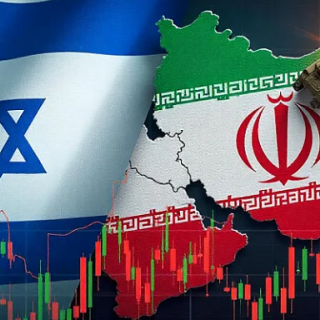
Tensions between Iran and Israel have escalated again after a series of military escalations involving airstrikes and missile retaliation. Iranian President Masoud Pezeshkian formally declared the country was in "total war" against Israel and its Western allies, including the United States and European countries, following a 12-day military operation targeting Iran's nuclear facilities.
This conflict has deep roots in geopolitical and ideological rivalries in the Middle East and has continued since a major escalation in mid-2025 that caused dozens of casualties and damage to critical infrastructure in both countries.
Iran Declares "Total War"
Iranian President Masoud Pezeshkian declared Iran now in "all-out war" with Israel, the United States, and Europe. He accused the enemies of seeking Iran's destruction and vowed a more decisive response if attacked again. Iran's economy and domestic situation were also cited as being linked to the pressures of war and sanctions.
Iran Threatening Statement
Iran's president warned that if Israel or the US attacks again, Iran will respond more decisively, asserting that the conflict will be far more difficult than the Iran-Iraq war of the 1980s.
Netanyahu to Meet Trump
Israeli Prime Minister Benjamin Netanyahu is scheduled to meet with US President Donald Trump at Mar-a-Lago to discuss the next phase of his peace plan and tensions with Iran/Hezbollah. Regional tensions are already high after a brief conflict over the summer.
Israeli Military Strengthens Defenses
Israel now has a new "Iron Beam" laser system ready for missile/drone defense, adding to its existing defense network, similar to Iron Dome.
Global Economic Impact
a. Global Energy and Oil Prices
Tensions have triggered a sharp rise in global crude oil prices due to concerns about supply disruptions from the Persian Gulf region, particularly if the strategic Strait of Hormuz, which carries about 25% of the world's oil, is disrupted.
Brent and WTI oil prices spiked significantly when news of the attacks broke, and analysts warned of potential increases above US$100–US$130 per barrel if the conflict escalates or if key energy supplies are disrupted.
b. Impact on World Trade
The conflict has raised ship insurance premiums and global logistics costs, particularly on trade routes from Asia to Europe. These rising logistics costs have increased the prices of goods and raw materials, putting pressure on the global supply chain.
Global trade growth is expected to slow due to demand uncertainty and supply disruptions.
english.aawsat.com
c. Inflation and Financial Markets
Geopolitical uncertainty is driving up commodity prices (oil, gold), potentially accelerating inflation in many countries.
Economics Observatory
Global stock markets have experienced volatility, with major indices falling sharply in response to news of the military escalation.
Economics Observatory
d. Technology Sector and Investment
In Israel, the technology sector, which contributes significantly to exports and GDP, is beginning to experience pressure. Reports indicate increasing demands for worker relocations and re-evaluation of operations by multinational companies due to long-term uncertainty.
Conclusion
The Israel-Iran conflict not only impacts regional security but has also given rise to:
Rising global energy prices
Pressure on financial and stock markets
Risk of higher inflation in many countries
Potential disruptions to global trade and supply chains
Defensive responses and investment relocations by companies in conflict zones. (Cay)
Source: Newsmaker.id
Renewed tensions between the United States and Russia have resurfaced following an incident involving an oil tanker, sparking market concerns about potential disruptions to global energy supplies. Was...
According to a report from the US Department of Labor (DOL) released on Thursday, the number of Americans filing new applications for unemployment insurance rose to 208,000 for the week ending January...
Geopolitical issues have heated up again after statements and political signals from the United States sparked speculation about a possible US takeover of Greenland. Although no concrete action has be...
Private employment rose less than economists expected in December, according to the ADP report. Private employment rose 41,000 (Estimate +50,000) in December, compared with a revised -29,000 in Novem...
Greenland is not only a strategic location, but also a world-class mineral repository. The island holds vast reserves of rare earth elements (REEs), essential for modern technology. These minerals are...
Oil prices stabilized on Thursday (February 12th), as the market reassigned a risk premium to US-Iran tensions despite US inventory data showing swelling domestic supplies. This movement confirms one thing: geopolitical headlines are still more...
Gold prices weakened slightly on Thursday (February 12th), as more solid US employment data reduced market confidence in an imminent Federal Reserve interest rate cut. The strong employment data prompted market participants to shift expectations of...
The Hang Seng Index reversed its downward trend in Hong Kong on Thursday (February 12th), weakening by around 0.9% to around 27,000 after a strong session earlier. This decline halted the momentum of the short term rally, as investors began to...