


Copper miner Freeport-McMoRan (NYSE:FCX) posted a drop in fourth-quarter production on Thursday and said that its costs would rise more than expected this year, sending the company's shares down more than 4%.
While the Phoenix-based company was able to post a better-than-expected quarterly profit, the results were fueled by higher copper prices during the quarter that offset a production drop in Indonesia.
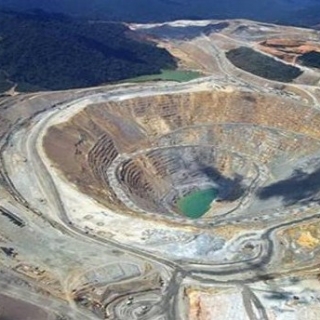
Freeport operates Indonesia's Grasberg, the world's second-largest copper mine, and had been building a smelter in the country as part of an operating agreement with Jakarta officials.
That smelter was damaged by a fire last year and the company has been working on repairs while also negotiating with the country on extending an export agreement to smelt the copper elsewhere temporarily.
"We have a solid recovery plan that we're executing on and that will enable us to deliver this project during 2025," CEO Kathleen Quirk told investors on a conference call.
Freeport boosted its budget for the year by roughly 5% to $4.4 billion and forecast an increase for next year as well, surprising investors. Quirk said the company is working to grow more efficient while also funding growth projects.
Shares were down about 4.3% in midday trading. Lower copper prices also pressured the stock.[MET/L]
The company remains bullish on long-term copper demand and expects the market to be in a deficit in coming years, Quirk said.
Freeport's average realized price for copper rose 9% to $4.15 per pound during the fourth quarter, but copper production fell about 5% to 1.04 billion pounds on a year-over-year basis. The company expects 4 billion pounds of copper sales for the year, marginally lower than 2024.
On an adjusted basis, Freeport earned 31 cents per share in the quarter, compared with analysts' average estimate of 20 cents per share, according to data compiled by LSEG.
Freeport sells all of the copper it produces in the United States to U.S. customers and thus does not expect to be affected by any potential tariffs on the metal, but does worry about broader impacts, Quirk said.
"We want to make sure that any tariffs in place don't impact overall global growth or create inflationary pressures in the U.S.," Quirk said.(Cay) Newsmaker23
Source: Investing.com
The upcoming Supreme Court ruling on the legality of President Donald Trump's massive tariffs, which rocked markets in April, is one of the next major tests for US stocks and bonds. Equity markets ha...
The US seized two Venezuela-linked oil tankers in the Atlantic Ocean on Wednesday, one of which was sailing under a Russian flag, as part of President Donald Trump's aggressive efforts to regulate oil...
France is working with partners on a plan on how to respond should the United States act on its threat to take over Greenland, a minister said on Wednesday, as Europe sought to address U.S. President ...
The world community must make clear that U.S. intervention in Venezuela is a violation of international law that makes the world less safe, the Office of the United Nations High Commissioner for Human...
US President Donald Trump threatened on Friday to come to the aid of protesters in Iran if security forces open fire on them, days after unrest that has killed several people and posed the biggest int...
Oil prices stabilized on Thursday (February 12th), as the market reassigned a risk premium to US-Iran tensions despite US inventory data showing swelling domestic supplies. This movement confirms one thing: geopolitical headlines are still more...
Gold prices weakened slightly on Thursday (February 12th), as more solid US employment data reduced market confidence in an imminent Federal Reserve interest rate cut. The strong employment data prompted market participants to shift expectations of...
The Hang Seng Index reversed its downward trend in Hong Kong on Thursday (February 12th), weakening by around 0.9% to around 27,000 after a strong session earlier. This decline halted the momentum of the short term rally, as investors began to...