


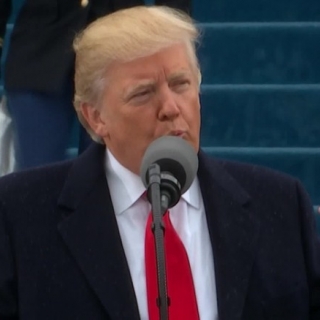
President Donald Trump said the US would send more Patriot air defense batteries to Ukraine, apparently in a shift in stance toward Russia after its efforts to negotiate a ceasefire failed.
"I haven't agreed on the numbers yet, but they'll be getting some," the president told reporters on Sunday on his way back to the White House. "We'll be sending Patriots, which they desperately need."
The announcement served as the backdrop for what Trump described as his "major statement" against Russia on Monday, as Moscow escalated its airstrikes against Ukraine. The US president has grown increasingly irritated by Russian President Vladimir Putin's intransigence in negotiations to end the war, now in its fourth year.
However, it was unclear whether the statement would include a promise of new military aid beyond the possible use of $3.8 billion left over from a package approved under the previous administration of President Joe Biden. A new sanctions bill against Russia has also been making its way through Congress.
Trump said the US was "not paying anything" for the potential supply of new batteries, which he said would be financed by the European Union. Last week, he said NATO would pay for "those weapons, 100%." A single Patriot battery system can cost more than $1 billion, with additional missiles costing about $4 million each.
The US wants to provide more weapons to Ukraine, but also wants other, non-US funding, according to a senior NATO official, who asked not to be named to speak more freely.
The North Atlantic Treaty Organization will play a coordinating role with each member state making the purchase, the person said. NATO Secretary-General Mark Rutte will meet with Trump on Monday during a two-day visit to Washington after they spoke by phone on Thursday. German Defense Minister Boris Pistorius is also scheduled to be in the US capital.
Berlin is negotiating with the Trump administration to provide two additional Patriot systems to Ukraine and cover the entire cost of the much-needed delivery.
The move signals a change of heart for Trump, who has delayed approving new arms deliveries to Ukraine since the start of his second term. Instead, he is trying to lure Putin to the negotiating table, arguing that he can stop the conflict, something Biden has failed to achieve.
Trump had previously refused to consider seeking additional funding, arguing that it would only embolden Putin and diminish the chances of ending the fighting.
The US president lashed out at his Russian counterpart last week after Putin repeatedly attacked Ukrainian cities with record numbers of drones and missiles and ignored calls for a ceasefire. Trump's latest plan to send more military aid to Ukraine comes after the Pentagon earlier this month unexpectedly halted several major arms shipments, citing low inventories. Ukrainian President Volodymyr Zelenskiy said Friday that the US had resumed those aid deliveries.
Trump added that he was very disappointed with Putin. "He talks nicely and then he bombs everyone at night," he said. He declined to say last week whether his announcement would include new sanctions. However, Trump said he hoped the Senate would pass a tougher Russia sanctions bill sponsored by a close ally, Senator Lindsey Graham of South Carolina.
The law would give Trump the authority to hit U.S. trading partners, including China and India, with 500% tariffs on their products if they purchase Russian oil, gas, or other products under sanctions, potentially wreaking havoc on the oil market. (alg)
Source: Reuters
Renewed tensions between the United States and Russia have resurfaced following an incident involving an oil tanker, sparking market concerns about potential disruptions to global energy supplies. Was...
According to a report from the US Department of Labor (DOL) released on Thursday, the number of Americans filing new applications for unemployment insurance rose to 208,000 for the week ending January...
Geopolitical issues have heated up again after statements and political signals from the United States sparked speculation about a possible US takeover of Greenland. Although no concrete action has be...
Private employment rose less than economists expected in December, according to the ADP report. Private employment rose 41,000 (Estimate +50,000) in December, compared with a revised -29,000 in Novem...
Greenland is not only a strategic location, but also a world-class mineral repository. The island holds vast reserves of rare earth elements (REEs), essential for modern technology. These minerals are...
Oil prices stabilized on Thursday (February 12th), as the market reassigned a risk premium to US-Iran tensions despite US inventory data showing swelling domestic supplies. This movement confirms one thing: geopolitical headlines are still more...
Gold prices weakened slightly on Thursday (February 12th), as more solid US employment data reduced market confidence in an imminent Federal Reserve interest rate cut. The strong employment data prompted market participants to shift expectations of...
The Hang Seng Index reversed its downward trend in Hong Kong on Thursday (February 12th), weakening by around 0.9% to around 27,000 after a strong session earlier. This decline halted the momentum of the short term rally, as investors began to...