


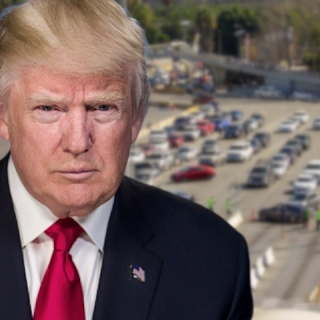
President Donald Trump announced 25% tariffs on goods from Japan and South Korea starting Aug. 1, as he moves to impose unilateral tariffs on countries that have not reached trade deals with his administration.
The two Asian countries were the first announcements in what the president promised would be a series of trade demands and deals announced Monday. Trump's hasty efforts to overhaul U.S. trade policy in his second term have been a source of persistent uncertainty for markets, central bankers and executives trying to gauge the impact on production, inventories, hiring, inflation and consumer demand — routine planning that is difficult enough without the costs of tariffs that go into effect one day and are gone the next.
Ultimately, the Japanese and South Korean tariffs, shared on his Truth Social platform, were largely in line with what he had said the countries would face. After a 90-day suspension of his so-called reciprocal tariffs, which initially hit Japan at 24% and South Korea at 25%, Trump lowered them to 10% to allow time for negotiations.
Trump warned the countries against retaliating in his letter, saying any action would be met with a U.S. response.
"If for any reason you decide to increase the Tariffs, then, whatever amount you choose to increase them will be added to the 25% that we are imposing," Trump said. (alg)
Source: Bloomberg
Renewed tensions between the United States and Russia have resurfaced following an incident involving an oil tanker, sparking market concerns about potential disruptions to global energy supplies. Was...
According to a report from the US Department of Labor (DOL) released on Thursday, the number of Americans filing new applications for unemployment insurance rose to 208,000 for the week ending January...
Geopolitical issues have heated up again after statements and political signals from the United States sparked speculation about a possible US takeover of Greenland. Although no concrete action has be...
Private employment rose less than economists expected in December, according to the ADP report. Private employment rose 41,000 (Estimate +50,000) in December, compared with a revised -29,000 in Novem...
Greenland is not only a strategic location, but also a world-class mineral repository. The island holds vast reserves of rare earth elements (REEs), essential for modern technology. These minerals are...
Oil prices stabilized on Thursday (February 12th), as the market reassigned a risk premium to US-Iran tensions despite US inventory data showing swelling domestic supplies. This movement confirms one thing: geopolitical headlines are still more...
Gold prices weakened slightly on Thursday (February 12th), as more solid US employment data reduced market confidence in an imminent Federal Reserve interest rate cut. The strong employment data prompted market participants to shift expectations of...
The Hang Seng Index reversed its downward trend in Hong Kong on Thursday (February 12th), weakening by around 0.9% to around 27,000 after a strong session earlier. This decline halted the momentum of the short term rally, as investors began to...