


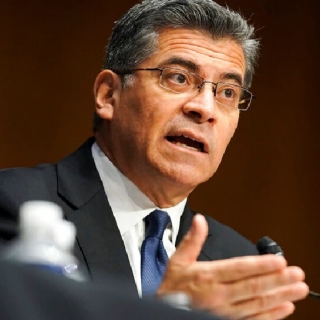
Treasury Secretary Scott Bessent said Beijing has a choice to be a reliable partner with the rest of the world or not, reiterating that China needs to shift to a more consumption-oriented economy to help ease global imbalances.
"They want to be a reliable partner with the rest of the world, or they don't," Bessent said via video link to the American Swiss Foundation Leadership Summit in Zurich on Tuesday.
"They're in the middle of a big real estate — I'm not going to be fearmongering and say crisis — but a big real estate development and the way for them to stabilize their economy is not to export deflation and excess product to the rest of the world," he said. "The way to do that is through a level of fiscal stimulus and stop the overproduction, and get on a solid footing for the consumer economy." Bessent did not comment on a possible phone call between President Donald Trump and President Xi Jinping, which White House officials have said is being prepared.
The world's two largest economies have blamed each other for violating the terms of a deal they announced three weeks ago in Geneva that suspended retaliatory tariffs until mid-August to allow time for talks to get underway.
Read more: Swiss Watch Exports Surge in April Ahead of U.S. Tariff Threats
Trump "wants the U.S. to be more than just a manufacturing economy," Bessent said. The U.S. is seeking to remain a destination for foreign and domestic investment with tax cuts, trade rebalancing and deregulation, adding that precision manufacturing is one of the Trump administration's goals, he said.
Bessent also said he sees untapped potential for Switzerland and the U.S. to collaborate more on artificial intelligence and financial services. He said U.S. officials will continue to work with their Swiss counterparts to simplify global financial regulation, modernize capital requirements and continue to engage with each other on key macroeconomic issues.
July 9 extension
Switzerland is one of several countries trying to negotiate a bilateral trade deal with the U.S. to avoid Trump's retaliatory 10% tariff hike to the higher level set on April 2 — 31% in Switzerland's case — when a 90-day suspension ends on July 9.
Speaking earlier at the same forum, Switzerland's top trade official Helene Budliger said Switzerland had been assured by the U.S. that tariffs would remain at the current 10% level instead of rising to 31%, even if negotiations were extended beyond July 9.
Read more: U.S. Tariff Countdown Heats Up Race to Turn Talks Into Deal
Switzerland has been told "several times," by both Minister Bessent and U.S. Trade Representative Jamieson Greer, that the time would be extended, "as long as there is a perception that we are negotiating in a bona fide way — which is the only way Switzerland negotiates," she said in a conversation with Bloomberg TV's Annmarie Hordern.
Swiss President Karin Keller-Sutter has previously said it was "clear" the deadline would be pushed back as talks continue, but there has been no confirmation from the U.S. on this. The Swiss government last week signed a negotiating mandate outlining a compromise around tariff cuts for agricultural goods that the country does not produce significantly.
Budliger added that the two sides have started "quite detailed conversations about what a British-style deal between the U.S. and Switzerland might look like." There are "relatively concrete ideas" on the table, he said.
He also said that Switzerland suffers from a global steel glut along with the U.S. (alg)
Source: Bloomberg
Renewed tensions between the United States and Russia have resurfaced following an incident involving an oil tanker, sparking market concerns about potential disruptions to global energy supplies. Was...
According to a report from the US Department of Labor (DOL) released on Thursday, the number of Americans filing new applications for unemployment insurance rose to 208,000 for the week ending January...
Geopolitical issues have heated up again after statements and political signals from the United States sparked speculation about a possible US takeover of Greenland. Although no concrete action has be...
Private employment rose less than economists expected in December, according to the ADP report. Private employment rose 41,000 (Estimate +50,000) in December, compared with a revised -29,000 in Novem...
Greenland is not only a strategic location, but also a world-class mineral repository. The island holds vast reserves of rare earth elements (REEs), essential for modern technology. These minerals are...
Oil prices stabilized on Thursday (February 12th), as the market reassigned a risk premium to US-Iran tensions despite US inventory data showing swelling domestic supplies. This movement confirms one thing: geopolitical headlines are still more...
Gold prices weakened slightly on Thursday (February 12th), as more solid US employment data reduced market confidence in an imminent Federal Reserve interest rate cut. The strong employment data prompted market participants to shift expectations of...
The Hang Seng Index reversed its downward trend in Hong Kong on Thursday (February 12th), weakening by around 0.9% to around 27,000 after a strong session earlier. This decline halted the momentum of the short term rally, as investors began to...