


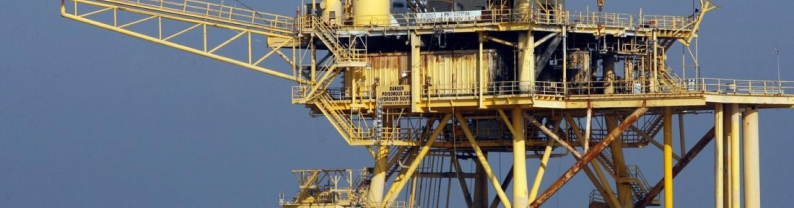
Oil prices stabilized on Thursday (February 12th), as the market reassigned a risk premium to US-Iran tensions despite US inventory data showing swelling domestic supplies. This movement confirms one thing: geopolitical headlines are still more "noise" than signals of a short-term surplus. As of 3:50 PM WIB, Brent was at $69.60/barrel (+0.29%) and WTI was at $64.83/barrel (+0.31%). The gains were moderate, but enough to keep prices near the psychological $70 level for Brent. From a geopolitical perspective, market focus is on the potential for escalation in the Middle East. Recent reports...
Oil was little changed after advancing last week, as traders weighed moves to crack down on Russian flows against forecasts for a surplus later in the year. Brent traded near $67 a barrel, after adding 2.3% last week, while West Texas Intermediate was below $63. US President Donald Trump reiterated calls that Europe must stop buying oil from Russia, after earlier saying that he's prepared to move ahead with "major" sanctions on crude supply from the OPEC+ member if NATO countries do the same. While most European countries have cut back or stopped purchasing Russian...
EUR/USD remains steady during the North American session on Friday, poised to end the week with modest gains of over 0.18% as traders brace for the next week's monetary policy decision by the Federal Reserve (Fed). At the time of writing, the pair trades at 1.1736, virtually unchanged. Euro ends week modestly higher as soft US data cements rate cut bets, narrowing policy divergence with ECB US economic data continued to drive price action on Friday as Consumer Sentiment in September deteriorated, while inflation expectations remain above the Fed's 2% goal. This, and the payrolls revision...
Oil prices rose on Friday after a Ukrainian drone attack suspended loadings from the largest port in western Russia, but gains were capped by concerns about U.S. demand. Brent crude futures settled at $66.99 a barrel, up 62 cents, or 0.93%. U.S. West Texas Intermediate crude finished at $62.69, a gain of 32 cents, or 0.51%. Early in the day, crude reacted to the drone attack on Russia's northwestern port of Primorsk, which led to a suspension of oil loading operations overnight, an official from Ukraine's SBU security service said. "Those attacks on Russian energy infrastructure have room...
Gold prices rise over 0.44% during Friday's North American session as weaker than expected jobs market data increased the chances that the Federal Reserve (Fed) will cut interest rates next week. At the time of writing, XAU/USD trades at $3,649 after hitting a daily low of $3,630. Bullion rises on weak Consumer Sentiment, Jobless Claims boost Fed easing betsThe week ended with a softer than expected University of Michigan (UoM) Consumer Sentiment for September, while 5-Year inflation expectations surged. Friday's data along with Tuesday's -911K payroll revision, and an increase in people...
The U.S. dollar rose on Friday, a day after falling on a surge in U.S. jobless claims and modest inflation, as investors expected the Federal Reserve to cut interest rates next week after a roughly nine-month hiatus. The greenback rose 0.3% to 147.66 yen, on track for its largest percentage gain in 10 days, after rising for three straight weeks. The dollar firmed earlier on Friday after a U.S.-Japanese joint statement affirmed exchange rates should be "market determined" and that excess volatility and disorderly moves in exchange rates were undesirable. The dollar index was up 0.1% at...
Oil prices continued their rally amid growing concerns that Ukrainian drone attacks could disrupt oil flows through Russia's two most important crude export hubs on the Baltic coast. Brent crude rose above $67 per barrel, after falling 1.7% on Thursday. The attacks have halted operations at Primorsk, the region's main oil loading port, and three pumping stations that deliver crude to the Ust-Luga hub, a source familiar with the situation said. This increased risk premium offsets the International Energy Agency's (IEA) projection for a record-breaking oil supply surplus next year. The IEA's...
The EUR/USD pair lost ground early in the European session and retreated to levels near 1.1700, amid volatile and volatile trading on Friday. Comments from ECB official Olly Rehn, who warned of downside risks to inflation, failed to support the euro (EUR), which remained weighed down by a stronger US dollar. On Thursday, the ECB maintained its Deposit Facility rate at 2%, and President Christine Lagarde said that "risks to economic growth have become more balanced." These comments dampened market expectations of further rate cuts in the near future and provided a significant boost to the...
Oil prices held steady on Friday (September 12th) as concerns about oversupply and weakening U.S. demand offset the risk of supply disruptions stemming from conflicts in the Middle East and Ukraine. Brent crude futures rose 11 cents, or 0.2%, to $66.49 a barrel at 08:54 GMT, and U.S. West Texas Intermediate crude rose 4 cents to $62.41. Brent and WTI benchmarks fell 1.7% and 2%, respectively, on Thursday. The International Energy Agency's monthly report on Thursday stated that global oil supply will rise faster than expected this year due to planned production increases by the OPEC+ group,...
 Gold rises in the early Asian trade. There's a broad commodities uptrend, driven by macro uncertainty, a weaker dollar, and persistent demand for "hard" assets, says Fawad Razaqzada, market analyst...
 Oil extended declines after OPEC+ agreed to a bigger-than-expected production increase next month, raising concerns about oversupply just as US tariffs fan fears about the demand outlook.
Brent...
Oil extended declines after OPEC+ agreed to a bigger-than-expected production increase next month, raising concerns about oversupply just as US tariffs fan fears about the demand outlook.
Brent...
 The Japanese Yen (JPY) weakened against its US counterpart and reversed part of Friday's recovery from the lowest level since July 23 following Bank of Japan (BOJ) Governor Kazuo Ueda's remarks....