


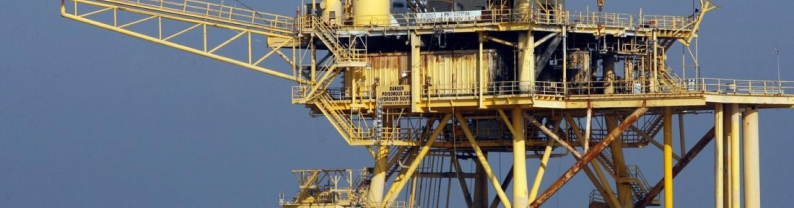
Oil prices stabilized on Thursday (February 12th), as the market reassigned a risk premium to US-Iran tensions despite US inventory data showing swelling domestic supplies. This movement confirms one thing: geopolitical headlines are still more "noise" than signals of a short-term surplus. As of 3:50 PM WIB, Brent was at $69.60/barrel (+0.29%) and WTI was at $64.83/barrel (+0.31%). The gains were moderate, but enough to keep prices near the psychological $70 level for Brent. From a geopolitical perspective, market focus is on the potential for escalation in the Middle East. Recent reports...
Gold traded higher mid-afternoon on Friday as treasury yields fell after the United States added more new jobs than expected last month. Gold for February delivery was last seen up US$10.40 to US$2,658.80 per ounce. The U.S. Bureau of Labor Statistics reported the country added 227,000 new jobs last month, above expectations for a rise of 214,000 according to Marketwatch and well higher than the unusually low rise of 36,000 jobs a month earlier. The unemployment rate rose to 4.2% from 4.1% in October. The data shows the the U.S. labor market remains solid, easing pressure on the Federal...
Gold prices after the latest U.S. data showed the labor market bounced back in November. Futures are flat at $2,649 a troy ounce, after rising 0.5% earlier in the session. Fed officials are still expected to cut interest rates by 25 basis points at their next meeting, but the job data could make it easier for them to leave rates on hold if inflation data comes in warmer than anticipated next week. Friday's nonfarm payrolls report "matches the message from some of the alternative indicators suggesting that conditions in the labour market are stabilizing at a healthy level," Capital...
Oil prices fell on Friday, with weak demand in focus after the OPEC+ group delayed a planned increase in supplies and extended deep production cuts until the end of 2026. Brent crude futures were down 20 cents, or 0.3%, at $71.89 a barrel by 0910 GMT. U.S. West Texas Intermediate crude futures were down 14 cents, or 0.2%, at $68.16 a barrel. For the week, Brent was on track to fall 1.5%, while WTI was on track to gain 0.2%. The Organization of the Petroleum Exporting Countries and its allies on Thursday delayed the start of oil output increases by three months to April and extended a full...
The current price action is likely part of a consolidation phase, most likely between 0.6435 and 0.6475. In the longer term, the risks to the AUD have shifted to the downside; the 0.6380 level is expected to provide significant support, UOB Group FX analysts Quek Ser Leang and Lee Sue Ann note. After the AUD fell to a low of 0.6399 two days ago, we highlighted yesterday that ‘AUD weakness could retest the 0.6400 level before stabilisation is likely.' This should remain below 0.6460, with minor resistance at 0.6445. Our view remains unchanged, as the AUD traded within a 0.6422/0.6455 range,...
Gold (XAU/USD) prices struggled to capitalize on their decent intraday uptick from one-and-a-half-week lows touched early Friday (6/12), albeit managed to hold modest gains through the first half of the European session. The US Treasury bond yields remained depressed amid bets that the Federal Reserve (Fed) will lower borrowing costs in December. This, in turn, pushed the US Dollar (USD) near multi-week lows and acted as a tailwind for the non-yielding yellow metal. Additionally, a slight deterioration in the global risk sentiment, geopolitical tensions, and trade war fears turned out to be...
Silver prices held steady above $31 an ounce on Friday, near a one-month high as traders bet the U.S. Federal Reserve will cut interest rates again this month. The probability of a 25 basis point rate cut in December jumped to about 72%, up from 66% last week. The expectations grew even after Fed Chair Jerome Powell signaled that the central bank was in no rush to cut rates, citing strong growth, a robust labor market and persistent inflation pressures. Additionally, speculation is growing that China could announce more stimulus measures during a key political meeting this month, which...
Gold (XAU/USD) prices recovered from hitting a one-and-a-half-week low during the Asian session on Friday and climbed to an intraday high, above $2,640 levels in the last hour. However, any meaningful appreciating move seems elusive ahead of the US Nonfarm Payrolls (NFP) report, which will be closely watched for the outlook on US interest rates and provide a fresh impetus to the non-yielding bullion. Despite this, the commodity remains on track for a second straight weekly decline. The closely watched US jobs data will guide the Federal Reserve (Fed) policymakers in their next monetary...
US West Texas Intermediate (WTI) crude oil prices remained under selling pressure for the third straight day on Friday and traded near the lower end of the weekly range, around the $67.80 region during the Asian session. The Organization of the Petroleum Exporting Countries and its allies, known as OPEC+, on Thursday delayed a planned supply increase by three months to April and extended a full halt to cuts by one year to the end of 2026. The announcements indicated that the cartel is concerned about a potential supply glut and slowdown in global demand, especially in China – the world's...
 Gold rises in the early Asian trade. There's a broad commodities uptrend, driven by macro uncertainty, a weaker dollar, and persistent demand for "hard" assets, says Fawad Razaqzada, market analyst...
 Oil extended declines after OPEC+ agreed to a bigger-than-expected production increase next month, raising concerns about oversupply just as US tariffs fan fears about the demand outlook.
Brent...
Oil extended declines after OPEC+ agreed to a bigger-than-expected production increase next month, raising concerns about oversupply just as US tariffs fan fears about the demand outlook.
Brent...
 The Japanese Yen (JPY) weakened against its US counterpart and reversed part of Friday's recovery from the lowest level since July 23 following Bank of Japan (BOJ) Governor Kazuo Ueda's remarks....