


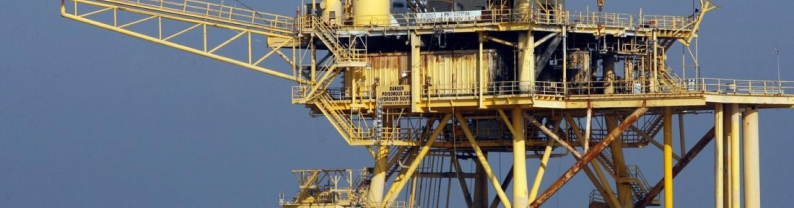
Oil prices stabilized on Thursday (February 12th), as the market reassigned a risk premium to US-Iran tensions despite US inventory data showing swelling domestic supplies. This movement confirms one thing: geopolitical headlines are still more "noise" than signals of a short-term surplus. As of 3:50 PM WIB, Brent was at $69.60/barrel (+0.29%) and WTI was at $64.83/barrel (+0.31%). The gains were moderate, but enough to keep prices near the psychological $70 level for Brent. From a geopolitical perspective, market focus is on the potential for escalation in the Middle East. Recent reports...
West Texas Intermediate (WTI) oil prices extended losses for the third straight session, trading near $77.20 a barrel during the Asian session on Monday (1/20). Oil traders are on alert ahead of President-elect Donald Trump's inauguration later in the day. US markets will remain closed on Monday in observance of Martin Luther King Jr. Day. Concerns are mounting over Trump's proposed policies, including potential tariffs, tax cuts and deportations of undocumented immigrants. Analysts note that the future direction of US Federal Reserve (Fed) interest rates will largely depend on how broadly...
The dollar weakened against major currencies on Monday as traders braced for a series of policy announcements following Donald Trump's inauguration. Markets are focused on his plans to raise tariffs, tighten immigration, lower taxes and increase deregulation, which are expected to have an impact on inflation. However, trading volumes are expected to remain low throughout the session, as U.S. markets are closed for the Martin Luther King Jr. holiday. Last week, the dollar index snapped a six-week winning streak after a surprise slowdown in U.S. core inflation, coupled with...
EUR/USD recovered some of its losses from the previous session, trading near 1.0280 during Asian hours. However, the pair's gains may remain capped as the US Dollar (USD) could strengthen amid market caution ahead of President-elect Donald Trump's inauguration later today. US markets will remain closed on Monday for the Martin Luther King Jr. holiday. Concerns over Trump's policy promises—such as imposing tariffs, extending tax cuts, and deporting illegal immigrants—have fueled a rise in US Treasury yields and supported the US Dollar ahead of his inauguration. Analysts suggest that the...
Gold (XAU/USD) prices extended its decline to near $2,695 during the early Asian session on Monday (1/20). A stronger US dollar (USD) ahead of President-elect Donald Trump's inauguration exerted selling pressure on the yellow metal. Analysts expect gold prices to face volatility ahead of Trump's inauguration. Traders will be watching developments surrounding potential trade policies. Any aggressive comments from Trump on using trade tariffs to support the US manufacturing sector could lift the greenback and weigh on the USD-denominated commodity. However, last week's weaker-than-expected...
Oil prices rose in early Asian trade on the prospect of fresh supply disruptions, ANZ research analysts said in a commentary. New US sanctions on Russia's oil industry prompted many buyers to look for alternatives, analysts said. However, the recent gains may be short-lived as Trump has vowed to end the Russia-Ukraine war soon, analysts added. In the short term, the market is also eyeing cold weather in the Permian Basin, a major shale oil producer in Texas, they said. Front-month WTI crude rose 0.5% to $78.35/bbl; front-month Brent crude rose 0.5% to $81.17/bbl. Source: Dow Jones Newswires
Gold edged down after three days of gains mid-afternoon Friday as the dollar rebounded from two days of losses that followed on soft U.S. economic data that spurred hopes for faster interest-rate cuts from the Federal Reserve. Gold for February delivery was last seen down US$0.90 to US$2,750.00 per ounce. U.S. economic data this week showed core inflation and retail sales were softer than expected in December, reviving hopes the Federal Reserve will speed rate cuts, though the central bank is widely expected to leave rates unchanged at the Jan.29 end to the next meeting of its policy...
WTI crude oil futures declined 1% to settle at $77.89 per barrel and Brent crude oil futures fell 0.6% to settle at $80.79 per barrel on Friday, driven by expectations of a ceasefire agreement in Gaza, which could reduce attacks on ships by Yemen's Houthi militia. Despite this drop, oil prices marked a fourth consecutive week of gains, rising more than 1%, primarily fueled by concerns over new U.S. sanctions targeting Russian oil producers and tankers, raising fears of tighter global oil supplies. Analysts highlighted that these concerns, coupled with expectations of U.S. interest rate...
WTI crude oil futures fell to $78 per barrel and Brent crude oil futures fell below $81 per barrel on Friday but remained on track for a fourth consecutive week of gains, driven by concerns over US sanctions on Russian energy. Last week, the Biden administration imposed broader sanctions targeting Russian oil producers and tankers, raising fears of supply disruptions. Investors are also watching for potential impacts from President-elect Donald Trump's return to office, as his Treasury pick has signaled tougher sanctions on Russia. Meanwhile, expectations of a ceasefire deal in Gaza, which...
 Gold rises in the early Asian trade. There's a broad commodities uptrend, driven by macro uncertainty, a weaker dollar, and persistent demand for "hard" assets, says Fawad Razaqzada, market analyst...
 Oil extended declines after OPEC+ agreed to a bigger-than-expected production increase next month, raising concerns about oversupply just as US tariffs fan fears about the demand outlook.
Brent...
Oil extended declines after OPEC+ agreed to a bigger-than-expected production increase next month, raising concerns about oversupply just as US tariffs fan fears about the demand outlook.
Brent...
 The Japanese Yen (JPY) weakened against its US counterpart and reversed part of Friday's recovery from the lowest level since July 23 following Bank of Japan (BOJ) Governor Kazuo Ueda's remarks....