


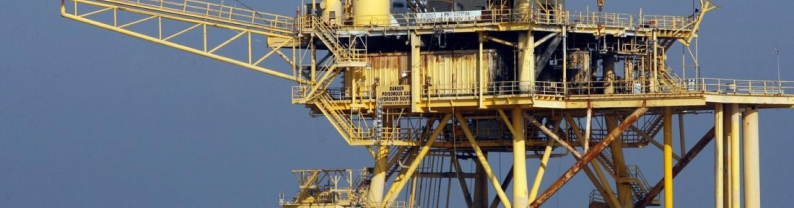
Oil prices stabilized on Thursday (February 12th), as the market reassigned a risk premium to US-Iran tensions despite US inventory data showing swelling domestic supplies. This movement confirms one thing: geopolitical headlines are still more "noise" than signals of a short-term surplus. As of 3:50 PM WIB, Brent was at $69.60/barrel (+0.29%) and WTI was at $64.83/barrel (+0.31%). The gains were moderate, but enough to keep prices near the psychological $70 level for Brent. From a geopolitical perspective, market focus is on the potential for escalation in the Middle East. Recent reports...
Silver price (XAG/USD) has retraced its gains, trading around $30.30 per troy ounce during the Asian session on Monday. The non-interest-bearing metal faces challenges with the upcoming US Federal Reserve (Fed) policy decision this week. There is widespread anticipation that the Fed will maintain current interest rates, marking the first pause in the rate-cutting cycle that began in September. The uncertainty surrounding US President Donald Trump's trade and immigration policies could prompt the Federal Reserve to remain cautious about cutting rates this year. Trump's policies are perceived...
Oil fluctuated as investors reacted to rapid-fire moves on trade by the Trump administration, with the US threatening, and then holding off, a broad package of curbs against Colombia. Brent dropped below $78 a barrel, but pared a deeper intraday loss, while West Texas Intermediate was near $74. Following a dispute over migrants, President Donald Trump first ordered tariffs against Bogota, before the White House paused the actions as Colombia agreed to all Trump's conditions. The US dollar, meanwhile, pushed higher, weighing on most commodities. Crude remains higher this...
The Australian Dollar (AUD) ends its three-day winning streak against the US Dollar (USD), with the AUD/USD pair trading subdued following the release of mixed Chinese Purchasing Managers' Index (PMI) data on Monday. As close trade partners, China's economic performance significantly impacts the Australian economy. China's NBS Manufacturing PMI fell to 49.1 in January, down from 50.1 in December, missing the market expectation of 50.1. Similarly, the NBS Non-Manufacturing PMI declined to 50.2 in January compared to December's 52.2 reading. The Australian Dollar also failed to gain support...
Gold edges lower in early Asian trade, as investors await the Federal Reserve's rate decision this week, when interest rates are widely expected to be kept on hold. "A change in the tone of the Federal Reserve could affect the direction of the market," says Harbourfront Wealth - Sonora Wealth Group in a note. However, the global economic outlook under the Trump administration could continue supporting gold prices, says its investment advisor Miro Svoboda. Gold typically has an inverse relationship with interest rates, with high rates damping demand for the non-interest-bearing metal. Spot...
Oil fell as President Donald Trump imposed his first set of sanctions and tariffs in a move that highlighted risks to the global economy and to trade. Brent dropped toward $78 a barrel after logging its first weekly decline this year, with West Texas Intermediate above $74. The US imposed tariffs and sanctions on Colombia after it didn't allow military planes carrying deported migrants to land. The administration has also threatened actions on flows of goods from a host of other nations, including Canada and China. Crude remains higher this year, after an earlier round of...
EUR/USD rallies to near the psychological resistance of 1.0500 on Friday as the Hamburg Commercial Bank (HCOB) reported that the Eurozone preliminary Composite Purchasing Managers' Index (PMI) grew in January after shrinking in the last two months. Flash HCOB PMI report, compiled by S&P Global, showed that overall business activity expanded. The Composite PMI rose to 50.2 from 49.6 in November. Economists expected the PMI to continue to decline but at a slower pace to 49.7.The kick-off to the new year is mildly encouraging. The private sector is back in cautious growth mode after two...
Oil prices settled slightly higher on Friday but posted a weekly decline, ending four straight weeks of gains, after U.S. President Donald Trump announced sweeping plans to boost domestic production while demanding that OPEC move to lower crude prices. Brent crude futures settled up 21 cents, or 0.27%, to $78.50 a barrel. U.S. West Texas Intermediate crude (WTI) settled up 4 cents, or 0.05%, to $74.66. Brent has lost 2.8% this week while WTI was down 4.1%. Trump on Friday reiterated his call for the Organization of the Petroleum Exporting Countries to cut oil prices to hurt oil-rich...
AUD/USD attracted buyers on Friday after President Trump suggested a trade agreement with China remains within reach, reinforcing a risk-on mood. The pair advances to 0.6315, heading for its first weekly gain in three weeks. Meanwhile, renewed speculation regarding additional Federal Reserve (Fed) rate cuts in 2025 continues to undermine the US Dollar, providing an added lift to the Aussie.The Greenback falls to a one-month trough as markets price in the prospect of further Fed easing by year-end. In addition, President Trump's statements about immediate interest rate cuts contribute to the...
 Gold rises in the early Asian trade. There's a broad commodities uptrend, driven by macro uncertainty, a weaker dollar, and persistent demand for "hard" assets, says Fawad Razaqzada, market analyst...
 Oil extended declines after OPEC+ agreed to a bigger-than-expected production increase next month, raising concerns about oversupply just as US tariffs fan fears about the demand outlook.
Brent...
Oil extended declines after OPEC+ agreed to a bigger-than-expected production increase next month, raising concerns about oversupply just as US tariffs fan fears about the demand outlook.
Brent...
 The Japanese Yen (JPY) weakened against its US counterpart and reversed part of Friday's recovery from the lowest level since July 23 following Bank of Japan (BOJ) Governor Kazuo Ueda's remarks....