


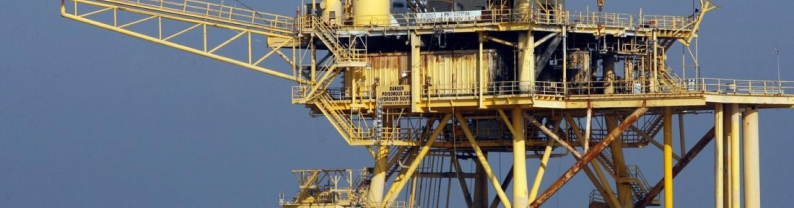
Oil prices stabilized on Thursday (February 12th), as the market reassigned a risk premium to US-Iran tensions despite US inventory data showing swelling domestic supplies. This movement confirms one thing: geopolitical headlines are still more "noise" than signals of a short-term surplus. As of 3:50 PM WIB, Brent was at $69.60/barrel (+0.29%) and WTI was at $64.83/barrel (+0.31%). The gains were moderate, but enough to keep prices near the psychological $70 level for Brent. From a geopolitical perspective, market focus is on the potential for escalation in the Middle East. Recent reports...
The EUR/USD pair recovers a few pips from the vicinity of the mix-1.1300s, or the Asian session low, though it lacks any follow-through amid a modest US Dollar (USD) uptick. Spot prices currently trade around the 1.1375 area and remain confined in a familiar range held over the past week or so. The USD attracts buyers for the second straight day amid some repositioning trade ahead of this week's key US macro data. The shared currency, on the other hand, is undermined by dovish signals from the European Central Bank (ECB), which turns out to be another factor acting as a headwind for the...
The USD/CHF pair posts modest losses around 0.6410 during the early European session on Wednesday. The uncertainty surrounding trade policy continues to boost the safe-haven flows, supporting the Swiss Franc (CHF). The Swiss KOF Leading Indicator for April is due later on Wednesday. China exempted some US imports from its 125% tariffs last week, although China quickly knocked down US President Donald Trump's assertion that trade talks between the two countries were underway. On Monday, US Treasury Secretary Scott Bessent said that key trade partners have made "very good" offers to avoid US...
Gold price (XAU/USD) trades with a negative bias for the second consecutive day, though it lacks bearish conviction and holds above the $3,300 mark during the Asian session on Wednesday. The global equity markets continue to rise amid signs of easing US-China trade tensions and US President Donald Trump's decision to give flexibility on tariffs to US carmakers. This, along with a modest US Dollar (USD) uptick, is seen as a key factor undermining demand for the safe-haven precious metal. Meanwhile, Trump's rapidly shifting stance on trade policies has been received poorly by investors and...
The Japanese Yen (JPY) trades with a negative bias against its American counterpart for the second straight day on Wednesday as a positive risk tone seems to undermine demand for traditional safe-haven assets. US President Donald Trump signed an order to ease the impact of new tariffs on the auto industry, which, along with signs of further trade deals, boosts investors' confidence. Apart from this, disappointing domestic data turns out to be another factor weighing on the JPY. Any meaningful JPY depreciation, however, seems elusive as traders might opt to move to the sidelines ahead of the...
The U.S. dollar was steady on Wednesday but poised for its weakest monthly performance since November 2022 as erratic U.S. trade policies under President Donald Trump left the greenback vulnerable while boosting the euro, yen and Swiss franc. The White House has retreated several times on the sweeping tariffs Trump unveiled in early April that led to a global stock market meltdown and prompted investors to flee the normally safe-haven U.S. dollar and Treasury debt. Trump signed a pair of orders on Tuesday to soften the blow of his auto tariffs with a mix of credits and relief from other...
Oil prices tread water in Asian trade on Wednesday as uncertainty over U.S. trade policy and global economic growth kept traders negative on the outlook for demand, with weak Chinese manufacturing data adding to the mix. Prices were headed for a steep monthly loss in April as fears of slowing demand and increased supplies battered oil markets through the month. Prices had also briefly hit a four-year low earlier in April. Brent oil futures for June fell 0.1% to $64.18 a barrel, while West Texas Intermediate crude futures steadied at $60.30 a barrel by 22:01 ET (02:01 GMT). Brent oil...
The Gold price (XAU/USD) extends the decline to near $3,315 during the early Asian session on Wednesday. The precious metal edges lower amid easing trade tensions and better risk sentiment in global markets. Traders will keep an eye on the US ADP Employment Change, Personal Consumption ExpendituresPrice Index (PCE) and the flash Q1 Gross Domestic Product (GDP) reports, which are due later on Wednesday. US President Donald Trump plans to soften the impact of his automotive tariffs by preventing duties on foreign-made cars from stacking with other tariffs and easing levies on foreign parts...
The USD/CHF pair traded around 0.8900 during the North American session on Tuesday (4/29), benefiting from a broader US Dollar (USD) strength. US Commerce Secretary Howard Lutnick revealed a White House plan aimed at reducing tariffs on US automakers, supporting a mild recovery in global risk appetite. Meanwhile, the US Dollar Index (DXY) moved higher towards 99.30, supported by expectations that weaker labor market data and weak consumer confidence could steer the Federal Reserve (Fed) towards a more cautious policy stance. However, uncertainty remains around the US-China trade...
 Gold rises in the early Asian trade. There's a broad commodities uptrend, driven by macro uncertainty, a weaker dollar, and persistent demand for "hard" assets, says Fawad Razaqzada, market analyst...
 Oil extended declines after OPEC+ agreed to a bigger-than-expected production increase next month, raising concerns about oversupply just as US tariffs fan fears about the demand outlook.
Brent...
Oil extended declines after OPEC+ agreed to a bigger-than-expected production increase next month, raising concerns about oversupply just as US tariffs fan fears about the demand outlook.
Brent...
 The Japanese Yen (JPY) weakened against its US counterpart and reversed part of Friday's recovery from the lowest level since July 23 following Bank of Japan (BOJ) Governor Kazuo Ueda's remarks....