


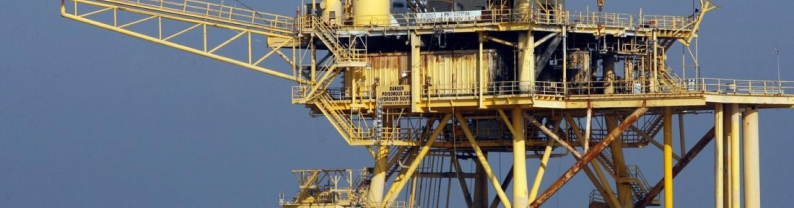
Oil prices stabilized on Thursday (February 12th), as the market reassigned a risk premium to US-Iran tensions despite US inventory data showing swelling domestic supplies. This movement confirms one thing: geopolitical headlines are still more "noise" than signals of a short-term surplus. As of 3:50 PM WIB, Brent was at $69.60/barrel (+0.29%) and WTI was at $64.83/barrel (+0.31%). The gains were moderate, but enough to keep prices near the psychological $70 level for Brent. From a geopolitical perspective, market focus is on the potential for escalation in the Middle East. Recent reports...
The US dollar index edged higher toward 99 on Tuesday, recovering some ground after losses in the previous session as market sentiment steadied despite disappointing economic data and rising trade tensions. On Monday, data showed US manufacturing activity contracted more than expected in May, reflecting headwinds from ongoing trade uncertainty under the Trump administration. Trade concerns were heightened after Trump threatened to double tariffs on steel imports to 50%, drawing sharp criticism from major trading partners. Tensions with China also escalated as Beijing rejected Trump's...
Gold rose after its biggest daily surge in four weeks as a weaker dollar and stronger demand for safe-haven assets bolstered trade and geopolitical risks. Bullion prices were near $3,390 an ounce after jumping 2.8% on Monday as relations between Washington and Beijing deteriorated and the Russia-Ukraine war escalated. China accused the U.S. of violating their latest trade deal and vowed to take action to defend its interests, even as the White House later confirmed the countries' leaders would likely speak this week. Meanwhile, the European Union issued a fresh warning of retaliatory...
The Australian Dollar (AUD) traded positive in the early hours of the Asian session on Tuesday (03/06), while the US Dollar (USD) remained pressured. A series of events, including the re-escalation of tensions between the United States and China and the threat of new tariffs, have led to significant outflows from the USD, which has benefited other currencies, such as the Australian Dollar. US President Trump, tariffs, and trade wars continue to drive sentiment and demand for the US Dollar. US President Donald Trump recently announced that tariffs on steel and aluminum imports will double...
EUR/USD edged higher during the North American session to hit a six-week high of 1.1449, poised to hold above 1.1400 as the US Dollar dropped to levels last seen in April as the "Sell America" trade continued. Escalating trade tensions between the United States (US) and China, as well as the Eurozone (EU), prompted investors to favor the Greenback with the Euro posting a gain of over 0.68%. Recently, economic data in the US revealed that business activity in the manufacturing sector remained in contraction territory, according to the Institute for Supply Management (ISM). Last week, US...
Oil prices rose more than 2% on Monday, even as the OPEC+ producer group stuck to its output hike plan, as wildfires in Canada's oil-producing provinces threatened supplies and President Donald Trump's threat of new tariffs weighed on the dollar. Brent crude rose $1.76, or 2.8%, to $64.54 a barrel by 2:14 p.m. EDT (1814 GMT). U.S. West Texas Intermediate crude rose $1.63, or 2.68%, to $62.42. Wildfires burning in Canada's oil-producing province of Alberta have affected about 7% of the country's total crude output as of Monday, according to Reuters calculations. At least two thermal oil...
Gold prices jumped 2.5% on Monday to above $3,370 an ounce, hitting their highest in more than three weeks as investors sought a safe haven amid rising geopolitical and economic risks. A 0.7% drop in the dollar made the metal more attractive to foreign buyers, further fueling the rally. Market jitters mounted after U.S. President Donald Trump announced plans to double tariffs on steel and aluminum imports to 50%, effective June 4, adding to existing trade tensions with China. Trump also accused Beijing of violating a recent tariff truce, while China retaliated with its own accusations,...
The dollar's decline this year risks accelerating, with June providing a number of potentially negative catalysts. The 2025 decline, though steeper by more than 7% — so far orderly, but the scale and scope of the dollar's selling is likely to increase on any dovish Fed pricing later in the year. The dollar fell on Monday — down against all G10 currencies — after just posting its fifth straight monthly decline in its longest losing streak since 2020. Traders began the month grappling with deteriorating diplomatic relations between the U.S. and China over trade and weaker-than-expected...
Gold rose more than 2% on Monday to its highest in more than three weeks, as a weaker dollar and a combination of geopolitical risks and economic uncertainty fueled investor demand for safe-haven assets. Spot gold was up 2.7% at $3,377.29 an ounce, as of 10:19 a.m. ET (1419 GMT), after hitting its highest since May 8 earlier in the session. U.S. gold futures were up 2.6% at $3,402.70. The dollar (.DXY), fell 0.7% against a basket of other currencies, making bullion cheaper for holders of other currencies. Stocks also fell as U.S.-China trade tensions escalated and investors braced for a...
 Gold rises in the early Asian trade. There's a broad commodities uptrend, driven by macro uncertainty, a weaker dollar, and persistent demand for "hard" assets, says Fawad Razaqzada, market analyst...
 Oil extended declines after OPEC+ agreed to a bigger-than-expected production increase next month, raising concerns about oversupply just as US tariffs fan fears about the demand outlook.
Brent...
Oil extended declines after OPEC+ agreed to a bigger-than-expected production increase next month, raising concerns about oversupply just as US tariffs fan fears about the demand outlook.
Brent...
 The Japanese Yen (JPY) weakened against its US counterpart and reversed part of Friday's recovery from the lowest level since July 23 following Bank of Japan (BOJ) Governor Kazuo Ueda's remarks....