


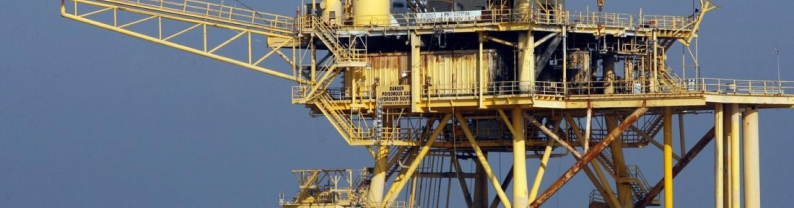
Oil prices stabilized on Thursday (February 12th), as the market reassigned a risk premium to US-Iran tensions despite US inventory data showing swelling domestic supplies. This movement confirms one thing: geopolitical headlines are still more "noise" than signals of a short-term surplus. As of 3:50 PM WIB, Brent was at $69.60/barrel (+0.29%) and WTI was at $64.83/barrel (+0.31%). The gains were moderate, but enough to keep prices near the psychological $70 level for Brent. From a geopolitical perspective, market focus is on the potential for escalation in the Middle East. Recent reports...
The GBP/USD pair gains ground around 1.3605 during the Asian trading hours on Thursday. The Greenback softens against the Pound Sterling amid the prospects for more interest rate cuts by the Federal Reserve (Fed) this year. Traders await the US weekly Initial Jobless Claims data later on Thursday. Also, the Federal Reserve (Fed) officials are scheduled to speak, including Alberto Musalem, Christopher Waller and Mary Daly. US President Donald Trump on Monday warned trading partners of sharply higher US tariffs from August 1, after he delayed all but 10% of his April levies on most countries...
Oil prices eased on Thursday as the latest tariff announcements by U.S. President Donald Trump were perceived by market participants as a threat to global economic growth, however signs of strong U.S. gasoline demand limited losses. Brent crude futures were down 3 cents at $70.16 a barrel by 0401 GMT. U.S. West Texas Intermediate crude lost 6 cents to $68.32 a barrel. On the demand side, macro uncertainty has led to a more cautious buying environment, particularly in Asia, said analytics firm Kpler in a note, while noting that geopolitical risk premiums have faded with the Israel-Iran...
The Japanese Yen (JPY) is building on the previous day's goodish recovery from over a two-week low and scaling higher for the second consecutive day against a broadly retreating US Dollar (USD). Investors remain on edge amid persistent uncertainties surrounding US President Donald Trump's trade policies, which, in turn, benefit the safe-haven JPY. The USD, on the other hand, is undermined by prospects for more interest rate cuts by the Federal Reserve (Fed) this year, bolstered by FOMC Minutes on Wednesday. This, in turn, contributes to the USD/JPY pair's intraday slide back below the...
The Australian Dollar (AUD) continues its winning streak for the third successive session on Thursday. The AUD/USD pair gained ground after the Reserve Bank of Australia (RBA) surprisingly decided to maintain the Official Cash Rate (OCR) at 3.85% earlier this week. RBA Governor Michele Bullock stated that inflation risks persist, driven by the elevated unit labor costs and weak productivity, which could push inflation above forecasts. Moreover, RBA Deputy Governor Andrew Hauser mentioned that the global economy is facing uncertainty. Hauser also stated that tariff effects on the global...
Gold rose to around $3,320 per ounce on Thursday, extending gains from the previous session, supported by a weaker dollar as investors continued to monitor trade developments and digested the latest FOMC minutes. Markets remain focused on a wave of tariff demand letters from President Trump, with Brazil the latest to face steep duties following earlier threats on copper imports and other countries—fueling concerns over broader trade disruptions. Meanwhile, minutes from the Fed's June meeting showed officials were divided on the timing and extent of potential interest rate cuts. While most...
The US dollar index fell to around 97.3 on Thursday, marking its second consecutive day of losses as investors pivoted toward riskier assets amid a broad rally in stocks and commodities. The greenback also came under pressure from a sharp drop in Treasury yields, driven by strong demand in Wednesday's 10-year note auction. On the policy front, minutes from the Federal Reserve's latest meeting revealed that most officials were open to cutting interest rates later this year. Despite the overall decline, the dollar surged more than 2% against the Brazilian real after President Donald Trump...
West Texas Intermediate (WTI), the US crude oil benchmark, is trading around $67.15 during the early Asian trading hours on Thursday. The WTI price loses ground amid concerns over weakening demand following a surprise increase in US crude inventories. US crude oil inventories rose last week for a second consecutive build, the biggest rise since January. The US Energy Information Administration (EIA) weekly report showed crude oil stockpiles in the US for the week ending July 4 rose by 7.070 million barrels, compared to an increase of 3.835 million barrels in the previous week. The market...
The US dollar (USD) maintained a solid position on Wednesday (July 9), although its momentum weakened slightly after a strong start to the day. The greenback opened on a slightly bullish note amid ongoing tariff tensions and cautious market sentiment. Investors remained cautious following US President Donald Trump's latest tariff threats and the extension of the deadline for reciprocal duties, which continued to dampen risk appetite and supported safe-haven funds flowing into the USD. The US Dollar Index (DXY), which measures the greenback against a basket of six major currencies, rose...
 Gold rises in the early Asian trade. There's a broad commodities uptrend, driven by macro uncertainty, a weaker dollar, and persistent demand for "hard" assets, says Fawad Razaqzada, market analyst...
 Oil extended declines after OPEC+ agreed to a bigger-than-expected production increase next month, raising concerns about oversupply just as US tariffs fan fears about the demand outlook.
Brent...
Oil extended declines after OPEC+ agreed to a bigger-than-expected production increase next month, raising concerns about oversupply just as US tariffs fan fears about the demand outlook.
Brent...
 The Japanese Yen (JPY) weakened against its US counterpart and reversed part of Friday's recovery from the lowest level since July 23 following Bank of Japan (BOJ) Governor Kazuo Ueda's remarks....