


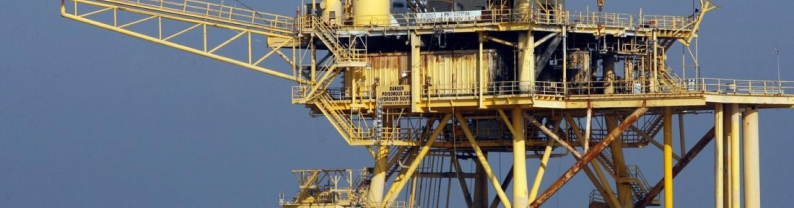
Oil prices stabilized on Thursday (February 12th), as the market reassigned a risk premium to US-Iran tensions despite US inventory data showing swelling domestic supplies. This movement confirms one thing: geopolitical headlines are still more "noise" than signals of a short-term surplus. As of 3:50 PM WIB, Brent was at $69.60/barrel (+0.29%) and WTI was at $64.83/barrel (+0.31%). The gains were moderate, but enough to keep prices near the psychological $70 level for Brent. From a geopolitical perspective, market focus is on the potential for escalation in the Middle East. Recent reports...
The US dollar index dipped to around 97.5 on Monday, retreating after a two-day advance as the euro strengthened following the weekend's US-EU trade agreement. The deal, which imposes a 15% tariff on most European exports, down from the 30% initially threatened, eased transatlantic trade tensions and boosted demand for the euro. Meanwhile, investors are turning their focus to a pivotal week for US monetary policy and economic data. The Federal Reserve is widely expected to leave interest rates unchanged on Wednesday, but markets will closely watch for signals regarding a potential rate cut...
The euro climbed above $1.175 on Monday, snapping a two-day losing streak after the US and EU reached a trade agreement over the weekend. The deal includes a 15% tariff on most European goods, significantly lower than the 30% originally threatened by Washington, easing fears of a broader trade conflict. Announced jointly by President Trump and European Commission President Ursula von der Leyen in Scotland on Sunday, the agreement was hailed by Trump as "the biggest of all the deals," while von der Leyen said it would provide "stability" and "predictability." However, key details, such as...
Oil steadied after the US and European Union agreed on a trade deal ahead of President Donald Trump's tariff deadline of Aug. 1. Brent was above $68 a barrel after closing 1.1% lower on Friday, and West Texas Intermediate traded near $65. The bloc faces 15% levies on most of its exports, although Trump and European Commission President Ursula von der Leyen appeared to differ on some key details of the agreement. Trump's trade policies and threats of retaliation from targeted countries have raised concerns about the outlook for global economic growth, weighing on oil and other commodities....
Gold steadied after the US and European Union announced they had reached a tariff agreement, staving off some concerns about a potentially painful trade war between the economies. Bullion traded near $3,330 an ounce — following a 0.4% weekly loss — as investors weighed the outlook for the global economy in the wake of the deal, which will see the EU face 15% levies on most of its exports including automobiles. Still, there are lingering questions about the scope of the pact, including details over the impact on metals — signaling potential challenges when it comes to implementation. With...
Oil prices weakened on Friday (July 25th) and closed at a three-week low as traders worried about negative economic news from the US and China and signs of increasing supply. The losses were limited by optimism that a US trade deal could boost global economic growth and future oil demand. Brent crude futures fell 74 cents, or 1.1%, to $68.44, while US West Texas Intermediate (WTI) crude fell 87 cents, or 1.3%, to $65.16. This was the lowest closing level for Brent since July 4th and WTI since June 30th. For the week, Brent fell about 1% while WTI fell about 3%. European Commission...
Gold prices weakened on Friday, weighed down by a stronger U.S. dollar and signs of progress in U.S.-EU trade negotiations, which have dampened demand for safe-haven assets. Spot gold fell 0.9% to $3,336.01 an ounce at 2:01 PM ET (18:01 GMT). U.S. gold futures closed down 1.1% at $3,335.6. The U.S. dollar index, open a new tab, rebounded from a more than two-week low, making bullion more expensive for overseas buyers. "The Japan deal is significant, and there are hopes for a U.S.-EU deal before the August 1 deadline. That's reducing safe-haven demand as rising risk appetite drives capital...
Oil prices weakened on Friday due to negative economic news from the United States and China and signs of rising supply, despite optimism that a U.S. trade deal could boost global economic growth and future oil demand. Brent crude futures fell 32 cents, or 0.5%, to $68.86 a barrel at 11:02 a.m. EDT (15:02 GMT), while U.S. West Texas Intermediate (WTI) crude fell 47 cents, or 0.7%, to $65.56. This caused Brent prices to fall about 1% for the week and WTI to fall about 3%. U.S. President Donald Trump said on Friday there was a 50-50 chance, or even less, that the U.S. would reach a trade...
Gold prices weakened on Friday (July 25th), weighed down by a stronger US dollar and signs of progress in US-EU trade negotiations, which have reduced safe-haven demand. Spot gold fell 1% to $3,333.12 per ounce at 11:23 a.m. ET (15:23 GMT). US gold futures fell 1.2% to $3,333.70. The US dollar index rebounded from a more than two-week low, making bullion more expensive for overseas buyers, while the 10-year US Treasury yield held steady. "The Japan deal is significant, and there are hopes for a US-EU deal before the August 1st deadline. That's weakening safe-haven demand as rising risk...
 Gold rises in the early Asian trade. There's a broad commodities uptrend, driven by macro uncertainty, a weaker dollar, and persistent demand for "hard" assets, says Fawad Razaqzada, market analyst...
 Oil extended declines after OPEC+ agreed to a bigger-than-expected production increase next month, raising concerns about oversupply just as US tariffs fan fears about the demand outlook.
Brent...
Oil extended declines after OPEC+ agreed to a bigger-than-expected production increase next month, raising concerns about oversupply just as US tariffs fan fears about the demand outlook.
Brent...
 The Japanese Yen (JPY) weakened against its US counterpart and reversed part of Friday's recovery from the lowest level since July 23 following Bank of Japan (BOJ) Governor Kazuo Ueda's remarks....