


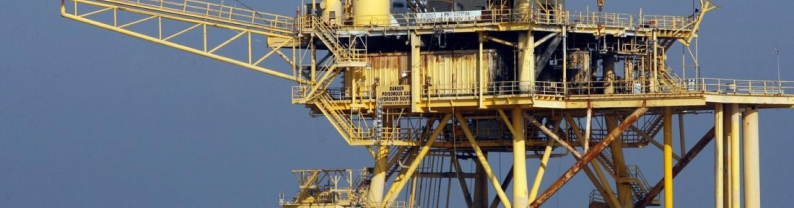
Oil prices stabilized on Thursday (February 12th), as the market reassigned a risk premium to US-Iran tensions despite US inventory data showing swelling domestic supplies. This movement confirms one thing: geopolitical headlines are still more "noise" than signals of a short-term surplus. As of 3:50 PM WIB, Brent was at $69.60/barrel (+0.29%) and WTI was at $64.83/barrel (+0.31%). The gains were moderate, but enough to keep prices near the psychological $70 level for Brent. From a geopolitical perspective, market focus is on the potential for escalation in the Middle East. Recent reports...
Asian markets moved mixed on Wednesday. Japan's shares edged lower, while Australia and several other indices gained. The Nikkei 225 fell 0.26%, but the Topix rose 0.35%. In South Korea, the Kospi was flat, and the Kosdaq rose 0.62%. Australia's S&P/ASX 200 Index rose 0.13%. Hang Seng futures pointed to a slightly higher opening at 26,865, compared to the previous close of 26,696.41.The main highlight came from SoftBank Group. The Japanese company revealed it sold its entire stake in Nvidia for US$5.83 billion in October, in line with its "all-in" strategy for OpenAI. SoftBank also...
The Nikkei index weakened 0.3% to 50,674.53 on Wednesday, dragged down by declines in technology and semiconductor stocks. SoftBank Group (-5.9%), Kioxia (-2.8%), and Advantest (-2.8%) led the decline, indicating that risk appetite for growth stocks remains fragile. Interestingly, the Topix index rose 0.5% to 3,338.87, signaling a rotation into more defensive or value sectors—such as financials, industrials, and raw materials—amid pressure on major tech names. This means the market is not entirely risk-off, but rather more selective. In the forex market, USD/JPY was at 154.07 (from 154.22...
The S&P 500 rose 0.3% and the Dow Jones Industrial Average jumped 630 points to a new record high, while the Nasdaq Composite Index fell 0.3% as investors shifted from technology stocks to blue-chip and cyclical stocks on expectations that a funding deal would pass the House of Representatives this week. Progress in the Senate toward reopening the government lifted sentiment in economy-sensitive sectors, while leading healthcare companies such as Merck (+4.8%), Amgen (+4.6%), and Johnson & Johnson (+2.9%) boosted the Dow. Hopes that the government's reopening would release delayed...
US stock indices were muted on Tuesday amid fresh labor market concerns and continued skepticism on whether AI valuations are warranted by fundamentals. The S&P 500 and the Nasdaq 100 inched lower, while the Dow was close to the flatline. Data from the ADP indicated an average of 11,250 jobs were lost per week through most of October, consolidating the wave of pessimistic labour reports released by other private sources. In the meantime, stocks with exposure to soaring AI capital expenditures remained under pressure from recent concerns of frothiness after SoftBank sold its entire $5.8...
Stocks in Europe were higher on Tuesday, with the STOXX 50 adding 0.5% and the STOXX 600 rising 0.6%, extending gains from the previous session, amid further signs the end of the US government shutdown is close. After a pact reached in the Senate on Sunday between some Democrats who defected the party's leadership and some Republicans, the US Senate voted 60-40 yesterday to pass a bill to end the longest ever government shutdown in the US. Fresh corporate updates also boosted investor sentiment. Shares of LVMH were up 1.8% after Bloomberg reported the luxury brand is set to open major...
The Hang Seng added 47 points, or 0.2%, to close at 26,696 on Tuesday, reversing morning losses amid eventual gains in property and financial stocks. Markets ended in the green for the second day, supported by relief over the impending end of the U.S. government shutdown, after the Senate passed a funding deal. At the same time, hopes grew that domestic activity in China will remain resilient toward year-end as Beijing continues its efforts to support the sluggish economy. Meanwhile, Hong Kong's final Q3 GDP figures are due later this week and may show modest improvement, according to flash...
The Nikkei 225 index fell 0.14% to close at 50,843 on Tuesday (November 11), losing gains from earlier in the session as investors took profits from rising tech stocks amid ongoing concerns over high AI valuations. Significant losses were seen in AI-related stocks such as Kioxia Holdings (-0.9%), Fujikura (-6%), Advantest (-4.1%), and Disco Corp (-4.5%). In corporate news, Honda Motor shares rose 0.8% even after cutting its full-year profit forecast amid pressure from US tariffs and a global chip shortage, while facing increasing competition from Chinese electric vehicle manufacturers. Sony...
Shutdown AS Reda, Investor Asia Gaspol Lagi? The reopening of the US federal government is approaching. This has given investors relief as official economic data will begin to flow again, providing clues to the direction of monetary policy. Risk sentiment is strengthening: the Hang Seng Index is nearing a one-month high of 26,651, while the Hang Seng Tech index edged up 0.3%. In mainland China, the CSI 300 and Shanghai Composite Index fell 0.2%. Blue-chip stocks rose: Baidu +2.9%, Xiaomi +2.2%, HSBC +2.0%, and AIA +1.7%. The boost comes from news that the US Senate is advancing plans to...
 Gold rises in the early Asian trade. There's a broad commodities uptrend, driven by macro uncertainty, a weaker dollar, and persistent demand for "hard" assets, says Fawad Razaqzada, market analyst...
 Oil extended declines after OPEC+ agreed to a bigger-than-expected production increase next month, raising concerns about oversupply just as US tariffs fan fears about the demand outlook.
Brent...
Oil extended declines after OPEC+ agreed to a bigger-than-expected production increase next month, raising concerns about oversupply just as US tariffs fan fears about the demand outlook.
Brent...
 The Japanese Yen (JPY) weakened against its US counterpart and reversed part of Friday's recovery from the lowest level since July 23 following Bank of Japan (BOJ) Governor Kazuo Ueda's remarks....