


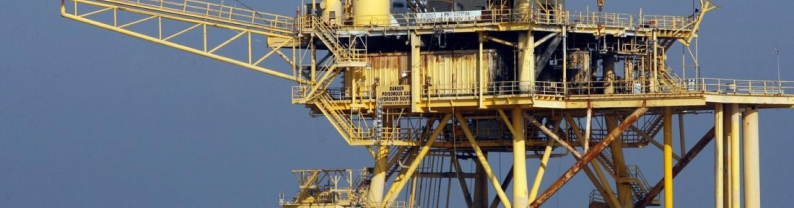
Oil prices stabilized on Thursday (February 12th), as the market reassigned a risk premium to US-Iran tensions despite US inventory data showing swelling domestic supplies. This movement confirms one thing: geopolitical headlines are still more "noise" than signals of a short-term surplus. As of 3:50 PM WIB, Brent was at $69.60/barrel (+0.29%) and WTI was at $64.83/barrel (+0.31%). The gains were moderate, but enough to keep prices near the psychological $70 level for Brent. From a geopolitical perspective, market focus is on the potential for escalation in the Middle East. Recent reports...
The Hong Kong stock exchange opened lower on Tuesday, following negative pressure in global markets as investors reassessed the valuation of the artificial intelligence (AI) sector and awaited the direction of US interest rate policy. The Hang Seng Index (HSI) fell around 1.3% at the start of the session, moving to around 26,027 points. This decline extended the correction trend in the Asian region, in line with the decline on Wall Street. The technology sector was again the biggest drag on the index, with shares of giants such as Xiaomi, Li Auto, and Meituan each falling between 2% and...
On Tuesday morning, November 18, 2025, sentiment on Asian markets remained cautious following a sharp decline on Wall Street and concerns about the Fed's interest rate direction. Most indexes in the region moved lower, with investors choosing to reduce risk ahead of the release of Nvidia's earnings report and US employment data, which was delayed due to the longest government shutdown in history. In Japan, the Nikkei 225 closed down around 0.1% at 50,323.91, while the Topix index also weakened. The greatest pressure came from tourism and retail stocks after China issued a travel warning to...
The Nikkei closed down 0.9% to 49,890.32, following Wall Street's decline on Monday. Selling pressure was felt across most of the Japanese stock market, as risk-off sentiment reemerged, or investors' tendency to avoid risky assets amid global uncertainty. StoneX senior market analyst Matt Simpson explained that market participants are returning to caution following the decline in Wall Street stocks. Investors' primary focus is now on Nvidia's earnings release due on Wednesday, as the chip giant's results have the potential to significantly impact technology stocks and the overall direction...
The Dow Jones Industrial Average (DJIA) hit another weak patch on Monday, backsliding nearly 500 points and slipping back below the 47,000 handle to start the new trading week with many of the same questions from last week going unanswered. The AI segment continues to see new challenges amid concerns about endpoint revenues, and investors are hoping that a kickstart to official data sources following the reopening of the federal government will help push the Federal Reserve (Fed) to deliver a third straight interest rate cut in December. Alphabet shares supported by Berkshire...
The three major stock averages in the US swung around the flatline on Monday, as investors braced for the resumption of economic data releases from major statistical agencies following the end of last week's government shutdown. Key reports including the jobs report and trade data are due this week and could influence the Fed's policy decision next month, at a time when many policymakers are growing more sceptical about the need for additional rate cuts. Markets are currently pricing in about a 43% chance of a quarter-point cut in December. Meanwhile, Nvidia is set to report quarterly...
Japanese stocks edged lower on Monday, with the Nikkei 225 down 0.1% to 50,324 and the broader Topix index down 0.37%. The main pressure came from tourism and retail stocks after geopolitical tensions with China escalated. Beijing warned Japan not to interfere in the Taiwan issue and also urged its citizens to exercise caution when traveling to Japan. A Japanese diplomat is reportedly planning a visit to China to try to calm the situation, but the market remains nervous. Travel-related stocks were the first to suffer from this sentiment. Japan Airlines and ANA Holdings fell 3.8% and 3.1%,...
Hong Kong's stock market was under pressure again at the start of the week as investors remained cautious ahead of the release of US September non-farm payrolls (NFP) data on Thursday—the first significant data since the 43-day government shutdown. Uncertainty about the Federal Reserve's interest rate direction dampened risk appetite. The Hang Seng Index fell 0.7%, extending its 1.9% decline from Friday, while Hang Seng Tech fell 0.6%. The biggest pressure came from technology and travel stocks, including Trip.com, which fell 3.9%, Baidu, which fell 2.1%, and WuXi AppTec, which fell 2.7%....
Asian stock markets opened cautiously at the start of the week, with the MSCI Asia Pacific index rising slightly by 0.2%. The Kospi led the gains, while Japan's Nikkei index fell 0.5% after data showed the Japanese economy contracted again. Japanese retail and tourism stocks also weakened due to escalating tensions with China. US stock futures rose 0.3%, providing some positive sentiment. Investors are now awaiting a slew of US economic data, which returns after a long pause due to the shutdown, including the jobs report. At the same time, risk appetite appears to be weakening as AI stock...
 Gold rises in the early Asian trade. There's a broad commodities uptrend, driven by macro uncertainty, a weaker dollar, and persistent demand for "hard" assets, says Fawad Razaqzada, market analyst...
 Oil extended declines after OPEC+ agreed to a bigger-than-expected production increase next month, raising concerns about oversupply just as US tariffs fan fears about the demand outlook.
Brent...
Oil extended declines after OPEC+ agreed to a bigger-than-expected production increase next month, raising concerns about oversupply just as US tariffs fan fears about the demand outlook.
Brent...
 The Japanese Yen (JPY) weakened against its US counterpart and reversed part of Friday's recovery from the lowest level since July 23 following Bank of Japan (BOJ) Governor Kazuo Ueda's remarks....