


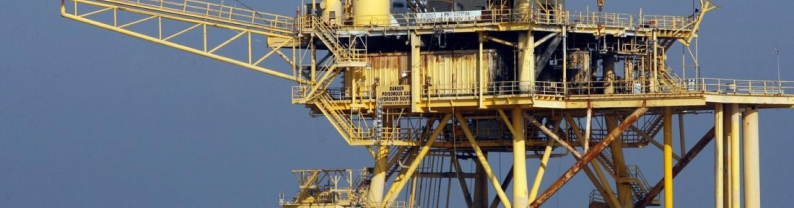
Oil prices stabilized on Thursday (February 12th), as the market reassigned a risk premium to US-Iran tensions despite US inventory data showing swelling domestic supplies. This movement confirms one thing: geopolitical headlines are still more "noise" than signals of a short-term surplus. As of 3:50 PM WIB, Brent was at $69.60/barrel (+0.29%) and WTI was at $64.83/barrel (+0.31%). The gains were moderate, but enough to keep prices near the psychological $70 level for Brent. From a geopolitical perspective, market focus is on the potential for escalation in the Middle East. Recent reports...
The Stoxx 50 and Stoxx 600 edged up on Monday, as investors prepared for a week of key developments, including the ECB's anticipated 25-basis-point rate cut on Thursday, its fourth this year. Markets are keen for hints on whether the ECB might accelerate rate cuts to aid Europe's struggling economy. Sentiment was further lifted by China's pledge to implement "moderately loose" monetary policies and "more proactive" fiscal measures, fueling hopes of increased domestic consumption and benefiting European luxury stocks like Kering, which jumped up to 4%. Volkswagen rose over 1% amid ongoing...
US stocks drifted in tight ranges Monday as investors consolidated recent gains ahead of the release of key inflation data this week for more cues on interest rates. At 09:35 ET (14:35 GMT), the Dow Jones Industrial Average was up 75 points, or 0.2%, while the S&P 500 index dropped 7 points, or 0.1%, and the NASDAQ Composite fell 40 points, or 0.2%. The S&P 500 and the NASDAQ Composite closed at fresh records Friday, rising around 1% and over 3% for the week, respectively. The Dow Jones Industrial Average lagged behind, closing the week down 0.6%.CPI data awaited for more rate cues...
European markets opened higher on Monday as the new trading week kicked off, with investors weighing geopolitical turmoil. Shortly after markets opened, the pan-European Stoxx 600 was up by around 0.3%, with all major regional bourses and most sectors trading in positive territory. Traders will be assessing geopolitical upheaval in the Middle East after the ousting of Syrian President Bashar al-Assad over the weekend. Western leaders have greeted the overthrow of the Assad dynasty by rebel forces with caution, fearing a power vacuum and more instability in the region. Meanwhile,...
Hong Kong's shares were almost flat in the Monday morning session, trading around 19,868 following a rally in the prior session, with investors responding to China's CPI and PPI data. Consumer prices in the mainland rose by 0.2% yoy in November, missing consensus of 0.5% while marking the softest increase in five months. At the same time, producer prices fell by 2.5%, pointing to the 26th month of drop despite softening from October's print of a 2.9% fall. On local data, forex reserves in the city notched a nine-month peak of USD 425 billion last month. Market participants monitored...
European equity markets are expected to start the new trading week on a cautious note, with global political instability dampening investor sentiment. The ongoing political crises in South Korea and France, coupled with the collapse of Syrian President Bashar al-Assad's regime, add to the uncertainty. Additionally, there are no major economic or earnings releases in Europe on Monday. In pre-market trading, futures on the Euro Stoxx 50 and Stoxx 600 were down around 0.15% and 0.1%, respectively. Source: Trading Economics
The Nikkei 225 index rose 0.18% to close at 39,160, while the broader Topix index rose 0.27% to 2,735 on Monday, recovering losses from the previous session and tracking Wall Street's gains at the end of last week. Investors also eyed revised Japanese third-quarter economic growth data, which indicated the country's second straight quarter of expansion. Business sentiment data later this week will be closely watched for further insight into the health of the economy. However, gains were capped by ongoing global political instability. Political crises in South Korea and France, as well as...
Hong Kong stocks were mostly flat on Monday morning, trading around 19,868 after rallying in the previous session, as investors digested China's November CPI and PPI data. Mainland consumer prices rose 0.2% year-on-year, missing market consensus of 0.5% and marking the weakest gain in five months. Producer prices, meanwhile, fell 2.5%, marking a 26-month decline, although easing from a 2.9% drop in October. Source: Trading Economics
China's producer prices fell 2.5% year-on-year in November 2024, after falling 2.9% in the previous month and below market expectations of 2.8%. This marked the 26th straight month of producer deflation, reflecting continued weakness in domestic demand amid Beijing's ongoing efforts to stem the trend. On a monthly basis, producer prices edged up 0.1%, after falling 0.1% in October. For the first 11 months of the year, producer prices shrank 2.1%. Source: Trading Economics
 Gold rises in the early Asian trade. There's a broad commodities uptrend, driven by macro uncertainty, a weaker dollar, and persistent demand for "hard" assets, says Fawad Razaqzada, market analyst...
 Oil extended declines after OPEC+ agreed to a bigger-than-expected production increase next month, raising concerns about oversupply just as US tariffs fan fears about the demand outlook.
Brent...
Oil extended declines after OPEC+ agreed to a bigger-than-expected production increase next month, raising concerns about oversupply just as US tariffs fan fears about the demand outlook.
Brent...
 The Japanese Yen (JPY) weakened against its US counterpart and reversed part of Friday's recovery from the lowest level since July 23 following Bank of Japan (BOJ) Governor Kazuo Ueda's remarks....