


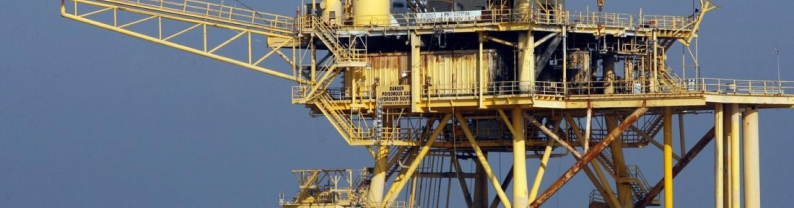
Oil prices stabilized on Thursday (February 12th), as the market reassigned a risk premium to US-Iran tensions despite US inventory data showing swelling domestic supplies. This movement confirms one thing: geopolitical headlines are still more "noise" than signals of a short-term surplus. As of 3:50 PM WIB, Brent was at $69.60/barrel (+0.29%) and WTI was at $64.83/barrel (+0.31%). The gains were moderate, but enough to keep prices near the psychological $70 level for Brent. From a geopolitical perspective, market focus is on the potential for escalation in the Middle East. Recent reports...
Stocks in the US kicked off the week in the green, with the S&P 500 adding 1%, the Nasdaq soaring 1.5% and the Dow Jones gaining 350 points, as traders hope the new US tariffs set to take effect on April 2nd could be softer and more targeted than initially anticipated. Reports emerged that President Donald Trump's coming wave of tariffs is poised to be more targeted than the barrage he has occasionally threatened. All sectors were in the green, but consumer discretionary, tech and communication services outperformed. Shares of Tesla soared more than 5% and other megacaps were also...
The STOXX 50 was up 0.8% and the STOXX 600 soared 0.6% on Monday, rebounding from Friday's losses, as traders hope the new US tariffs set to take effect on April 2nd could be softer and more targeted than initially anticipated. Reports emerged that President Donald Trump's coming wave of tariffs is poised to be more targeted than the barrage he has occasionally threatened.Meanwhile, traders were also digesting fresh PMI data, with figures for France beating forecasts while in Germany, both composite and services PMIs came below forecast although the manufacturing one beat. Basic resources,...
The Hang Seng climbed 216 points or 0.9% to finish at 23,905 on Monday, rebounding from a subdued morning session. The rally followed strong gains in U.S. futures after President Trump hinted at possible "flexibility" in his reciprocal tariff plan ahead of the April 2 deadline. Meanwhile, Fed Chair Powell last week downplayed the long-term impact of the tariffs, easing investor concerns. Markets welcomed Premier Li Qiang's renewed pledge for more proactive macroeconomic policies. Meantime, the PBoC reiterated plans to cut banks' RRR and interest rates at an "appropriate time" later this...
Japanese stocks were down after the close on Monday, March 24, as losses in the Shipbuilding, Manufacturing and Services sectors led shares lower. At the close in Tokyo, the Nikkei 225 was down 0.15%. The best performers on the Nikkei 225 were Sumitomo Realty & Development Co. (TYO:8830), which rose 10.52% or 575.00 points to trade at 6,042.00 at the close. Meanwhile, Tokyo Tatemono Co., Ltd. (TYO:8804) gained 4.94% or 123.50 points to close at 2,623.00 and Mitsubishi Estate Co Ltd (TYO:8802) gained 4.85% or 114.50 points to 2,474.00 in late trade. The worst performers on the session...
Hong Kong stocks were little changed in early trade on Monday, steady at around 23,686 after falling sharply in the previous two sessions. Property and financial stocks were lower, while gains in tech stocks and sluggish consumer staples provided little support. Traders approached President Trump's upcoming April 2 deadline for reciprocal tariffs with caution, hoping for a more targeted approach in this round of levies. On the local front, data showed that Hong Kong's current account surplus jumped to HK$96.3 billion in Q4 2024, up from HK$61.5 billion a year earlier, driven by higher...
The Nikkei 225 Index edged up 0.2% to above 37,700, while the Topix Index slipped 0.3% to 2,795 in mixed trading on Monday. Japanese stocks struggled for direction as US President Donald Trump's April 2 deadline for reciprocal tariffs weighed on sentiment. However, Trump hinted on Friday that there could be "flexibility" in his plan, and weekend reports suggested the tariffs may be narrower in scope, potentially sparing certain industries. Domestically, fresh data showed that Japan's private sector activity contracted for the first time in five months, with manufacturing extending its...
Asia-Pacific markets opened mostly lower on Monday (3/24) as U.S. President Donald Trump's April 2 tariff deadline looms. Australia's S&P/ASX 200 fell 0.37%. South Korea's Kospi fell 0.36%, while the small-cap Kosdaq fell 0.05%. Japan's Nikkei 225 rose 0.28% at the open while the Topix gained 0.13%. Hong Kong's Hang Seng futures last traded at 23,657, lower than the HSI's last close of 23,689.72. Over the weekend, Chinese Premier Li Qiang warned of "rising instability" and called on countries to open up markets and businesses. U.S. stock futures were higher, signaling that equities...
The S&P 500 inched higher on Friday, ending four consecutive weeks of declines that were brought on by trade policy turmoil, recession fears and a rollover in megacap tech shares. The S&P 500 added 0.08%, rising into positive territory as the trading session drew to a close. The broad market index ended the day at 5,667.56. The Nasdaq Composite gained 0.52% and settled at 17,784.05, while the Dow Jones Industrial Average advanced 32.03 points, or 0.08%, to close at 41,985.35. The broad-market S&P 500 posted a 0.5% weekly advance, averting a fifth straight week of losses. The...
 Gold rises in the early Asian trade. There's a broad commodities uptrend, driven by macro uncertainty, a weaker dollar, and persistent demand for "hard" assets, says Fawad Razaqzada, market analyst...
 Oil extended declines after OPEC+ agreed to a bigger-than-expected production increase next month, raising concerns about oversupply just as US tariffs fan fears about the demand outlook.
Brent...
Oil extended declines after OPEC+ agreed to a bigger-than-expected production increase next month, raising concerns about oversupply just as US tariffs fan fears about the demand outlook.
Brent...
 The Japanese Yen (JPY) weakened against its US counterpart and reversed part of Friday's recovery from the lowest level since July 23 following Bank of Japan (BOJ) Governor Kazuo Ueda's remarks....