


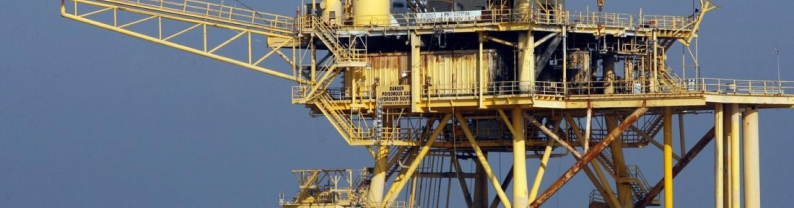
Oil prices stabilized on Thursday (February 12th), as the market reassigned a risk premium to US-Iran tensions despite US inventory data showing swelling domestic supplies. This movement confirms one thing: geopolitical headlines are still more "noise" than signals of a short-term surplus. As of 3:50 PM WIB, Brent was at $69.60/barrel (+0.29%) and WTI was at $64.83/barrel (+0.31%). The gains were moderate, but enough to keep prices near the psychological $70 level for Brent. From a geopolitical perspective, market focus is on the potential for escalation in the Middle East. Recent reports...
Asia-Pacific markets traded mixed on Tuesday (5/13), following a big rally on Wall Street after the US and China agreed to a trade deal. Hong Kong stocks fell at the open with the Hang Seng Index down 1.02% and the Hang Seng Tech Index down 1.55%. This was a reversal of strong gains posted by both indices in the previous session. Meanwhile, mainland China's CSI 300 index started the day flat. In Japan, the benchmark Nikkei 225 index jumped 1.85%, while the broader Topix index gained 1.36%. In South Korea, the Kospi index rose 0.26% while the small-cap Kosdaq index gained...
U.S. stocks roared back on Monday after the U.S. and China agreed to temporarily slash tariffs following negotiations over the weekend in Switzerland, raising hopes a trade war won't push the economy into a recession. The Dow Jones Industrial Average surged 1,160.72 points, or 2.81%, and closed at 42,410.10. The 30-stock index ended the session near its highs of the day, with buying enthusiasm remaining strong. The S&P 500 popped 3.26% to end at 5,844.19, bringing its gain since its April intraday low at the height of tariff pessimism to more than 20%. The benchmark has cut its...
European stock markets closed higher Monday following the White House's announcement that the U.S. and China had agreed to slash tariffs. The Stoxx 600 closed up by 1.1% provisionally, with mining stocks rallying nearly 5% to lead the gains. The U.K.'s FTSE 100 was 0.6% higher as France's CAC 40 moved up 1.4% and Germany's DAX climbed 0.2%. U.S. Treasury Secretary Scott Bessent said on Monday that talks with China had been "very productive." The agreement to suspend most tariffs for 90 days shows a thawing of trade tensions between the world's two largest economies. U.S. stocks opened...
US stocks skyrocketed on Monday, with both the S&P 500 and the Nasdaq soaring about 3% and the Dow Jones jumping more than 1,000 points, after the US and China announced a sweeping 90-day reduction in tariffs following trade negotiations over the weekend in Switzerland. The US said it would lower tariffs on Chinese goods from 145% to 30%, while China will cut levies on US imports from 125% to 10%, both for a 90-day period. The move boosted investor confidence, signalling that both sides are serious about de-escalating trade tensions and encouraging a return to riskier assets. Consumer...
The Hang Seng surged 682 points or 3.0% to close at 23,549 on Monday, marking its eighth straight session of gains and hitting a 1-1/2 month high. The rally followed a sharp rise in U.S. futures after the U.S. and China agreed to a 90-day pause in trade tensions and a major easing of tariffs. Washington will cut duties on Chinese goods to 30% from 145%, while Beijing will lower tariffs on U.S. goods to 10% from 125%. Sentiment was further lifted by data showing China's car sales rose nearly 10% yoy in April. Tech stocks led the advance, with the sector index up around 5%, boosted by gains...
European equity markets are set for a strong start on Monday, boosted by an easing of US-China trade tensions after high-level negotiations over the weekend in Switzerland. US officials announced that a deal had been reached aimed at reducing the trade deficit, while Chinese representatives highlighted a "significant consensus" between the two sides. A joint statement with further details is expected later in the day. Meanwhile, there are no major economic releases in Europe on Monday, with earnings due from Italian banking giant UniCredit. In premarket trading, Euro Stoxx 50 futures rose...
Japanese stocks rose after the close on Monday (5/12), as gains in the Real Estate, Banking and Textile sectors helped stocks advance. At the close in Tokyo, the Nikkei 225 was up 0.42%. The best performers on the Nikkei 225 were Advantest Corp. (TYO:6857), which rose 9.04% or 605.00 points to trade at 7,300.00 at the close. Meanwhile, Pacific Metals Co., Ltd. (TYO:5541) rose 7.30% or 116.00 points to close at 1,704.00 and Yaskawa Electric Corp. (TYO:6506) gained 6.79% or 205.00 points to 3,226.00 at the close. The worst performers on the session were DeNA Co Ltd (TYO:2432), which fell...
Hong Kong stocks jumped 322 points, or 1.4%, to 23,188 on Monday morning, marking their eighth straight session of gains and hitting a 1-1/2-month high. The rally followed a strong surge in U.S. stock futures amid signs of progress in U.S.-China trade talks over the weekend. Washington has highlighted progress toward a deal while Beijing has confirmed both sides have agreed to start formal negotiations. Investor sentiment was further boosted by easing geopolitical tensions, including a fragile ceasefire between India and Pakistan and Ukrainian President Zelenskiy's openness to meeting...
 Gold rises in the early Asian trade. There's a broad commodities uptrend, driven by macro uncertainty, a weaker dollar, and persistent demand for "hard" assets, says Fawad Razaqzada, market analyst...
 Oil extended declines after OPEC+ agreed to a bigger-than-expected production increase next month, raising concerns about oversupply just as US tariffs fan fears about the demand outlook.
Brent...
Oil extended declines after OPEC+ agreed to a bigger-than-expected production increase next month, raising concerns about oversupply just as US tariffs fan fears about the demand outlook.
Brent...
 The Japanese Yen (JPY) weakened against its US counterpart and reversed part of Friday's recovery from the lowest level since July 23 following Bank of Japan (BOJ) Governor Kazuo Ueda's remarks....