


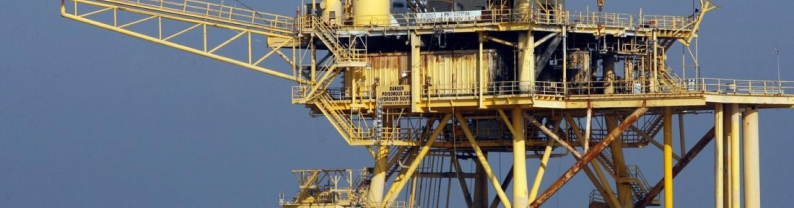
Oil prices stabilized on Thursday (February 12th), as the market reassigned a risk premium to US-Iran tensions despite US inventory data showing swelling domestic supplies. This movement confirms one thing: geopolitical headlines are still more "noise" than signals of a short-term surplus. As of 3:50 PM WIB, Brent was at $69.60/barrel (+0.29%) and WTI was at $64.83/barrel (+0.31%). The gains were moderate, but enough to keep prices near the psychological $70 level for Brent. From a geopolitical perspective, market focus is on the potential for escalation in the Middle East. Recent reports...
The Nikkei 225 index weakened slightly by 0.1% to 49,336.22 after losing early gains. This decline followed declines in most US stock markets in the previous session, prompting Japanese investors to remain cautious. US employment data released Tuesday provided mixed signals for the market. According to the Sucden Financial research team, investors are reluctant to draw too many conclusions from the data. Expectations of further interest rate cuts by the Federal Reserve are also considered to be delayed, thus curbing risk appetite. Several stocks recorded significant declines. Eneos...
Asian stocks opened lower after weak US employment data did little to change expectations of a Federal Reserve interest rate cut. The MSCI Asia Pacific Index fell 0.1%, extending its decline to a third day. This decline followed Wall Street, where the S&P 500 fell again, although the Nasdaq 100 still recorded a slight gain. Government bonds and the US dollar held steady after weakening in the previous session. Oil prices actually strengthened, with WTI rising more than 1% after President Donald Trump ordered a complete blockade of sanctioned oil tankers entering and leaving Venezuela....
European stocks closed lower on Tuesday, with the STOXX 50 down 0.5% and the broader STOXX 600 slipping 0.4%, as optimism around Russia–Ukraine peace efforts prompted investors to reassess the outlook for military spending and weighed on defense shares. Defense names declined sharply, led by Rheinmetall (-4.6%), alongside losses in BAE Systems (-1.7%), Leonardo (-3.9%) and Thales (-1.6%). Technology heavyweights also pressured the market, with ASML Holding down 2.1% and SAP falling 1.4%, as softer global growth signals dampened appetite for cyclical tech exposure. In contrast, LVMH...
Stocks fell slightly on Tuesday as traders digested the delayed release of the November's jobs report. The S&P 500 fell 0.1%, while the Nasdaq Composite pulled back about 0.2%. The Dow Jones Industrial Average hovered around the flatline. November's jobs report came in better than expected, showing an increase of 64,000 jobs for the month, according to the Bureau of Labor Statistics. Economists surveyed by Dow Jones predicted that nonfarm payrolls would grow by 45,000 in the period. However, the BLS reported that October shed 105,000 jobs. The unemployment rate also increased to 4.6%,...
The Hang Seng Index fell 393 points, or 1.5%, to 25,217 on Tuesday (December 16), closing at a nearly four-week low and extending the previous session's sharp decline as mainland Chinese stocks slumped further and traders grew nervous ahead of key US economic data this week. Meanwhile, China's economy showed more signs of slowing in November, with disappointing industrial output and retail sales. Property stocks led the decline amid concerns of a prolonged downturn, particularly after China Vanke said it would hold a second bondholder meeting after failing to secure approval to extend a...
European stocks are expected to open lower on Tuesday (December 16), reversing gains seen earlier in the week. Shortly after the opening bell, the pan-European Stoxx 600 index fell 0.2%, with most sectors and major bourses in negative territory. Developments in Russia-Ukraine peace negotiations remain in focus, after Ukrainian President Volodymyr Zelenskyy said over the weekend that Kyiv is willing to give up its NATO membership ambitions to secure a deal to end the war. Meanwhile, US President Donald Trump told reporters on Monday that after "long and very good talks" with European...
The Nikkei 225 index closed down 1.2% to 49,544.21 on Tuesday, dragged down by a defensive market mood ahead of tonight's US economic data release. Market participants tended to reduce risk, making selling easier to emerge despite the lack of major "bad news" from Japan. The wait-and-see sentiment grew stronger as the (slightly delayed) US jobs data was seen as potentially altering the direction of Fed interest rate expectations, while this week also featured a busy central bank calendar—including the Bank of Japan, which is widely expected to raise interest rates. This combination made...
Hong Kong shares dropped 371 points, or 1.4%, to 25,258 Tuesday morning's session, extending steep losses from the previous day as all sectors retreated. Risk appetite was burdened by declines in mainland markets after weak November data showed fragile industrial output and retail turnover amid soft external demand and shaky domestic conditions. Local equities neared their lowest in a week, following a negative lead from Wall Street, where AI and tech weakness persisted. Losses were partly offset by domestic data showing Hong Kong's manufacturing output rose for a fourth straight quarter in...
 Gold rises in the early Asian trade. There's a broad commodities uptrend, driven by macro uncertainty, a weaker dollar, and persistent demand for "hard" assets, says Fawad Razaqzada, market analyst...
 Oil extended declines after OPEC+ agreed to a bigger-than-expected production increase next month, raising concerns about oversupply just as US tariffs fan fears about the demand outlook.
Brent...
Oil extended declines after OPEC+ agreed to a bigger-than-expected production increase next month, raising concerns about oversupply just as US tariffs fan fears about the demand outlook.
Brent...
 The Japanese Yen (JPY) weakened against its US counterpart and reversed part of Friday's recovery from the lowest level since July 23 following Bank of Japan (BOJ) Governor Kazuo Ueda's remarks....