


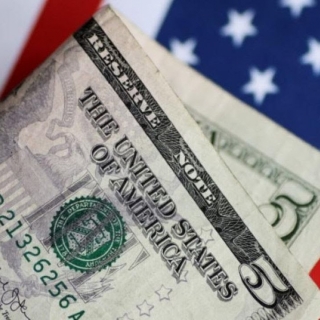
The U.S. dollar strengthened on Tuesday as talks between Beijing and Washington continued for a second day, raising investor hopes of an easing in trade tensions, while sterling fell as U.K. jobs data showed a weaker labor market.
Officials from the world's two largest economies are meeting in London to try to defuse a dispute that has widened from tariffs to restrictions on rare earths.
"Unlike the Geneva talks (held in May), where tariff relief provided an easy win, the London talks are now tackling thornier issues such as export controls on chips, rare earths and student visas," said Charu Chanana, chief investment strategist at Saxo.
U.S. President Donald Trump and his Chinese counterpart Xi Jinping spoke by phone last week at a crucial time for both economies showing signs of strain from Trump's series of tariff orders since January.
The dollar index, which measures the U.S. currency against a basket of six peers, was up 0.3% at 99.255, but remained close to a six-week low of 98.351 hit last week.
The index is down 8.7% this year as investors, worried about the impact of tariffs and trade tensions on the U.S. economy and growth, flee U.S. assets and seek alternatives.
The euro was down 0.2% at $1.1395, while the Australian dollar, often seen as a proxy for risk sentiment, was down 0.2% at $0.6502.
Sterling weakened after U.K. jobs data suggested further weakness in the labor market, which could affect how quickly the Bank of England cuts interest rates.
British wages rose a slower-than-expected 5.2% in the three months to April, pushing sterling down 0.6% against the dollar to $1.3468. "That (labor market data) was clearly weak," said Kirstine Kundby-Nielsen, currency strategist at Danske Bank.
"This raises questions about the hawkish bias that we have seen from the Bank of England."
The BoE meets next week and is widely expected to leave interest rates unchanged. Money market traders are expecting about 48 basis points of cuts by the end of the year.
The Bank of Japan is also expected to keep borrowing costs unchanged at its policy meeting next week. Its governor, Kazuo Ueda, suggested on Tuesday that the timing of the next rate hike could be delayed.
"Once we have more confidence that underlying inflation will be close to 2 percent or around that level, we will continue to raise interest rates to adjust the level of monetary support," Ueda told parliament.
While risks to Japan's export-dependent economy from Trump's tariffs have pushed back market bets on the timing of the next rate hike, investors are looking for clues from Ueda on how quickly rate hikes could resume.
The yen was last little changed at 144.71 per dollar but has gained more than 8 percent against the U.S. currency this year on safe-haven inflows during the market turmoil sparked by Trump's tariff chaos.
Investors' focus this week will be on the U.S. consumer price index report for May, due out on Wednesday. The report could provide insight into the impact of tariffs as investors watch for any spike in inflation ahead of next week's Fed policy meeting.
The U.S. central bank is also widely expected to keep interest rates steady. Traders expect nearly two more 25 basis point rate cuts by the end of the year. (alg)
Source: Reuters
The USD/CHF pair weakened for the third consecutive day and traded around 0.7960 in early European trading on Tuesday. The Swiss franc strengthened on increased demand for safe haven assets, following...
The US Dollar Index (DXY) trended sluggishly around 99.06 on Monday (January 19th), as liquidity thinned as US markets were closed for Martin Luther King Jr. Day. Despite limited movement, global sent...
The US dollar is expected to rise for a third straight day on Thursday (January 8), but trading remains cautious as investors position themselves ahead of Friday's Nonfarm Payrolls (NFP) report. Recen...
The dollar index edged up to 98.5 on Tuesday, its strongest level in more than two weeks, as investors focused on a slate of key economic data for the US. Recent indicators have pointed to some soften...
The US dollar opened 2026 weakly on Friday. Throughout last year, the dollar was pressured by many major currencies due to narrowing interest rate differentials between the US and other countries. Con...
Oil prices stabilized on Thursday (February 12th), as the market reassigned a risk premium to US-Iran tensions despite US inventory data showing swelling domestic supplies. This movement confirms one thing: geopolitical headlines are still more...
Gold prices weakened slightly on Thursday (February 12th), as more solid US employment data reduced market confidence in an imminent Federal Reserve interest rate cut. The strong employment data prompted market participants to shift expectations of...
The Hang Seng Index reversed its downward trend in Hong Kong on Thursday (February 12th), weakening by around 0.9% to around 27,000 after a strong session earlier. This decline halted the momentum of the short term rally, as investors began to...