


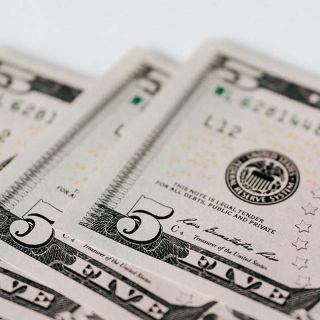
The dollar struggled to make headway on Tuesday as an unprecedented two-day surge in its Taiwanese counterpart spilled over to other regional peers and highlighted the fragility of the U.S. currency.
The past two-day sharp moves in the Taiwan dollar subsided during the session, but Hong Kong's de-facto central bank intervened to stop the local currency from strengthening and China's yuan jumped in its return from an extended break.
Investors were also awaiting actual progress in trade negotiations with the United States and evidence of a thaw in Sino-U.S. relations, as opposed to just hints from officials.
The Taiwan dollar on Monday surged to a three-year high of 29.59 per dollar, having leapt 8% in two days, in a move which coincided with the end of U.S.-Taiwan trade talks in Washington. It was last slightly weaker at 30.185 per dollar.
Such a deal has been repeatedly denied by Taiwan's central bank, but the market is not entirely convinced and sees the Taiwan dollar's jump having its tacit approval, as well as likely to be welcomed by the United States.
The Hong Kong dollar was also testing the strong end of its trading band between 7.75 and 7.85 per dollar, which prompted the Hong Kong Monetary Authority to buy $7.8 billion (HK$60.5 billion) earlier in the day to prevent the currency from breaking its peg to the U.S. dollar.
The onshore yuan was 0.7% higher at 7.2212 per dollar following the reopen of trade after an extended break, while its offshore counterpart strayed not too far from a six-month high at 7.2135.
Currencies like the Australian dollar and the yen also benefited from the fallout, with the Aussie last hovering near Monday's five-month high at $0.6467.
The yen steadied at 143.69 per dollar, having risen 0.9% in the previous session.
The moves further reinforced the narrative of investors falling out of favour with the U.S. dollar, triggered by President Donald Trump's chaotic global tariff policy.
Against a basket of currencies, the dollar was down 0.1% at 99.73. The dollar index had clocked a monthly decline of 4.3% in April, the largest in over two years.
The Federal Reserve announces its policy decision on Wednesday and is expected to keep rates on hold, but the meeting may be the last where the outcome is so cut and dry.
Elsewhere, the euro rose 0.09% to $1.1324, while sterling ticked 0.05% higher to $1.3303.
The New Zealand dollar gained 0.26% to $0.5982.
The Bank of England also meets this week and is expected to lower interest rates by a quarter point on Thursday as Trump's tariffs darken the global growth outlook, while central banks in Norway and Sweden are expected to keep rates steady.
Source : Reuters
The USD/CHF pair weakened for the third consecutive day and traded around 0.7960 in early European trading on Tuesday. The Swiss franc strengthened on increased demand for safe haven assets, following...
The US Dollar Index (DXY) trended sluggishly around 99.06 on Monday (January 19th), as liquidity thinned as US markets were closed for Martin Luther King Jr. Day. Despite limited movement, global sent...
The US dollar is expected to rise for a third straight day on Thursday (January 8), but trading remains cautious as investors position themselves ahead of Friday's Nonfarm Payrolls (NFP) report. Recen...
The dollar index edged up to 98.5 on Tuesday, its strongest level in more than two weeks, as investors focused on a slate of key economic data for the US. Recent indicators have pointed to some soften...
The US dollar opened 2026 weakly on Friday. Throughout last year, the dollar was pressured by many major currencies due to narrowing interest rate differentials between the US and other countries. Con...
Oil prices stabilized on Thursday (February 12th), as the market reassigned a risk premium to US-Iran tensions despite US inventory data showing swelling domestic supplies. This movement confirms one thing: geopolitical headlines are still more...
Gold prices weakened slightly on Thursday (February 12th), as more solid US employment data reduced market confidence in an imminent Federal Reserve interest rate cut. The strong employment data prompted market participants to shift expectations of...
The Hang Seng Index reversed its downward trend in Hong Kong on Thursday (February 12th), weakening by around 0.9% to around 27,000 after a strong session earlier. This decline halted the momentum of the short term rally, as investors began to...