


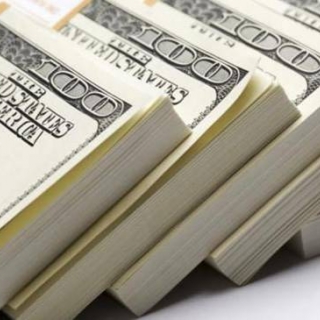
The dollar held steady on Tuesday, trading near a three-year low against the euro and a six-month trough against the yen, as investors trying to make sense of the constant changes to President Donald Trump'stariffs remained wary of U.S. assets.
Much of the volatility that hit the dollar last week and sent Treasury yields soaring appeared to have abated somewhat on Tuesday, although investor sentiment was still fragile.
The euro , which has been one of the biggest beneficiaries of this month's dumping of U.S. assets, was a touch weaker on the day at $1.1336, narrowly below last week's three-year high at $1.1474.
The dollar was slightly weaker at 142.99 yen, staying close to the six-month low of 142.05 it touched on Friday.
After slumping to a 10-year low against the Swiss franc last week, the dollar was 0.2% higher on Tuesday. Still, it is down nearly 8% against the Swiss franc this month, set for its biggest monthly drop since December 2008.
Market focus has been on the ever-shifting tariff headlines with the U.S. removing smartphones and other electronics from its duties on China over the weekend providing some relief, although comments from Trump suggested the reprieve is likely to be short-term.
Trump's imposition and then abrupt postponement of most tariffs on goods imported to the U.S. has sown confusion, adding to the uncertainty for investors and policymakers around the world.
There was a greater sense of calm across the market on Tuesday. But given the uncertainty Trump and his vacillation over tariffs have stirred up, analysts expected the reprieve for the dollar to be short-lived.
The yield on the benchmark U.S. 10-year Treasury note edged up 2 basis points to 4.38% after dropping nearly 13 basis points in the previous session.
Yields rose about 50 bps last week - their biggest weekly increase in over 20 years - as analysts and investors questioned U.S. bonds' status as the world's safest assets.
Fed Governor Christopher Waller said on Monday the Trump administration's tariff policies are a major shock to the U.S. economy that could lead the Federal Reserve to cut interest rates to head off a recession even if inflation remains high.
Traders are pricing in 86 bps of cuts from the Fed for the rest of the year, LSEG data showed.
The dollar index , which measures the U.S. currency against six others, was at 99.641, not far from last week's three-year low. The index is down over 4% this month, set for its biggest monthly drop since November 2022.
The more risk-linked currencies enjoyed a bout of strength. Sterling was up 0.1% at $1.347, while the Australian dollar rose 0.7% to $0.6371 and the New Zealand dollar gained 0.71% to reach $0.592, near its highest in four and half months.
Source : Reuters
The USD/CHF pair weakened for the third consecutive day and traded around 0.7960 in early European trading on Tuesday. The Swiss franc strengthened on increased demand for safe haven assets, following...
The US Dollar Index (DXY) trended sluggishly around 99.06 on Monday (January 19th), as liquidity thinned as US markets were closed for Martin Luther King Jr. Day. Despite limited movement, global sent...
The US dollar is expected to rise for a third straight day on Thursday (January 8), but trading remains cautious as investors position themselves ahead of Friday's Nonfarm Payrolls (NFP) report. Recen...
The dollar index edged up to 98.5 on Tuesday, its strongest level in more than two weeks, as investors focused on a slate of key economic data for the US. Recent indicators have pointed to some soften...
The US dollar opened 2026 weakly on Friday. Throughout last year, the dollar was pressured by many major currencies due to narrowing interest rate differentials between the US and other countries. Con...
Oil prices stabilized on Thursday (February 12th), as the market reassigned a risk premium to US-Iran tensions despite US inventory data showing swelling domestic supplies. This movement confirms one thing: geopolitical headlines are still more...
Gold prices weakened slightly on Thursday (February 12th), as more solid US employment data reduced market confidence in an imminent Federal Reserve interest rate cut. The strong employment data prompted market participants to shift expectations of...
The Hang Seng Index reversed its downward trend in Hong Kong on Thursday (February 12th), weakening by around 0.9% to around 27,000 after a strong session earlier. This decline halted the momentum of the short term rally, as investors began to...