


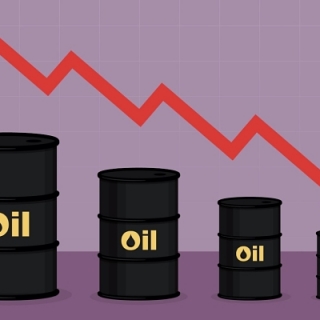
Oil prices plummeted on Thursday (August 28th) after briefly rising in the previous session, pressured by expectations of lower US fuel demand as the summer holiday season ends and Russian supplies to Hungary and Slovakia resume via the Druzhba pipeline resume.
Crude prices briefly rose on Wednesday after official data showed US crude inventories fell by 2.4 million barrels in the week ending August 22nd, compared with analysts' expectations in a Reuters poll for a 1.9 million barrel drop, a sign of strong demand.
However, oil market participants view the upcoming US Labor Day holiday as the unofficial end of the summer driving season and the beginning of a decline in US gasoline demand. Brent crude futures fell 19 cents, or 0.3%, to $67.86 at 08:20 GMT, and West Texas Intermediate (WTI) crude futures fell 29 cents, or 0.5%, to $63.86.
"This weekend's US bank holiday marks the end of the driving season, and gasoline isn't the expected panacea in terms of demand," said John Evans of oil broker PVM. "The short-term reasons to be friendly to oil prices are diminishing," he added, referring to the restart of Druzhba operations.
Russian crude oil supplies to Hungary and Slovakia via the Druzhba pipeline have resumed after a halt caused by Ukraine's attack on Russia last week, Hungarian oil company MOL and Slovakia's economy minister said on Thursday.
Traders are also watching how New Delhi responds to pressure from Washington to stop buying Russian oil, after US President Donald Trump doubled tariffs on imports from India to 50% on Wednesday.
"India is expected to continue buying crude from Russia at least in the short term, which should limit the impact of the new tariffs on global supply," said IG market analyst Tony Sycamore. Russia and Ukraine, which have also supported prices, have stepped up attacks on each other's energy infrastructure.
Russia launched a massive drone attack on energy and gas transportation infrastructure in six Ukrainian regions overnight, leaving more than 100,000 people without power, Ukrainian officials said on Wednesday. (alg)
Source: Reuters
Oil prices were little changed in Asian trading on Thursday after US President Donald Trump backed down from a threat to impose tariffs on European countries over Greenland. This decision helped ease ...
Oil prices rose on Tuesday, supported by a combination of supply disruptions from Kazakhstan, improved global economic growth projections, and a weakening US dollar, making dollar-denominated oil chea...
Oil traded in a tight range on Thursday after two straight sessions of losses, as markets digested a sharper US push to shape Venezuela's crude flows—alongside fresh tanker seizures tied to sanctions....
Oil prices edged higher as the market digested the United States' latest moves regarding Venezuela. WTI held steady at US$56/barrel after a sharp drop, while Brent remained below US$60/barrel. This s...
Brent crude prices sank in volatile trading on Wednesday after U.S. President Donald Trump said Venezuela will supply tens of millions of barrels of oil to Washington. Oil prices were nursing losses ...
Gold prices briefly caused a stir after hitting a new record, but then slowed. The main trigger: US President Donald Trump withheld the threat of tariffs on Europe and claimed there was a "framework" for a future agreement on Greenland. This calmer...
Oil prices were little changed in Asian trading on Thursday after US President Donald Trump backed down from a threat to impose tariffs on European countries over Greenland. This decision helped ease geopolitical tensions and improve market...
The Nikkei 225 Index climbed 1.73% to close at 53,689, while the broader Topix Index rose 0.74% to 3,616 on Thursday, snapping a five-day losing streak as Japanese shares were lifted by a strong rally in chip and artificial intelligence related...