


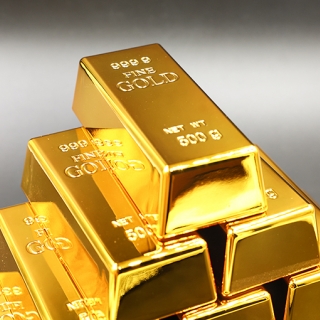
Gold, silver, and platinum surged to all-time highs, extending a historic year-end rally for precious metals, supported by rising geopolitical tensions, a weaker U.S. dollar, and thin market liquidity.
Spot gold prices rose as much as 1.2% to a peak above $4,530 an ounce on Friday. Spot silver for immediate delivery rose for the fifth consecutive session, climbing as much as 5% to surpass $75 an ounce.
Tensions in Venezuela, where the U.S. has blocked oil tankers and increased pressure on the government of Nicolás Maduro, have added to the appeal of precious metals as a safe-haven asset. Washington is also launching a military offensive against ISIS in Nigeria in cooperation with the African nation's government.
"Rising geopolitical tensions continue to support demand for safe-haven assets," including gold and silver, said Daniel Takieddine, chief executive officer at Sky Links Capital Group. Thin market liquidity at the end of the year also amplified price fluctuations, according to Takieddine.
The Bloomberg Dollar Spot Index, a leading indicator of the strength of the US currency, fell 0.7% for the week, its biggest decline since June. A weaker dollar generally supports gold and silver.
Gold has gained about 70% this year and silver more than 150%, with both metals on track for their best annual performance since 1979. This remarkable rally was supported by high central bank buying, inflows into exchange-traded funds (ETFs), and three consecutive interest rate cuts by the US Federal Reserve. Lower borrowing costs boosted precious metals, which pay no interest, and traders bet on more rate cuts by 2026.
US President Donald Trump's aggressive moves to reform global trade, along with threats to the independence of the Federal Reserve, added momentum to the rally earlier this year. Investor demand is also supported by the so-called currency weakness trade, as concerns over ballooning debt burdens drive a withdrawal from government bonds and the currencies used to issue them.
Gold's resilience is demonstrated by its rapid recovery after retreating from its previous peak of $4,381 in October, when the rally was deemed overheated. Heavy ETF buying has been a key driver of the latest surge, with holdings in State Street Corp.'s SPDR Gold Trust—the largest precious metals ETF—rising by more than a fifth this year.
Silver's rally has been even more spectacular than gold's. The recent surge in silver prices has been driven by speculative inflows and lingering supply dislocations in major trading centers following the historic short squeeze in October.
London warehouses have attracted substantial inflows since the October short squeeze, although most of the world's available silver remains in New York as traders await the outcome of a U.S. Commerce Department investigation into whether imports of critical minerals pose a national security risk. The review could pave the way for tariffs or other trade restrictions on the metal.
"You have a lot of trades or positions on paper; now you need to cover them with physical volume—and there's not much supply to cover that demand," said Manav Modi, a commodities analyst at Motilal Oswal Financial Services Ltd. "You need to back the paper silver with actual silver," he said.
Partly for the same reason, platinum has seen a rapid rally in recent weeks—this month alone, its price has risen more than 40%. The precious metal traded above $2,400 an ounce for the first time since Bloomberg began collecting data in 1987.
In addition to strong physical demand, global supply of the precious metal, used in the automotive and jewelry sectors, is expected to experience a third annual deficit this year, largely due to disruptions in key producer South Africa.
Gold prices rose 1.3% to $4,539.56 as of 10:35 a.m. in New York. Silver rose 5.5% to $75.80. Platinum rose 9.4% to $2,467.07, and palladium rose 8.8%. (alg)
Source: Bloomberg
Gold prices weakened slightly on Thursday (February 12th), as more solid US employment data reduced market confidence in an imminent Federal Reserve interest rate cut. The strong employment data promp...
Gold prices strengthened on Wednesday, supported by a weaker US dollar and falling US bond yields after the latest economic data reinforced the narrative that the Federal Reserve is likely to continue...
Gold experienced a slight correction in the European session on Tuesday (February 10th), but remained above $5,000/oz as the market held its breath ahead of a series of US data that could alter intere...
Gold held above the psychological $5,000 level at the start of the week, supported by a combination of factors that are "right" for the precious metal : physical demand from China, expectations of low...
Gold prices are still struggling to turn an intraday rebound into a sustained rally. After briefly falling to $4,654 (a four day low) and rebounding, prices were again rejected near $4,900. In the Eur...
Oil prices stabilized on Thursday (February 12th), as the market reassigned a risk premium to US-Iran tensions despite US inventory data showing swelling domestic supplies. This movement confirms one thing: geopolitical headlines are still more...
Gold prices weakened slightly on Thursday (February 12th), as more solid US employment data reduced market confidence in an imminent Federal Reserve interest rate cut. The strong employment data prompted market participants to shift expectations of...
The Hang Seng Index reversed its downward trend in Hong Kong on Thursday (February 12th), weakening by around 0.9% to around 27,000 after a strong session earlier. This decline halted the momentum of the short term rally, as investors began to...