


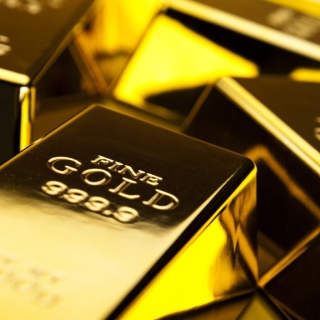
Gold prices hit another record high on Tuesday (December 7th), driven by strong investment demand amid widespread geopolitical and economic uncertainty, with additional support from expectations of further US interest rate cuts.
Spot gold held at $3,959.82 per ounce at 11:11 GMT, after hitting an all-time high of $3,977.19 earlier in the session. US gold futures for December delivery rose 0.2% to $3,983.10.
"Strong ETF demand remains key, driven by 'FOMO' and eroding confidence in traditional safe-haven assets," said Ole Hansen, head of commodity strategy at Saxo Bank, adding that continued central bank demand and lower funding costs are also supporting bullion.
The White House on Monday eased President Donald Trump's assertion that government layoffs were underway due to the ongoing government shutdown, but warned that layoffs could occur as the impasse entered its seventh day.
The economic shutdown has delayed the release of key economic indicators, forcing investors to rely on secondary, non-governmental data to gauge the timing and extent of the Fed's interest rate cuts. Markets continue to expect a 25 basis point rate cut at this month's meeting and a similar cut at the December meeting.
Non-yielding gold thrives in low-interest rates and times of economic uncertainty. Gold has gained 51% so far this year due to massive buying by central banks, increased demand for gold-backed exchange-traded funds (ETFs), a weakening dollar, and growing interest from retail investors seeking to hedge against rising trade and geopolitical tensions.
"I see gold reaching $4,300/oz over the next six months. The USD is expected to continue to depreciate," said Michael Langford, chief investment officer at Scorpion Minerals, with the overall macro and geopolitical scenario positive for gold price appreciation.
Goldman Sachs on Monday raised its gold price forecast for December 2026 to $4,900 per oz from $4,300.
China's central bank added gold to its foreign exchange reserves in September for the 11th consecutive month, according to data from the People's Bank of China. Meanwhile, political turmoil in Japan and France gripped currency and bond markets for a second straight day on Tuesday.
Elsewhere, spot silver fell 0.2% to $48.43 per ounce, platinum fell 1% to $1,611.56, and palladium held steady at $1,320.06. (alg)
Source: Reuters
Gold prices weakened slightly on Thursday (February 12th), as more solid US employment data reduced market confidence in an imminent Federal Reserve interest rate cut. The strong employment data promp...
Gold prices strengthened on Wednesday, supported by a weaker US dollar and falling US bond yields after the latest economic data reinforced the narrative that the Federal Reserve is likely to continue...
Gold experienced a slight correction in the European session on Tuesday (February 10th), but remained above $5,000/oz as the market held its breath ahead of a series of US data that could alter intere...
Gold held above the psychological $5,000 level at the start of the week, supported by a combination of factors that are "right" for the precious metal : physical demand from China, expectations of low...
Gold prices are still struggling to turn an intraday rebound into a sustained rally. After briefly falling to $4,654 (a four day low) and rebounding, prices were again rejected near $4,900. In the Eur...
Oil prices stabilized on Thursday (February 12th), as the market reassigned a risk premium to US-Iran tensions despite US inventory data showing swelling domestic supplies. This movement confirms one thing: geopolitical headlines are still more...
Gold prices weakened slightly on Thursday (February 12th), as more solid US employment data reduced market confidence in an imminent Federal Reserve interest rate cut. The strong employment data prompted market participants to shift expectations of...
The Hang Seng Index reversed its downward trend in Hong Kong on Thursday (February 12th), weakening by around 0.9% to around 27,000 after a strong session earlier. This decline halted the momentum of the short term rally, as investors began to...