


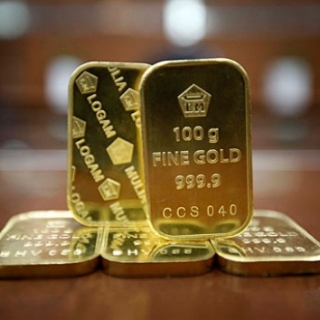
Gold prices weakened on Friday, weighed down by a stronger U.S. dollar and signs of progress in U.S.-EU trade negotiations, which have dampened demand for safe-haven assets.
Spot gold fell 0.9% to $3,336.01 an ounce at 2:01 PM ET (18:01 GMT). U.S. gold futures closed down 1.1% at $3,335.6. The U.S. dollar index, open a new tab, rebounded from a more than two-week low, making bullion more expensive for overseas buyers.
"The Japan deal is significant, and there are hopes for a U.S.-EU deal before the August 1 deadline. That's reducing safe-haven demand as rising risk appetite drives capital into riskier assets," said Peter Grant, vice president and senior metals strategist at Zaner Metals. Following this week's US-Japan trade deal, the European Commission stated that a trade deal with the US is close to being reached, although EU members have agreed to retaliatory tariffs on US goods if talks fail.
Data-wise, US jobless claims fell to a three-month low, signaling a stable labor market despite sluggish hiring. The stable labor market data is expected to give the Federal Reserve room to keep interest rates steady at 4.25%-4.50% at its meeting next week, even though inflation is showing signs of rising due to US President Donald Trump's import tariffs.
Trump's surprise visit to the central bank marked a new attempt to pressure Chairman Jerome Powell, with the President again urging a deep interest rate cut. "Gold may attract buying interest at $3,300, but it probably won't reach a new all-time high until after the Fed decision," Grant said, adding that the meeting could signal an interest rate cut later this year. Gold typically performs well during periods of uncertainty and low interest rates.
Spot silver fell 2.3% to $38.20 an ounce, but was still on track for a weekly gain. Platinum fell 0.9% to $1,395.31, while palladium fell 0.7% to $1,219.07, with both metals weakening throughout the week. (alg)
Source: Reuters
Gold prices weakened slightly on Thursday (February 12th), as more solid US employment data reduced market confidence in an imminent Federal Reserve interest rate cut. The strong employment data promp...
Gold prices strengthened on Wednesday, supported by a weaker US dollar and falling US bond yields after the latest economic data reinforced the narrative that the Federal Reserve is likely to continue...
Gold experienced a slight correction in the European session on Tuesday (February 10th), but remained above $5,000/oz as the market held its breath ahead of a series of US data that could alter intere...
Gold held above the psychological $5,000 level at the start of the week, supported by a combination of factors that are "right" for the precious metal : physical demand from China, expectations of low...
Gold prices are still struggling to turn an intraday rebound into a sustained rally. After briefly falling to $4,654 (a four day low) and rebounding, prices were again rejected near $4,900. In the Eur...
Oil prices stabilized on Thursday (February 12th), as the market reassigned a risk premium to US-Iran tensions despite US inventory data showing swelling domestic supplies. This movement confirms one thing: geopolitical headlines are still more...
Gold prices weakened slightly on Thursday (February 12th), as more solid US employment data reduced market confidence in an imminent Federal Reserve interest rate cut. The strong employment data prompted market participants to shift expectations of...
The Hang Seng Index reversed its downward trend in Hong Kong on Thursday (February 12th), weakening by around 0.9% to around 27,000 after a strong session earlier. This decline halted the momentum of the short term rally, as investors began to...