


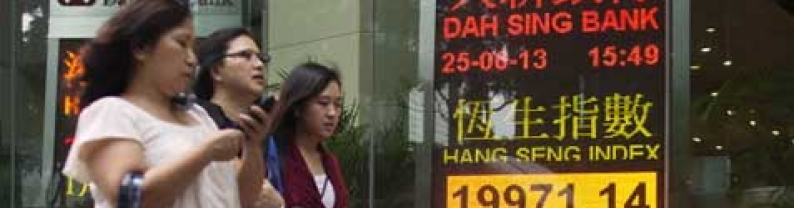
The Hang Seng Index reversed its downward trend in Hong Kong on Thursday (February 12th), weakening by around 0.9% to around 27,000 after a strong session earlier. This decline halted the momentum of the short term rally, as investors began to reduce risk in large cap stocks. Among the index's contributors, Tencent was a major drag, with its shares falling by around 2.3%, putting pressure on the technology sector, which has recently been a driving force behind market gains. Weakness in large cap companies like this typically quickly impacts sentiment due to their significant weighting in...
European stocks edged higher on Tuesday, with the STOXX 50 up 0.1% and the STOXX 600 gaining 0.3% to reach a fresh record high, rebounding after a mildly negative session the previous day. The advance was led by the pharmaceutical sector. Shares of Novo Nordisk surged nearly 6% after the company received approval from the US Food and Drug Administration to market an oral version of its obesity treatment, Wegovy, in the US. Other major drugmakers also posted gains, with AstraZeneca rising 0.8%, Novartis adding 0.7%, and Roche up 0.6%. Defensive sectors, including telecommunications and...
The Hang Seng dropped 28 points, or 0.1%, to close at 25,774 on Tuesday, reversing early gains led mainly by tech stocks and snapping a four-session winning streak. The decline followed a 3.5% fall in shares of Kuaishou Technology after media reports said the Chinese short-video platform experienced a sudden surge in explicit content due to a cyberattack on Monday. The stock plunged as much as 6%, its biggest one-day percentage drop since October 14, before closing down 3.5%. The company confirmed it had experienced a cyberattack on Monday night and said in a statement on Tuesday that it...
The Nikkei 225 Index traded flat to close around 50,412 on Tuesday, following a two-session winning streak, as investors adopted a cautious stance ahead of the government's finalization of the fiscal 2026 draft budget on Friday. The upcoming budget is projected to exceed ¥122 trillion ($781 billion), marking a record high and requiring bond issuance above last year's ¥28.6 trillion. This would come on top of a ¥21.3 trillion stimulus package funded through a supplementary budget for the current fiscal year, aimed at alleviating households from the effects of rising living costs. Notable...
The Hang Seng Index rose 107 points, or 0.4%, on Tuesday, reaching 25,909, posting its fifth consecutive session of gains. This rise was fueled by a recovery in the technology sector, fueled by optimism surrounding artificial intelligence (AI) stocks that fueled the rally on Wall Street. The Hong Kong stock market also benefited from hopes for further interest rate cuts by the Fed and expected additional stimulus from the Chinese government. Several major stocks, such as CSPC Pharmaceutical Group (up 5.2%), Zhongsheng Group (3.0%), and Ping An Insurance (2.9%), also boosted the index....
Asian stocks continued their two-day rally, following positive momentum from Wall Street that fueled a global rally. The MSCI Asia Pacific Index rose 0.3% on Tuesday morning after global stock indexes hit record closing highs. In Japan, the Topix index rose 0.5%, while US index futures edged higher. This rise was fueled by optimism about a year-end rally that is expected to strengthen. The S&P 500 erased December's losses and is on track for its eighth consecutive month of gains, which would be its longest winning streak since 2018. Large stocks like Tesla and Nvidia led the gains,...