


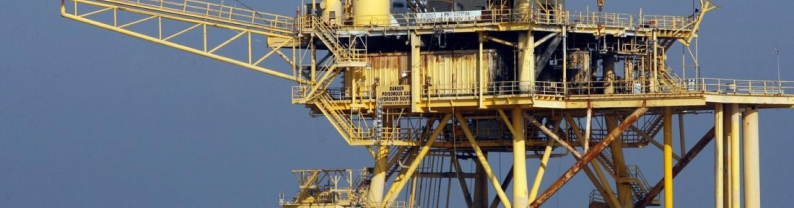
Oil prices stabilized on Thursday (February 12th), as the market reassigned a risk premium to US-Iran tensions despite US inventory data showing swelling domestic supplies. This movement confirms one thing: geopolitical headlines are still more "noise" than signals of a short-term surplus. As of 3:50 PM WIB, Brent was at $69.60/barrel (+0.29%) and WTI was at $64.83/barrel (+0.31%). The gains were moderate, but enough to keep prices near the psychological $70 level for Brent. From a geopolitical perspective, market focus is on the potential for escalation in the Middle East. Recent reports...
According to a report from the US Department of Labor (DOL) released on Thursday, the number of Americans filing new applications for unemployment insurance fell to 229,000 for the week ending August 23. The latest figure was slightly lower than the initial estimate (230,000) and lower than the previous week's 234,000 (revised from 235,000). Furthermore, the 4-week moving average increased by 2.5,000, bringing the total to 228,500 from the previous week's revised average. The report showed a seasonally adjusted insured unemployment rate of 1.3%, with Continuing Jobless Claims decreasing by...
The US Gross Domestic Product (GDP) grew at an annualized rate of 3.3% in the second quarter, the US Bureau of Economic Analysis (BEA) announced on Thursday. This figure was better than the preliminary estimate and market expectations of 3% and 3.1%, respectively. "Real GDP was revised up 0.3 percentage point from the preliminary estimate, primarily reflecting upward revisions to investment and consumer spending, partially offset by downward revisions to government spending and upward revisions to imports," the BEA explained in a press release. (alg) Source: FXstreet
The French prime minister's decision to hold a confidence vote next month carries heavy risks for the economy, bringing back fears of recession, business leaders said on Wednesday. Opposition parties have said they will bring down the minority government in the September 8 vote which Prime Minister Francois Bayrou unexpectedly announced on Monday, throwing the euro zone's second economy back into crisis. Opinion polls carried out after Bayrou's announcement show most French people now want new national elections, pointing to deepening dissatisfaction with politics and a risk of lasting...
President Donald Trump's unprecedented and intensifying attacks on the Federal Reserve risk backfire by hitting financial markets and the economy with higher long-term borrowing costs. For weeks, he has been slamming Chairman Jerome Powell for not significantly cutting interest rates to stimulate the economy and as Trump sees it lower the government's debt bill. He has nominated the head of his Council of Economic Advisers to the central bank's board and is now seeking to oust Governor Lisa Cook, paving the way for a legal battle over the institution's political autonomy. Yet, despite all...
Russia launched a massive drone attack on energy and gas transportation infrastructure in six Ukrainian regions overnight, leaving more than 100,000 people without power, Ukrainian officials said on Wednesday (August 27). Russian forces significantly damaged gas transportation infrastructure in the Poltava Region and attacked equipment at a major substation in the Sumy Region, the Energy Ministry said via the Telegram messaging service. The attack left more than 100,000 people without power in the Poltava, Sumy, and Chernihiv regions, Ukrainian President Volodymyr Zelenskiy said. Ukraine's...
The Indian government estimates that the newly imposed 50% US tariff will affect exports worth USD 48.2 billion. Officials have warned that the additional duties could make shipments to the US commercially unviable, potentially leading to job losses and slower economic growth. To soften the impact, the government is working on a multi-pronged strategy, including Goods and Services Tax (GST) reforms aimed at boosting domestic demand. The 50% tariff, effective from Wednesday (August 27), is expected to hit exports of textiles, shrimp, leather, and gems and jewellery the hardest. The US...
Australian inflation (CPI) rose 2.8% year-on-year in July, the fastest pace since July 2024. The housing cost component jumped 3.6% year-on-year, highlighting price pressures from rents and utilities. This figure was slightly above market expectations, signaling that the disinflation process is underway, but not yet complete. In the bond market, Australian 3-year bond futures fell (yields rose) shortly after the hotter-than-expected CPI release. However, this reaction is expected to be temporary. The global picture still points to the Federal Reserve moving toward interest rate cuts, a key...
U.S. President Donald Trump said he was ready for a legal battle after moving to oust Federal Reserve Governor Lisa Cook over allegations she falsified mortgage documents. Meanwhile, the central bank stated it would respect any court ruling in Cook's legal challenge against her dismissal. Trump's attempt to remove her is unprecedented in the Fed's 111-year history as a nominally independent U.S. institution, raising alarms over political pressure on monetary policy. Reuters said that if Cook's seat is vacated, Trump would gain the chance to appoint a majority of the Fed's seven-member...
 Gold rises in the early Asian trade. There's a broad commodities uptrend, driven by macro uncertainty, a weaker dollar, and persistent demand for "hard" assets, says Fawad Razaqzada, market analyst...
 Oil extended declines after OPEC+ agreed to a bigger-than-expected production increase next month, raising concerns about oversupply just as US tariffs fan fears about the demand outlook.
Brent...
Oil extended declines after OPEC+ agreed to a bigger-than-expected production increase next month, raising concerns about oversupply just as US tariffs fan fears about the demand outlook.
Brent...
 The Japanese Yen (JPY) weakened against its US counterpart and reversed part of Friday's recovery from the lowest level since July 23 following Bank of Japan (BOJ) Governor Kazuo Ueda's remarks....