


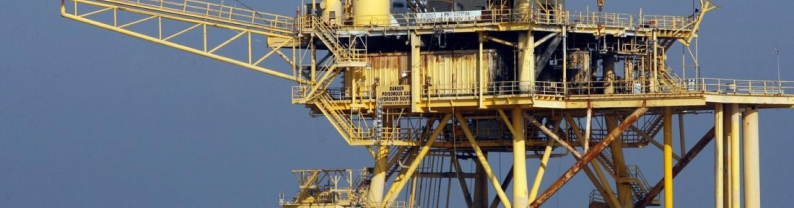
Oil prices stabilized on Thursday (February 12th), as the market reassigned a risk premium to US-Iran tensions despite US inventory data showing swelling domestic supplies. This movement confirms one thing: geopolitical headlines are still more "noise" than signals of a short-term surplus. As of 3:50 PM WIB, Brent was at $69.60/barrel (+0.29%) and WTI was at $64.83/barrel (+0.31%). The gains were moderate, but enough to keep prices near the psychological $70 level for Brent. From a geopolitical perspective, market focus is on the potential for escalation in the Middle East. Recent reports...
European stock markets pared losses on Friday, with the STOXX 50 and STOXX 600 closing down 0.8% and 0.9%, respectively, after plummeting as much as 1.9% earlier in the session. Investor sentiment improved following President Trump's statement that high tariffs on Chinese goods were unlikely to last long, signaling a potential easing of US-China trade tensions ahead of his meeting with Chinese President Xi Jinping. However, banking stocks remained under pressure, led by Deutsche Bank (-5.9%), Societe Generale (-4.6%), BNP Paribas (-3.7%), Banco Santander (-3.2%), and UniCredit (-2.6%), as...
The three major US stock indexes fluctuated between small gains and losses on Friday in what could be another volatile session. Consumer staples and energy stocks led the gains, while communication services was the weakest-performing sector. Quarterly results from regional banks helped lift sentiment, with Truist Financial rising 2.4%, and Fifth Third Bancorp climbing 3%. Earlier, futures had tumbled as signs of credit stress among regional lenders reignited concerns over US credit quality. Zions Bancorporation and Western Alliance, at the center of the recent turmoil, rebounded 3.6% and...
The Hang Seng tumbled 641 points, or 2.5%, to close at 25,247 on Friday, extending losses from the prior session and marking its lowest level in six weeks amid broad-based declines. Global sentiment soured after signs of credit stress at U.S. regional banks rattled investors, while renewed trade frictions between Washington and Beijing added pressure. All sectors fell, with tech sliding around 4%, followed by consumer, financial, and property stocks. Khoon Group hit a record low after certain sanctions by government authorities in the U.S. BYD lost 4.3% following its largest vehicle recall...
Both the STOXX 50 and the STOXX 600 fell 1.5% on Friday, tracking a global equity sell-off as signs of credit stress among US regional banks reignited concerns about credit quality and the potential spillover to other sectors. Banking and financial stocks came under heavy pressure, with notable declines in Intermediate Capital (-6.5%), Banco de Sabadell (-7.1%), Deutsche Bank (-6.3%), Barclays (-5.3%), Standard Chartered (-4.2%) and Société Générale (-4.5%). Meanwhile, escalating trade tensions between China and the US further weighed on sentiment. Beijing accused Washington of stoking...
Japanese stocks fell, led by the financial sector, as investors were shaken by revelations of loan problems at two regional US banks that raised concerns about the credit market. The Topix index fell 1% to 3,170.44 at the close of trading in Tokyo.Of the 1,672 stocks in the index, 446 rose and 1,169 fell, while 57 were unchanged. The Nikkei index fell 1.4% to 47,582.15, poised for its first weekly loss in eight weeks."Rather than focusing on specific sectors, it feels like we're seeing limited risk-off sentiment," said Tetsuo Seshimo, portfolio manager at Saison Asset Management. "Small...
Hong Kong stocks continued to weaken. The Hang Seng Index fell 1.3% to 25,555.02 at 10:14 a.m. local time, widening its weekly loss to 2.8%. Hang Seng Tech also fell 2.3%. The biggest pressure came from large caps: BYD Electronics -5.2%, SMIC -4.3%, Alibaba -2.7%, and Tencent -1.1%. In mainland China, the CSI 300 -1.3% and the Shanghai Composite -0.9%. After rallying more than 30% this year, sentiment has turned cautious. All eyes are on Monday's Chinese data releases: third-quarter GDP, retail sales, and industrial production. Economists' consensus forecasts GDP at ~4.7% (y/y), the slowest...
Asian stocks slipped at the open on Friday after risk sentiment faded on Wall Street, following news of bad debts at two US banks that heightened credit market concerns. US index futures also indicated further weakness. Japan, Australia, and South Korea all fell, in line with Wall Street's overnight slump: the S&P 500 fell 0.6% (financials -2.8%) and the Nasdaq 100 fell 0.4%. Hedging assets rallied: gold and silver hit record highs, while Treasury yields continued to fall—the 2-year yield to its lowest level since 2022 and the 10-year below 4%. The dollar index weakened, heading for its...
The Nikkei Stock Average falls 0.8% to 47885.32 in early trade, tracking Wall Street's declines overnight. The main theme has been risk-off, Commerzbank Research analysts say in a research report. Investors became uneasy about bad loans at two regional banks in the U.S., triggering worries over broader credit stress in the American economy, the analysts add. Among the worst performers on Japan's benchmark index, Disco Corp. drops 3.2%, Chugai Pharmaceutical sheds 3.05%, and Screen Holdings loses 3.1%. USD/JPY is at 150.18, compared with 150.44 late Thursday in New York. Source: Bloomberg
 Gold rises in the early Asian trade. There's a broad commodities uptrend, driven by macro uncertainty, a weaker dollar, and persistent demand for "hard" assets, says Fawad Razaqzada, market analyst...
 Oil extended declines after OPEC+ agreed to a bigger-than-expected production increase next month, raising concerns about oversupply just as US tariffs fan fears about the demand outlook.
Brent...
Oil extended declines after OPEC+ agreed to a bigger-than-expected production increase next month, raising concerns about oversupply just as US tariffs fan fears about the demand outlook.
Brent...
 The Japanese Yen (JPY) weakened against its US counterpart and reversed part of Friday's recovery from the lowest level since July 23 following Bank of Japan (BOJ) Governor Kazuo Ueda's remarks....