


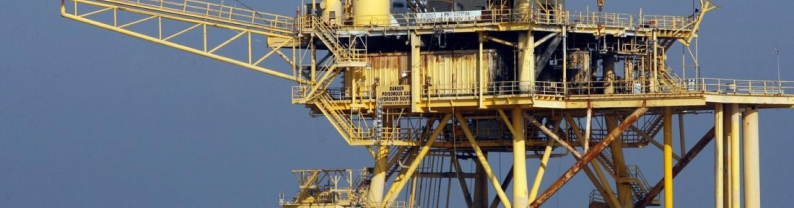
Oil prices stabilized on Thursday (February 12th), as the market reassigned a risk premium to US-Iran tensions despite US inventory data showing swelling domestic supplies. This movement confirms one thing: geopolitical headlines are still more "noise" than signals of a short-term surplus. As of 3:50 PM WIB, Brent was at $69.60/barrel (+0.29%) and WTI was at $64.83/barrel (+0.31%). The gains were moderate, but enough to keep prices near the psychological $70 level for Brent. From a geopolitical perspective, market focus is on the potential for escalation in the Middle East. Recent reports...
U.S. stocks ended mixed on Monday as Wall Street braced for a packed week of big-name earnings and key economic data. The S&P 500 rose about 0.1% and the Dow Jones Industrial Average gained 0.3%, with both indexes posting their fifth straight session of gains, while the Nasdaq 100 fell 0.1%, weighed down by early losses before a late-session rebound in Big Tech. Investors remain focused on upcoming quarterly results from Amazon, Apple, Meta Platforms and Microsoft, as well as signs of how President Trump's sweeping tariffs are affecting the company's outlook. While earnings have largely...
European markets closed higher on Monday, as investors digested a slew of key earnings and data releases in both Europe and the U.S. this week. The Stoxx 600 closed provisionally higher by 0.5%, with travel and banking sectors leading gains. Regionally, the FTSE 100 closed up 0.02% — its 11th straight day of gains and its best gain since late 2019. France's CAC 40 and Germany's DAX rose 0.5% and 0.06%, respectively. Top posts Deliveroo shares jump after DoorDash bid as company suspends share buybacks | see post Mediobanca makes $7.2 billion takeover bid for Banca Generali | see...
The three major averages in the US kickstarted the week in the green with the S&P adding around 0.3%, Dow Jones adding 200 points and the Nasdaq swinging between small gains and losses, amid a confluence of earnings optimism, softer borrowing costs and manageable commodity prices provided support. Anticipation of upside surprises from mega cap tech names—Microsoft, Apple and Amazon are widely expected to report strong top- and bottom-line beats alongside aggressive share-buyback and dividend plans—helped offset lingering trade-war jitters following conflicting U.S. and Chinese...
The Hang Seng finished flat at around 21,981 on Monday, as traders digested a key press briefing in China following Friday's Politburo meeting. Officials promised to support exporters and workers affected by U.S. tariffs while preparing contingency plans for the broader Chinese economy. The muted session followed modest losses in early trade, with strength in financials and tech offsetting weakness in property and consumers, after Beijing refrained from rolling out fresh stimulus, indicating that further actions would be launched as the situation evolves. Meanwhile, U.S. futures fell...
Japan stocks were higher after the close on Monday, as gains in the Real Estate, Banking and Textile sectors led shares higher. At the close in Tokyo, the Nikkei 225 gained 0.35%. The best performers of the session on the Nikkei 225 were Shin-Etsu Chemical Co., Ltd. (TYO:4063), which rose 6.60% or 267.00 points to trade at 4,313.00 at the close. Meanwhile, Keisei Electric Railway Co., Ltd. (TYO:9009) added 4.77% or 68.50 points to end at 1,505.50 and Hitachi Construction Machinery Co (TYO:6305) was up 4.32% or 176.00 points to 4,252.00 in late trade. The worst performers of the session...
European stocks rose on Monday, with the Stoxx 50 up 0.2% and the Stoxx 600 up 0.5%, and all sectors in positive territory, as investors prepared for a busy week of earnings and data from Europe and the US. Automotive and banking stocks led gains, both climbing 0.7%. Key earnings are expected from Porsche, Schneider Electric, and Deutsche Boerse. Meanwhile, signs of easing global trade tensions supported sentiment, with President Trump signaling openness to lowering Chinese tariffs and Beijing exempting certain US goods from its 125% levies. In corporate news, Italy's Mediobanca (+0.8%)...
Hong Kong stocks fell 73 points or 0.3% to 21,908 in early Monday trading, reversing gains from the prior session as investors adopted a cautious stance ahead of a key press briefing in China. Policymakers may announce new measures aimed at stabilizing employment and supporting growth following Friday's Politburo meeting. The decline came amid a sharp drop in U.S. futures, triggered by confusion over U.S. trade policy. Although President Donald Trump claimed progress was being made in trade talks with China and other nations, Treasury Secretary Scott Bessent failed Sunday to support Trump's...
The Nikkei 225 Index climbed 1% to above 36,000 while the broader Topix Index rallied 1.2% to 2,670 on Monday, extending last week's rally, with export-oriented companies leading the gains as the yen retreated from multi-month highs. A weaker yen boosts the profit outlook for Japan's export heavy industries and makes Japanese assets more attractive to foreign investors. Markets also kept a close eye on trade negotiations between the US and Japan, which appeared to be making progress. Industrial names posted strong gains, with Mitsubishi Heavy rising 3%, Toyota Industries up 2.3%, and...
 Gold rises in the early Asian trade. There's a broad commodities uptrend, driven by macro uncertainty, a weaker dollar, and persistent demand for "hard" assets, says Fawad Razaqzada, market analyst...
 Oil extended declines after OPEC+ agreed to a bigger-than-expected production increase next month, raising concerns about oversupply just as US tariffs fan fears about the demand outlook.
Brent...
Oil extended declines after OPEC+ agreed to a bigger-than-expected production increase next month, raising concerns about oversupply just as US tariffs fan fears about the demand outlook.
Brent...
 The Japanese Yen (JPY) weakened against its US counterpart and reversed part of Friday's recovery from the lowest level since July 23 following Bank of Japan (BOJ) Governor Kazuo Ueda's remarks....