


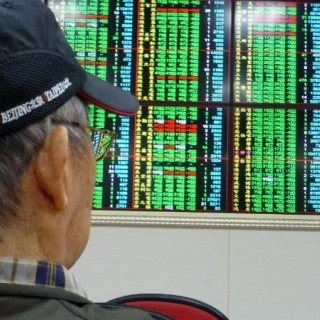
Asian stock markets opened higher on Wednesday (October 29th), buoyed by positive sentiment from Wall Street. Investors are confident that the artificial intelligence (AI) trend can continue to drive profits for major tech companies, while bets are growing that the Fed will cut interest rates. Japanese and South Korean stocks rose, while Hong Kong was closed. In the US, the S&P 500 edged higher, but shares of tech giants—the "Magnificent Seven"—continued to rally, rising around 1.3%. The US dollar weakened for a third straight day, oil remained weak due to signs of oversupply, and gold rose slightly after three days of declines.
Big tech names remain the market's driving force. Nvidia jumped nearly 5% after CEO Jensen Huang announced a slew of new partnerships and played down concerns about an "AI bubble." Its AI chip supplier, SK Hynix, also rallied after reporting record earnings. This week is heating up as five giant US technology companies—which account for roughly a quarter of the S&P 500 index—will release their financial results between Wednesday and Thursday. Investors are checking to see whether the billions of dollars invested in AI infrastructure will actually turn into profits, or if it's just a wish.
The risk-on sentiment is also being driven by macro and geopolitical factors. The market sees the possibility of a deal between the US and China following reports that the US is ready to reduce some tariffs if Beijing curbs exports of fentanyl precursor chemicals. This has sent commodities like copper soaring to near-record levels, while gold has retreated somewhat from its peak as people begin to perceive a easing of global risks. Furthermore, the Trump administration is also considering signing a technology cooperation agreement with South Korea in the areas of AI, quantum computing, and 6G—part of the competition to secure technological dominance against China.
Now all eyes are on the Fed. The Fed is expected to cut interest rates by 0.25 percentage points, and the market is hoping Jerome Powell will signal when the central bank will stop shrinking its balance sheet through quantitative tightening. But Powell will likely speak cautiously, as the Fed itself remains divided between those fearing a slowing economy and those concerned about inflation. The bottom line: AI remains the driving force, Wall Street remains optimistic, and Asia is also catching the rally — but the Fed's next course will be determined by what it says tonight. (azf)
Source: Bloomberg
Tested EN...
Asian stock markets weakened for the second consecutive day, indicating that the initial rally that had been "speedy" at the start of the year is starting to lose steam. At the same time, US governmen...
US stocks were mixed on Wednesday as investors weighed uneven economic data against expectations for eventual Federal Reserve easing, with the S&P 500 easing 0.2% and the Dow Jones sliding 0.8% fr...
European stocks were in mixed territory on Wednesday morning, as regional market jitters grow over U.S. President Donald Trump's threat to annex Greenland. The pan-European Stoxx 600 was little chang...
Asian stock markets weakened slightly on Wednesday after posting their best start to the year in history. The decline was driven by a decline in Japanese stocks amid escalating tensions with China. Th...
Oil prices stabilized on Thursday (February 12th), as the market reassigned a risk premium to US-Iran tensions despite US inventory data showing swelling domestic supplies. This movement confirms one thing: geopolitical headlines are still more...
Gold prices weakened slightly on Thursday (February 12th), as more solid US employment data reduced market confidence in an imminent Federal Reserve interest rate cut. The strong employment data prompted market participants to shift expectations of...
The Hang Seng Index reversed its downward trend in Hong Kong on Thursday (February 12th), weakening by around 0.9% to around 27,000 after a strong session earlier. This decline halted the momentum of the short term rally, as investors began to...