


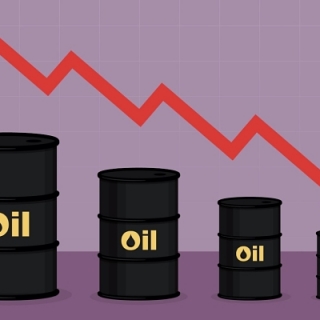
Oil prices headed for a third straight monthly decline, falling on Friday (October 31st) due to a stronger US dollar, weak Chinese data, and rising supply from major global producers.
Brent crude futures fell 38 cents, or 0.6%, to $64.62 a barrel at 10:08 GMT, while U.S. West Texas Intermediate crude was at $60.19 a barrel, down 38 cents, or 0.6%.
The U.S. dollar is nearing a three-month high against major currencies, making dollar-denominated commodities like oil more expensive.
Meanwhile, sources told Reuters that Saudi Arabia, the world's largest oil exporter, may lower its December crude oil prices for Asian buyers to their lowest in months due to abundant supplies, sources said, indicating bearish sentiment.
Oil prices also fell after an official survey showed factory activity in China contracted for a seventh month in October. Both Brent and WTI are expected to fall by about 3.5% in October as the Organization of the Petroleum Exporting Countries (OPEC) and major non-OPEC producers increase production to gain market share.
Higher supply would also cushion the impact of Western sanctions that have disrupted Russian oil exports to key buyers, China and India. OPEC+ is likely to increase production modestly in December, according to sources familiar with the negotiations ahead of the group's meeting on Sunday. Eight OPEC+ members have raised their production targets by more than 2.7 million barrels per day—or about 2.5% of global supply—through a series of monthly increases.
Meanwhile, crude oil exports from top exporter Saudi Arabia hit a six-month high of 6.407 million barrels per day, according to data from the Joint Organizations Data Initiative. The U.S. Energy Information Administration also reported record production of 13.6 million barrels per day last week.
US President Donald Trump said on Thursday that China has agreed to begin purchasing US energy, adding that a very large-scale transaction involving the purchase of oil and gas from Alaska is possible. However, analysts remain skeptical about whether a US-China trade deal will increase Chinese demand for US energy. (alg)
Source: Reuters
Oil prices stabilized on Thursday (February 12th), as the market reassigned a risk premium to US-Iran tensions despite US inventory data showing swelling domestic supplies. This movement confirms one ...
Oil prices rose on Wednesday (February 11th), supported by a combination of geopolitical risk premiums from US-Iran tensions and more solid Asian demand signals particularly from India which helped ea...
Oil remained in the green zone on Tuesday (February 10th), as the market refused to abandon the Middle East risk premium. As of 13:07 GMT (20:07 WIB), Brent rose +0.4% to $69.32/barrel, while WTI rose...
Oil prices fell about 1% on Monday as concerns about conflict in the Middle East eased slightly. The market calmed after the US and Iran agreed to resume talks on Tehran's nuclear program, reducing fe...
Oil prices moved slightly higher in a volatile session on Friday, as investors assessed the direction of nuclear negotiations between the United States and Iran. Price movements appeared sensitive to ...
Oil prices stabilized on Thursday (February 12th), as the market reassigned a risk premium to US-Iran tensions despite US inventory data showing swelling domestic supplies. This movement confirms one thing: geopolitical headlines are still more...
Gold prices weakened slightly on Thursday (February 12th), as more solid US employment data reduced market confidence in an imminent Federal Reserve interest rate cut. The strong employment data prompted market participants to shift expectations of...
The Hang Seng Index reversed its downward trend in Hong Kong on Thursday (February 12th), weakening by around 0.9% to around 27,000 after a strong session earlier. This decline halted the momentum of the short term rally, as investors began to...