


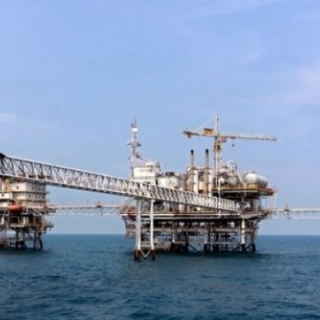
Oil prices surged about 5% to a two-week high on Thursday (October 23rd) after the US imposed sanctions on major Russian suppliers Rosneft (ROSN.MM) and Lukoil (LKOH.MM) over Moscow's war in Ukraine, prompting energy companies in China and India to consider reducing Russian imports.
Brent crude futures rose $3.40, or 5.4%, to $65.99 a barrel, while U.S. West Texas Intermediate (WTI) crude rose $3.29, or 5.6%, to $61.79. The daily percentage gains were the largest for both crude contracts since mid-June and the highest close since October 8th.
"The announcement of US sanctions against Rosneft and Lukoil represents a major escalation in targeting Russia's energy sector and could be a shock large enough to tip the global oil market into deficit next year," said David Oxley, chief climate and commodities economist at Capital Economics.
Russia was the world's second-largest crude oil producer in 2024 after the US, according to US energy data. In addition to soaring crude prices, US diesel futures jumped nearly 7%, pushing the diesel crack spread to its highest level since February 2024. The crack spread measures refining profit margins.
The US sanctions mean refiners in China and India, major buyers of Russian oil, will need to find alternative suppliers to avoid exclusion from Western banking systems, said Saxo Bank analyst Ole Hansen. Several trading sources told Reuters that China's state oil company has suspended purchases of seaborne Russian oil from the two companies now subject to US sanctions, further driving up prices.
Kuwait's oil minister said that the Organization of the Petroleum Exporting Countries (OPEC) would be ready to offset any market shortfall by easing production cuts. However, Russian President Vladimir Putin said it would take time for global markets to replace Russian oil.
"This is, of course, an attempt to pressure Russia," Putin added. "But no self-respecting country and no self-respecting people will decide anything under pressure." The US said it was ready to take further action and urged Moscow to immediately agree to a ceasefire in Ukraine.
"Various US and EU sanctions have so far had essentially no effect on Russia's ability to export oil, so we doubt that this latest round of sanctions will change the situation. Even so, the Kremlin may need to use more sophisticated methods to ship its oil covertly, thus increasing costs," said Pavel Molchanov, investment strategy analyst at Raymond James. Molchanov noted that the US investment bank will "continue to monitor this issue" as Russian exports account for about 7% of global oil supplies. (alg)
Source: Reuters
Oil prices stabilized on Thursday (February 12th), as the market reassigned a risk premium to US-Iran tensions despite US inventory data showing swelling domestic supplies. This movement confirms one ...
Oil prices rose on Wednesday (February 11th), supported by a combination of geopolitical risk premiums from US-Iran tensions and more solid Asian demand signals particularly from India which helped ea...
Oil remained in the green zone on Tuesday (February 10th), as the market refused to abandon the Middle East risk premium. As of 13:07 GMT (20:07 WIB), Brent rose +0.4% to $69.32/barrel, while WTI rose...
Oil prices fell about 1% on Monday as concerns about conflict in the Middle East eased slightly. The market calmed after the US and Iran agreed to resume talks on Tehran's nuclear program, reducing fe...
Oil prices moved slightly higher in a volatile session on Friday, as investors assessed the direction of nuclear negotiations between the United States and Iran. Price movements appeared sensitive to ...
Oil prices stabilized on Thursday (February 12th), as the market reassigned a risk premium to US-Iran tensions despite US inventory data showing swelling domestic supplies. This movement confirms one thing: geopolitical headlines are still more...
Gold prices weakened slightly on Thursday (February 12th), as more solid US employment data reduced market confidence in an imminent Federal Reserve interest rate cut. The strong employment data prompted market participants to shift expectations of...
The Hang Seng Index reversed its downward trend in Hong Kong on Thursday (February 12th), weakening by around 0.9% to around 27,000 after a strong session earlier. This decline halted the momentum of the short term rally, as investors began to...