


Oil prices closed up more than $1 per barrel on Tuesday (September 23) after a deal to resume exports from Iraqi Kurdistan stalled, easing some investors' concerns that the resumption would exacerbate concerns about a global oversupply.
Brent crude futures closed up $1.06, or 1.6%, to $67.63 per barrel, while U.S. West Texas Intermediate crude rose $1.13, or 1.8%, to $63.41 per barrel. Both benchmarks recouped significant losses earlier.
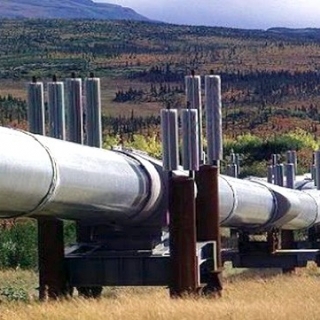
Pipeline oil exports from Iraqi Kurdistan to Turkey had not resumed on Tuesday despite hopes of a deal to end the deadlock, as the two major producers sought debt repayment guarantees. The agreement between Iraq's federal and regional Kurdish governments and oil companies aims to resume exports of about 230,000 barrels of oil per day from Kurdistan to global markets via Turkey, which have been suspended since March 2023.
Brent and WTI oil prices have fallen over the previous four sessions, by about 3%. "This is a perfect example of not counting your barrels until they're pumped. The market sold off on reports of a Kurdistan deal, and the lack of a deal has now taken those barrels off the market," said Phil Flynn, senior analyst at Price Futures Group.
Overall, the global oil market is bracing for rising supply and slowing demand, hampered by the adoption of electric vehicles and economic pressures triggered by US tariffs. In its latest monthly report, the International Energy Agency (IEA) stated that global oil supply will increase at a faster pace this year and that a surplus could widen by 2026 as production increases among OPEC+ members and supply increases from outside the producer group.
However, risks loom over the market as traders monitor the European Union's consideration of tighter sanctions on Russian oil exports, as well as escalating geopolitical tensions in the Middle East.
"The supporting element is the continued low OECD oil inventories," said UBS analyst Giovanni Staunovo, referring to inventories in high-income countries around the world. "On the other hand, higher crude oil exports from OPEC+ are a drag on prices, as is the lack of new sanctions targeting Russian oil exports."
US crude oil stocks are expected to have risen last week, while gasoline and distillate inventories likely fell, according to a preliminary Reuters poll on Monday. The market is awaiting weekly oil stockpiles data from the American Petroleum Institute, due later Tuesday.
"The market will continue to monitor distillate inventories, which are a weak area of the market," said Flynn of Price Futures Group. The increase in distillate stocks should help ease concerns about Russian supply amid attacks on the country's oil infrastructure, Flynn added.
The Ukrainian military attacked two Russian oil distribution facilities in the Bryansk and Samara regions overnight, Kyiv's general staff said.
Ukrainian President Volodymyr Zelenskiy is scheduled to meet with U.S. President Donald Trump at the United Nations on Tuesday and push for new sanctions against Russia, in a renewed effort to persuade Trump to more firmly support Kyiv's war effort. (alg)
Source: Reuters
Oil prices stabilized on Thursday (February 12th), as the market reassigned a risk premium to US-Iran tensions despite US inventory data showing swelling domestic supplies. This movement confirms one ...
Oil prices rose on Wednesday (February 11th), supported by a combination of geopolitical risk premiums from US-Iran tensions and more solid Asian demand signals particularly from India which helped ea...
Oil remained in the green zone on Tuesday (February 10th), as the market refused to abandon the Middle East risk premium. As of 13:07 GMT (20:07 WIB), Brent rose +0.4% to $69.32/barrel, while WTI rose...
Oil prices fell about 1% on Monday as concerns about conflict in the Middle East eased slightly. The market calmed after the US and Iran agreed to resume talks on Tehran's nuclear program, reducing fe...
Oil prices moved slightly higher in a volatile session on Friday, as investors assessed the direction of nuclear negotiations between the United States and Iran. Price movements appeared sensitive to ...
Oil prices stabilized on Thursday (February 12th), as the market reassigned a risk premium to US-Iran tensions despite US inventory data showing swelling domestic supplies. This movement confirms one thing: geopolitical headlines are still more...
Gold prices weakened slightly on Thursday (February 12th), as more solid US employment data reduced market confidence in an imminent Federal Reserve interest rate cut. The strong employment data prompted market participants to shift expectations of...
The Hang Seng Index reversed its downward trend in Hong Kong on Thursday (February 12th), weakening by around 0.9% to around 27,000 after a strong session earlier. This decline halted the momentum of the short term rally, as investors began to...