


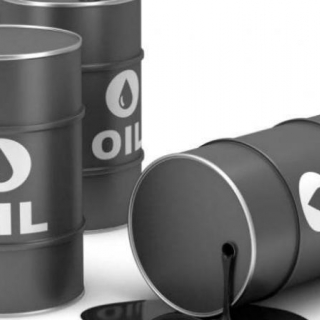
Oil prices rebounded after last week's decline after OPEC+ agreed to raise production at a modest rate, amid doubts about how many members could continue to increase output.
The rise marked a reversal of production cuts that were previously set to last until the end of 2026—following the return of most of the oil production that had been halted for several months—as the alliance seeks to regain market share. This signals the alliance's confidence in further pushing its bold oil market strategy.
Brent rose above $66 per barrel after falling nearly 4% last week, when it became clear that a production increase was imminent. Prices also pushed higher after Bloomberg News reported that the European Union was exploring new sanctions on Russian banks and energy companies as part of its latest steps to end the war in Ukraine, a move expected to be coordinated with the US.
The Organization of the Petroleum Exporting Countries and its partners will add 137,000 barrels per day in October, less than the increases scheduled for the previous two months. Actual volumes are also likely to be lower than announced, as some group members face pressure not to take part in their increases to compensate for previous increases, while others lack spare capacity.
Earlier last month, the International Energy Agency forecast a record surplus next year, which Goldman Sachs Group Inc. predicted would push Brent to the low $50s. The global benchmark has fallen more than 10% this year, with President Donald Trump's trade tariffs also weighing on the energy demand outlook.
OPEC+ said on Sunday that restarting the remaining 1.66 million barrels per day of production cuts would depend on "evolving market conditions," and that the production increases could be reversed. The group's faster-than-expected return to production that had been halted over the past few months surprised some in the oil market, but prices have remained relatively stable after an initial decline in April.
"Saudi Arabia is back in control, they're the only one with spare production capacity," said Jeff Currie, head of energy pipeline strategy at Carlyle, in a Bloomberg TV interview. "There's a very fine line between excess oil supply and running out of spare production capacity."
Monday's oil price gains also drew support from the broader market, with global stock markets reversing Friday's decline amid concerns that the Federal Reserve is lagging behind in supporting a cooling labor market. The dollar also weakened, making commodities priced in that currency more attractive.
Saudi Crown Prince Mohammed bin Salman will visit Washington in November to meet with Trump, indicating possible political considerations behind the supply decision. The US president has repeatedly called for lower fuel prices as he seeks to control inflation.
China's buildup of crude oil stocks by about 200,000 barrels per day in recent months has helped support demand, Frederic Lasserre, global head of research and analysis at Gunvor Group, said at the Asia Pacific Petroleum Conference in Singapore on Monday. However, China may not be able to absorb the entire upcoming market surplus, he added. (alg)
Source: Bloomberg
Oil prices stabilized on Thursday (February 12th), as the market reassigned a risk premium to US-Iran tensions despite US inventory data showing swelling domestic supplies. This movement confirms one ...
Oil prices rose on Wednesday (February 11th), supported by a combination of geopolitical risk premiums from US-Iran tensions and more solid Asian demand signals particularly from India which helped ea...
Oil remained in the green zone on Tuesday (February 10th), as the market refused to abandon the Middle East risk premium. As of 13:07 GMT (20:07 WIB), Brent rose +0.4% to $69.32/barrel, while WTI rose...
Oil prices fell about 1% on Monday as concerns about conflict in the Middle East eased slightly. The market calmed after the US and Iran agreed to resume talks on Tehran's nuclear program, reducing fe...
Oil prices moved slightly higher in a volatile session on Friday, as investors assessed the direction of nuclear negotiations between the United States and Iran. Price movements appeared sensitive to ...
Oil prices stabilized on Thursday (February 12th), as the market reassigned a risk premium to US-Iran tensions despite US inventory data showing swelling domestic supplies. This movement confirms one thing: geopolitical headlines are still more...
Gold prices weakened slightly on Thursday (February 12th), as more solid US employment data reduced market confidence in an imminent Federal Reserve interest rate cut. The strong employment data prompted market participants to shift expectations of...
The Hang Seng Index reversed its downward trend in Hong Kong on Thursday (February 12th), weakening by around 0.9% to around 27,000 after a strong session earlier. This decline halted the momentum of the short term rally, as investors began to...