


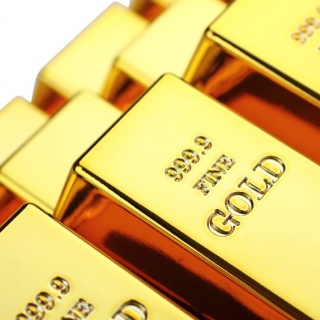
Gold rose to a new record above $4,200 an ounce and silver surged, driven by escalating US-China tensions and speculation that the Federal Reserve will cut interest rates twice more this year.
The price of gold bullion rose as much as 1.8% to a peak of $4,218.29 on Wednesday. Spot silver prices rose more than 3%, while the availability of the precious metal in the London market remains limited. Silver had a volatile day on Tuesday, when prices surged to an all-time high above $53.55 an ounce before falling sharply.
US Treasury yields fell to their lowest level in months after Fed Chairman Jerome Powell signaled that the US central bank is on track to cut interest rates by another quarter point later this month. Lower yields and borrowing costs tend to benefit precious metals, which do not pay interest.
Meanwhile, risk-off sentiment has risen—boosting gold's appeal as a safe-haven asset—after President Donald Trump issued new trade threats against China. The comments sparked renewed tensions in relations between the world's two largest economies, with Beijing vowing to retaliate after Washington threatened additional 100% tariffs on China last week.
In silver, the market has been gripped by a lack of liquidity in London, sparking a worldwide rush for the metal and sending benchmark prices soaring above futures in New York. The spread between the two markets on Wednesday was around $1.05 an ounce, while one-month annualized silver borrowing costs were around 17% on Tuesday, both historic highs.
Traders remain cautious ahead of the conclusion of the US government's Section 232 investigation into critical minerals, which could lead to import tariffs on certain commodities. Although silver is not on the US Geological Survey's current list of critical minerals, it is among six proposed additions to the 2025 draft list under consideration.
The four major precious metals have surged between 60% and 82% this year, in a rally that has dominated commodity markets. Gold's rise has been supported by central bank buying, increased holdings in exchange-traded funds (ETFs), and the Fed's interest rate cuts.
Demand for safe-haven assets has been fueled by recurring US-China trade tensions, threats to the Fed's independence, and the US government shutdown. Investors have also sought safety in precious metals to protect themselves from the threat posed by runaway budget deficits—a phenomenon known as the "dip trade." Central bank buying has also been a key driver of gold's price rise.
Much of the gold rally "is driven by physical buying, and if you look at central banks, they're going out and buying in large quantities," said Saad Rahim, chief economist at Trafigura Group. Concerns about debt sustainability and the prospect of lower interest rates have investors "looking at gold as a store of value and safety," he said. Spot gold was trading 1.2% higher at $4,191.73 an ounce at 5:10 p.m. in London. Palladium and platinum also rose. (alg)
Source: Bloomberg
Gold prices weakened slightly on Thursday (February 12th), as more solid US employment data reduced market confidence in an imminent Federal Reserve interest rate cut. The strong employment data promp...
Gold prices strengthened on Wednesday, supported by a weaker US dollar and falling US bond yields after the latest economic data reinforced the narrative that the Federal Reserve is likely to continue...
Gold experienced a slight correction in the European session on Tuesday (February 10th), but remained above $5,000/oz as the market held its breath ahead of a series of US data that could alter intere...
Gold held above the psychological $5,000 level at the start of the week, supported by a combination of factors that are "right" for the precious metal : physical demand from China, expectations of low...
Gold prices are still struggling to turn an intraday rebound into a sustained rally. After briefly falling to $4,654 (a four day low) and rebounding, prices were again rejected near $4,900. In the Eur...
Oil prices stabilized on Thursday (February 12th), as the market reassigned a risk premium to US-Iran tensions despite US inventory data showing swelling domestic supplies. This movement confirms one thing: geopolitical headlines are still more...
Gold prices weakened slightly on Thursday (February 12th), as more solid US employment data reduced market confidence in an imminent Federal Reserve interest rate cut. The strong employment data prompted market participants to shift expectations of...
The Hang Seng Index reversed its downward trend in Hong Kong on Thursday (February 12th), weakening by around 0.9% to around 27,000 after a strong session earlier. This decline halted the momentum of the short term rally, as investors began to...