


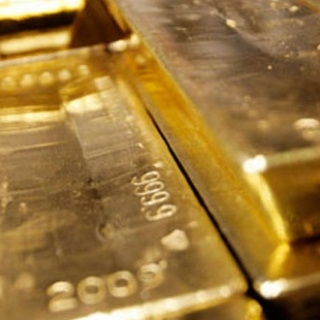
Gold prices fell more than 1% on Friday as the dollar held near a two-week high after U.S. inflation data matched expectations, suggesting the Federal Reserve may be cautious about further interest rate cuts.
Spot gold fell 1% to $2,846.96 an ounce. Bullion has fallen 3% so far this week, its sharpest weekly decline since November. U.S. gold futures fell 1.3% to $2,858.90.
The dollar index is set for a weekly gain, making dollar-priced bullion more expensive for overseas buyers.
"I think the main elements that are impacting the gold and silver markets are profit-taking in the liquidation during the week (and) a strong U.S. dollar index," said Jim Wyckoff, senior market analyst at Kitco Metals.
Wall Street's major indexes got off to a subdued start as investors remained cautious about potential price pressures from President Trump's policies.
"The stock market losses have triggered deleveraging pressure on gold that perpetuated the selloff from Monday's record highs," said Peter Grant, vice president and senior metals strategist at Zaner Metals.
The Personal Consumption Expenditures (PCE) price index rose 0.3% in January, in line with expectations, after rising an unrevised 0.3% in December.
"The pricing for Fed expectations overall hasn't really changed materially. Ultimately, it's not really a driver of gold prices," said Daniel Ghali, commodity strategist at TD Securities, referring to the data.
Traders in futures contracts priced into the Federal Reserve's interest rate policy maintained bets on Friday that the U.S. central bank will continue to cut short-term lending rates in June.
Higher interest rates have dented the appeal of non-yielding bullion. Still, safe-haven bullion is set for a second straight monthly gain, boosted by concerns over Trump's tariff plans.
Trump said Thursday that his proposed 25% tariffs on Mexican and Canadian goods would take effect on March 4, with an additional 10% duty on Chinese imports.
Spot silver fell 0.6% to $31.10, platinum fell 1.0% to $938.95 and palladium fell 0.2% to $917.60. All three metals are set for monthly declines. (Newsmaker23)
Source: CNBC
Gold prices weakened slightly on Thursday (February 12th), as more solid US employment data reduced market confidence in an imminent Federal Reserve interest rate cut. The strong employment data promp...
Gold prices strengthened on Wednesday, supported by a weaker US dollar and falling US bond yields after the latest economic data reinforced the narrative that the Federal Reserve is likely to continue...
Gold experienced a slight correction in the European session on Tuesday (February 10th), but remained above $5,000/oz as the market held its breath ahead of a series of US data that could alter intere...
Gold held above the psychological $5,000 level at the start of the week, supported by a combination of factors that are "right" for the precious metal : physical demand from China, expectations of low...
Gold prices are still struggling to turn an intraday rebound into a sustained rally. After briefly falling to $4,654 (a four day low) and rebounding, prices were again rejected near $4,900. In the Eur...
Oil prices stabilized on Thursday (February 12th), as the market reassigned a risk premium to US-Iran tensions despite US inventory data showing swelling domestic supplies. This movement confirms one thing: geopolitical headlines are still more...
Gold prices weakened slightly on Thursday (February 12th), as more solid US employment data reduced market confidence in an imminent Federal Reserve interest rate cut. The strong employment data prompted market participants to shift expectations of...
The Hang Seng Index reversed its downward trend in Hong Kong on Thursday (February 12th), weakening by around 0.9% to around 27,000 after a strong session earlier. This decline halted the momentum of the short term rally, as investors began to...