


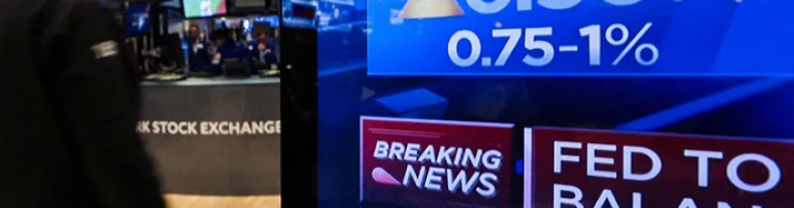
Stephen Miran, a Federal Reserve governor whose term ends at the end of January, said Thursday that he is looking for 150 basis points of interest-rate cuts this year to boost the U.S. labor market. Miran told Bloomberg Television's Surveillance program that Fed officials had room to further reduce rates given his view that underlying inflation was likely running at 2.3%. "I'm looking for about a point and a half of cuts. A lot of that is driven by my view of inflation," Miran said. "Underlying inflation is running within noise of our target, and that's a good indication of where overall...
Gold's price (XAU/USD) is jumping higher as buyers dig into the precious metal on Monday, printing several fresh all-time highs above $2,900 at the time of writing. The move comes after United States (US) President Donald Trump said he would announce "reciprocal tariffs" on many countries on Tuesday or Wednesday, adding to increasing uncertainty in global financial markets. On Sunday, US President Trump said a 25% levy would apply for all steel and aluminum imports into the US, but did not say when they would be applied. Meanwhile, traders will focus on Federal Reserve (Fed) Chair...
The Pound Sterling (GBP) ticks higher to near 1.2415 against the US Dollar (USD) in Monday's European session. The GBP/USD pair is marginally higher even though the US Dollar Index (DXY), which tracks the Greenback's value against six major currencies, is up almost 0.2%, which indicates significant strength in the Pound Sterling. The DXY Index gains as investors turn cautious about renewed global trade war tensions. US President Donald Trump threatened to raise 25% tariffs on steel and aluminum imports and impose reciprocal tariffs on nations he saw as engaging in unfair trade...
Oil prices ticked higher on Monday, rebounding after declines last week on concerns about a global trade war, as investors appeared to shrug off U.S. President Donald Trump's latest threat, this time on steel and aluminium imports. Brent crude futures was up 74 cents, or 1%, to $75.40 a barrel by 0938 GMT while U.S. West Texas Intermediate crude also climbed 1%, or 72 cents, at $71.72 a barrel. The market posted its third consecutive weekly decline last week on concerns about a global trade war. Source: Reuters
The US dollar rose Monday after US President Donald Trump threatened to levy new tariffs on metal imports, prompting demand for the safe haven, while the euro retreated. At 04:00 ET (09:00 GMT), the Dollar Index, which tracks the greenback against a basket of six other currencies, traded 0.2% higher to 108.140. Dollar gains on trade war fears Concerns about a potential global trade war were raised Monday after President Trump said he will announce new 25% tariffs on all steel and aluminium imports into the US later on Monday. The US president also said he will impose reciprocal tariffs...
EUR/USD recovers above 1.0300 in Monday's European session after a weak opening around 1.0280. The major currency opened on a weak note as investors rushed to the safe-haven fleet on renewed United States (US) President Donald Trump's tariff fears. The US Dollar Index (DXY), which tracks the Greenback's value against six major currencies, gives up majority of its intraday gains and wobbles around 108.20. However, the outlook of the USD Index remains firm on renewed fears of a global trade war. Over the weekend, President Trump threatened to raise 25% tariffs on imports of steel and...
 Bank of Japan (BOJ) Governor Kazuo Ueda stated that achieving 2% inflation is getting closer, although real inflation remains low. Ueda emphasized that the BOJ will continue to raise interest rates...
 The Reserve Bank of Australia (RBA) maintained its cash rate at 4.1% during its April meeting, holding borrowing costs unchanged after slashing 25 bps in the February meeting, aligning with market...