


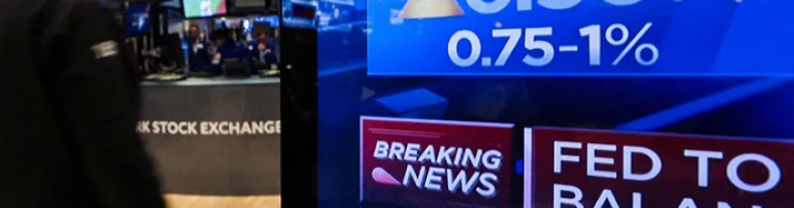
Stephen Miran, a Federal Reserve governor whose term ends at the end of January, said Thursday that he is looking for 150 basis points of interest-rate cuts this year to boost the U.S. labor market. Miran told Bloomberg Television's Surveillance program that Fed officials had room to further reduce rates given his view that underlying inflation was likely running at 2.3%. "I'm looking for about a point and a half of cuts. A lot of that is driven by my view of inflation," Miran said. "Underlying inflation is running within noise of our target, and that's a good indication of where overall...
The Australian dollar (AUD) continued its rally on Thursday (10/4), climbing towards the 0.6240 zone during the American session. The currency pair built on its recent strength as the US Dollar Index (DXY) slumped further towards multi-month lows near the 101 area. The move came after the market digested the White House's confirmation of a 145% tariff on Chinese goods, combined with the Federal Reserve's (Fed) cautious tone. Despite the greenback's decline, the technical backdrop for AUD/USD remains tilted to the downside, with several key indicators continuing to flash bearish signals,...
Oil prices fell more than $2 a barrel on Thursday, erasing the last session's rally, as investors reassessed a planned pause in broad U.S. tariffs and turned their attention to the deepening trade war between Washington and Beijing. U.S. West Texas Intermediate crude fell $2.28, or 3.7%, to settle at $60.07 a barrel. Brent crude fell $2.15, or 3.3%, to settle at $63.33 a barrel. Both contracts had risen more than $2 a barrel on Wednesday after U.S. President Donald Trump halted the heavy tariffs he had announced on dozens of U.S. trading partners a week ago, marking an abrupt change of...
Gold prices surged above $3,172 an ounce on Thursday, hitting a new record high, as a weaker dollar and escalating trade tensions between the U.S. and China boosted demand for the safe-haven metal. The surge followed President Trump's decision to raise tariffs on Chinese goods to 125%, up from 104%, even as he temporarily eased duties on other countries. The dollar index fell more than 1%, making gold more affordable for buyers using other currencies. Meanwhile, U.S. consumer prices unexpectedly fell in March, but inflation concerns remained high amid the new tariffs. As a result, traders...
Gold prices rose more than 1% on Thursday, extending the previous session's sharp gains, as a weaker dollar and escalating trade tensions between the US and China prompted investors to turn to the safe-haven appeal of the precious metal. Spot gold rose 1.6% to $3,132.29 an ounce by 9:29 a.m. ET (1329 GMT), after rising more than 3% on Wednesday. US gold futures rose 2.3% to $3,150.20. US President Donald Trump said on Wednesday he would temporarily lower tariffs on dozens of countries, but raised tariffs on China to 125% from 104%. "Gold is regaining its appeal as a safe haven and is back...
Oil extended a volatile run as investors assessed abrupt shifts in US trade policy, with futures returning to losses following a relief rally on Wednesday. Brent fell near $64 a barrel after a choppy session that saw prices hit a four-year low before ultimately posting the biggest one-day gain since October. With markets in turmoil, President Donald Trump announced a 90-day halt on higher tariffs against dozens of nations, but he also raised duties on China to 125%. "With a lot of uncertainty still existing, the prospect for a major rebound in crude is not...
 Bank of Japan (BOJ) Governor Kazuo Ueda stated that achieving 2% inflation is getting closer, although real inflation remains low. Ueda emphasized that the BOJ will continue to raise interest rates...
 The Reserve Bank of Australia (RBA) maintained its cash rate at 4.1% during its April meeting, holding borrowing costs unchanged after slashing 25 bps in the February meeting, aligning with market...